
Whitesky CEO tours Asia to develop Rp21 trillion Advanced Air Mobility sector
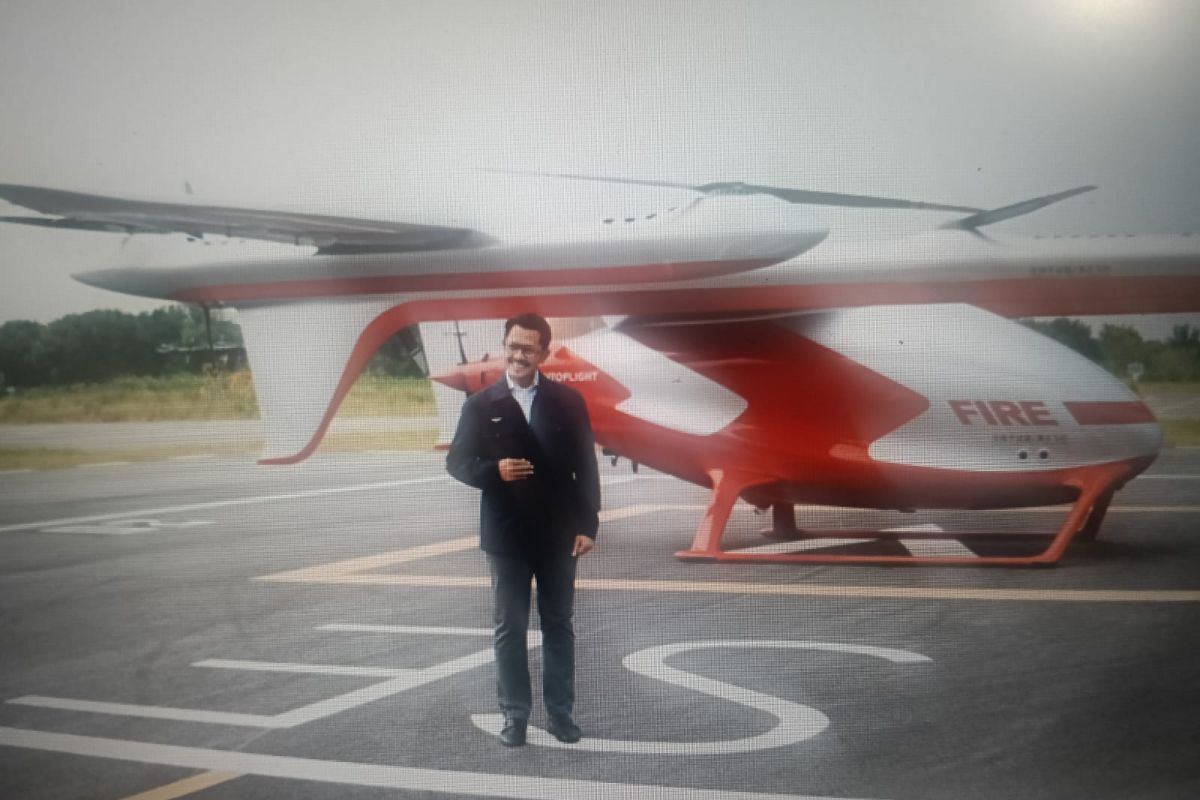
The Founder and CEO of Whitesky Group, Denon Prawiraatmadja, has commenced a series of tours across Asia to bolster the realisation of Indonesia’s Advanced Air Mobility (AAM) development roadmap, with an investment and development scale projected at no less than Rp21 trillion over ten years.
On Monday (21/9), Denon visited the AutoFlight facility in Kunshan, China, to observe technological advancements, flight demonstrations, and simulators, as well as to continue strategic discussions with the company’s leadership.
“China is one of the key points in this series,” he stated in a written statement in Jakarta on Monday.
This visit is part of a broader agenda following the presentation of Indonesia’s eVTOL ecosystem vision in Hong Kong. Over the next year, similar activities will continue to expand through partners in China, Hong Kong, Japan, and South Korea.
However, he noted that the journey is not merely aimed at increasing the number of aircraft entering Indonesia.
“We want every international collaboration to produce real economic value for Indonesia. Not just aircraft, but investment, technology, industrial capability, and new employment opportunities,” he said.
Whitesky aims to develop up to 200 eVTOL aircraft within a decade, a scale that the company believes will require an ecosystem far larger than mere aircraft procurement.
Investment will relate to operational needs, infrastructure, maintenance, charging, technology, training, and human capital development.
Consequently, he intends for this Asian tour to serve as a platform to connect his company not only with Original Equipment Manufacturers (OEMs) but also with financial institutions, technology providers, infrastructure partners, and battery and energy companies.
For Denon, the Rp21 trillion figure must not remain merely as an asset value.
The scale of development must be capable of driving new economic activity within the aviation sector and opening up supporting business chains that have not previously developed in Indonesia.
The group projects that the development of a 200 eVTOL ecosystem could create and support no fewer than 1,000 new jobs. Requirements will expand to include pilots, engineers, and technicians, as well as maintenance, vertiport operations, charging infrastructure, safety, training, and digital aviation.
“If an investment of this magnitude only results in an increase in fleet size, then we have not maximised the opportunity. What we are pursuing is how that investment creates jobs, capabilities, and new industries,” he said.