
Whispers of 5% Parliamentary Threshold from Coalition Leaders' Meeting
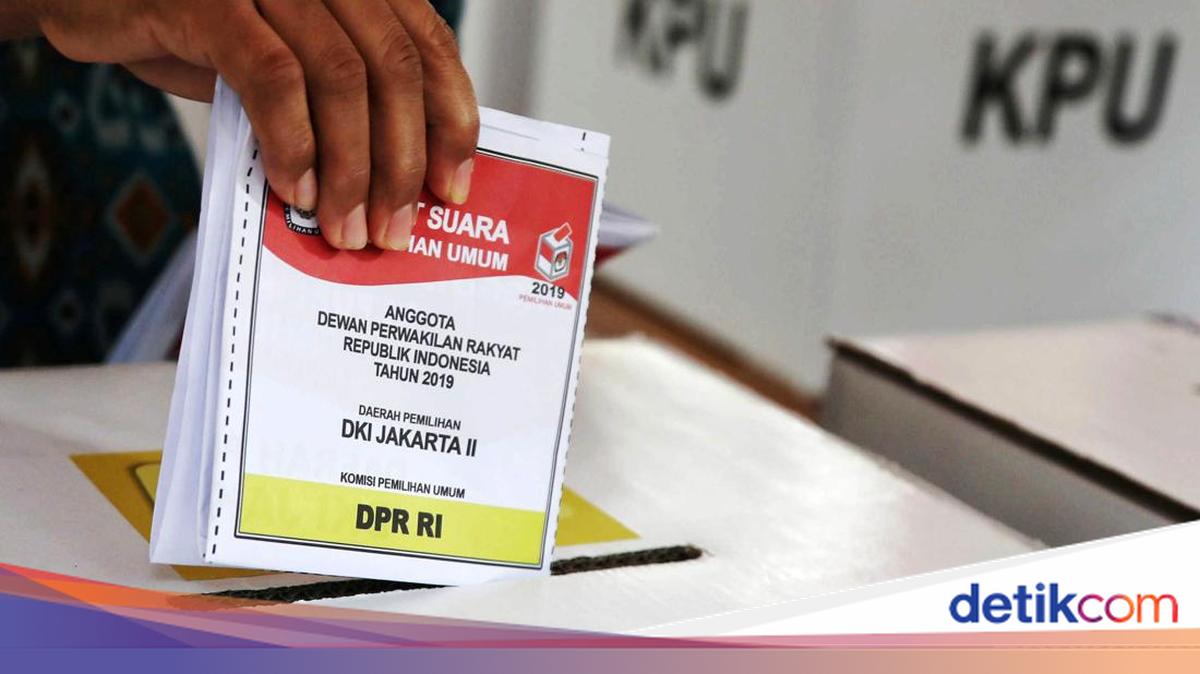
Several chairpersons of political parties within the government coalition have met to discuss the revision of the Election Law (RUU Pemilu), which includes regulations on the parliamentary threshold (PT).
The meeting of the coalition party leaders was confirmed directly by Gerindra Party Secretary-General Sugiono. In his explanation, Sugiono stated that the party chairpersons met recently.
“Yes, several party chairpersons gathered recently. Gerindra was represented at the time by Mr Dasco, acting as the daily chairman, to discuss matters that need to be addressed regarding the election law,” Sugiono told reporters at the DPR building, the parliamentary complex in Senayan, Jakarta, on Wednesday (16/9).
Gerindra Agrees on 5% Parliamentary Threshold
Sugiono stated that an agreement was reached during the meeting regarding the parliamentary threshold. He noted that his party, led by President Prabowo Subianto, agrees on a 5% parliamentary threshold.
“However, there is one thing that everyone seems to agree on, though I cannot speak on behalf of other parties. But Gerindra also agrees on a 5% PT. As Golkar also expressed recently, and PKS also expressed, I believe that is what we have agreed upon,” he said.
Furthermore, Sugiono mentioned that more efficient and effective election procedures were also discussed, including ensuring that the people’s votes are fully accommodated.
“Several other matters were also discussed. The core objective is how these elections can be more efficient and effective, and how the people’s voices—specifically those that might otherwise be lost—can still be properly accommodated,” he said.
“Because ultimately, those are their voices and aspirations. So, the broad outline is that first, the election must be more effective; second, the election must be efficient, and the involvement of all citizens—ensuring that votes that are sometimes wasted or left over can be accommodated as optimally as possible,” he continued.
PDIP Considers 5% Parliamentary Threshold Ideal
PDIP, which is not part of the Prabowo government coalition, does not feel excluded despite not being part of the meeting between the coalition leaders. PDIP considers it natural for the coalition chairpersons to meet.
“Oh, no (we do not feel left out). Speaking from a perspective of kinship as a nation, they should be able to be invited to talk. We may differ, but our goal must be one: for Indonesia Raya,” said the Head of the Honour Committee of the PDIP Central Executive Board, Komarudin Watubun, on a different occasion.
On the other hand, Komarudin stated that a 5% parliamentary threshold is an ideal figure. He noted that such a figure could simplify the political party landscape.
“If we are talking about ideal, it is roughly around that. The 5% figure is quite ideal,” said Komarudin.
“Look, there are certainly considerations regarding the effective efficiency of governance. The more political parties are simplified, the easier it becomes for the consolidation of power, right?” he remarked.
However, Komarudin reminded that the aspect of representing all votes must be accommodated. In his view, the parliamentary threshold must continue to account for the voices of all citizens.
“But in the concept of a country with minority and majority groups, everyone must be accommodated. If it is to be accommodated, then the parliamentary threshold figure must consider those aspects,” he said.
Furthermore, Komarudin assessed that the House of Representatives (DPR) must be careful when later establishing the parliamentary threshold. He stated that the decision must refer to the Constitutional Court (MK) rulings.
“Oh, yes. Certainly, the DPR must be careful, whether it is the coalition or anyone else; our discussions must refer to the MK. Because the MK’s decision is final and binding. Why should many DPR decisions on laws be discussed so exhaustively, only to be struck down there? That must not be allowed to happen again,” he said.