
While Farmers Sleep, How Barn Owls Save Oil Palm and Rice Fields
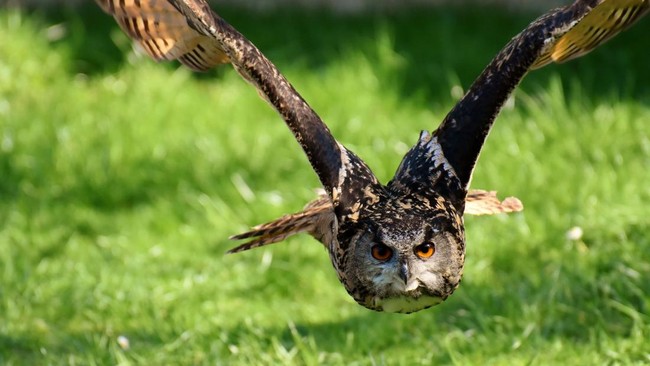
Jakarta, CNBC Indonesia - The use of barn owls as biological predators, with human intervention, to control rat pests is one way to maintain the productivity of agricultural and plantation crops, including oil palm. The most widely used species is Tyto alba, or the Javan barn owl. This nocturnal bird of prey has hearing and vision abilities in low-light conditions that make it effective at hunting rats at night. In oil palm plantation practice, a single Tyto alba is said to be able to prey on around three to five rats in one night. Its use is not merely an effort to eradicate pests. The presence of natural predators is also part of an Integrated Pest Management (IPM) approach, which prioritises prevention, monitoring, and biological methods before using chemical pesticides.
Rats are one of the important pests for various plantation crops because they can attack from the early phase of the plant through to production output. In oil palm, rats eat the fruit and can damage developing bunches, thereby suppressing plantation productivity. The Directorate General of Plantations recorded that rat attacks on oil palm occurred repeatedly throughout 2016-2021. Under certain conditions, rat populations in oil palm plantations can be very high. Data cited by the Directorate General of Plantations states that rat populations can reach 537 per hectare, while the average number of oil palm trees in one hectare can reach 130. Research also notes that a rat can eat between 5.5 and 13.6 grams of oil palm fruit per day.
Conventional rat control is generally carried out using rodenticides or rat poison. However, according to various studies including IML Research, rodenticides are highly toxic, even to non-target organisms. The use of rodenticides has the potential to pollute the environment including water, soil and air, and requires strict supervision in bait distribution. This creates its own problem. When natural predators also decline, ecosystem balance can be disrupted and pest control becomes increasingly dependent on human intervention. This is where the role of Tyto alba offers a different approach.
To survive in agricultural areas, farmers or companies usually provide owl nest boxes. In Asian Agri plantations, for example, one nest box is placed for around 25 hectares of land. In IPM, pest populations are kept below economically damaging levels through a combination of natural predators, monitoring, traps, biological agents, and more selective pesticide use. Human involvement is still needed, especially in the early stages, through the provision of nest boxes, training, and monitoring until the owls are able to adapt and hunt independently. Other biological methods can also be used, such as nectar-producing plants and the fungus Metarhizium anisopliae.
The use of natural predators offers two advantages at once. From a business perspective, pest populations can be suppressed so that crop damage and potential yield losses are reduced. At the same time, reduced dependence on pesticides can also lower chemical input needs and control costs in the long term. Cost efficiency is also shown in a study cited by the University of California Agriculture and Natural Resources (UCANR). Control using barn owls is estimated to cost only about US$0.34, or around Rp6,000 (US$1 = Rp17,700), for each rodent controlled. By comparison, trapping methods for pocket gophers, one type of rodent that is an agricultural pest, cost around US$8.11, or Rp143,500, per animal. This approach shows that sustainable agriculture is not only about reducing environmental impact, but also about creating a more efficient and resilient production system. By maintaining ecosystem balance, reducing chemical input use, and lowering the risk of yield loss, biological control can be one way to increase productivity without sacrificing environmental sustainability.