
Which Is More Potent: The Weling or Welang Snake’s Venom? The Effects of Their Bites
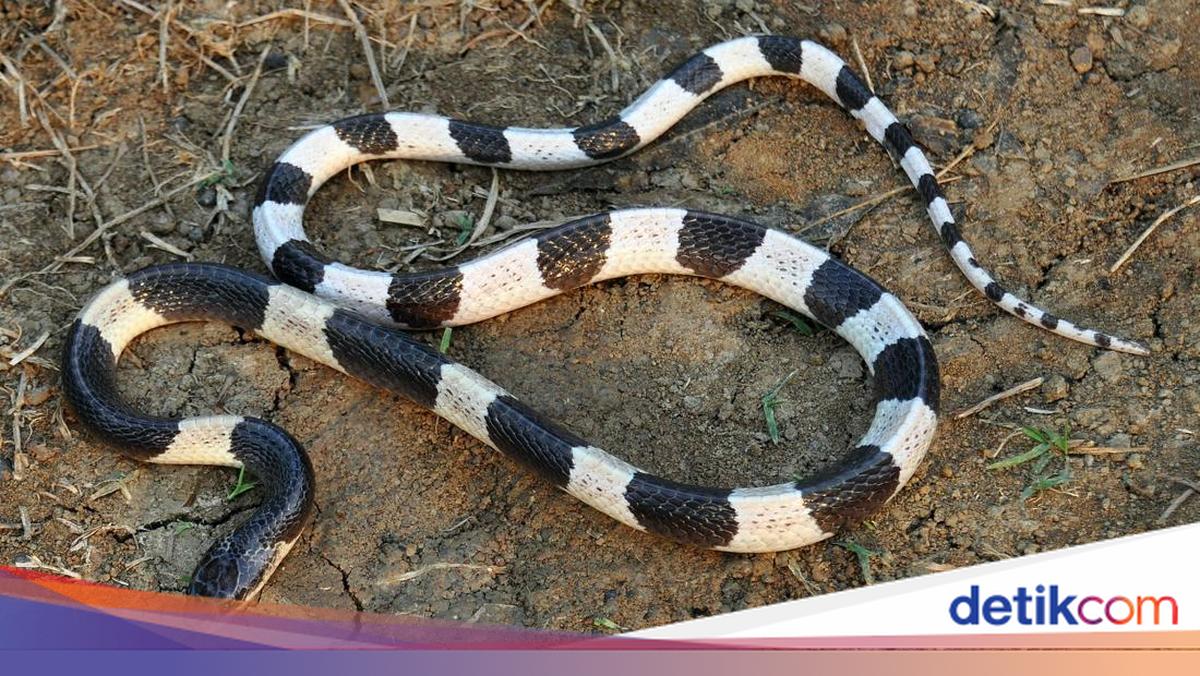
Weling snake attacks are not unusual in Java, including in Yogyakarta. Most recently, a resident of Karangsari, Pengkol, Nglipar, Gunungkidul, died after being bitten by a black-and-white snake.
According to Thai National Parks, the scientific name of the weling is Bungarus candidus. This reptile is also known by several other names, including the Malayan krait and blue krait. It usually inhabits damp forests or plantations, particularly those near water.
The weling has a similarly named relative, the welang. Its Latin name is Bungarus fasciatus, and its appearance resembles that of the weling, so the two are often mistaken for one another. Both are venomous and dangerous snakes.
Their venom is said to be more potent than that of several well-known snakes, such as the Javan spitting cobra. So, which has more potent venom, the weling or the welang? Here are some important facts.
Which Snake Has More Potent Venom?
A commonly used measure of snake venom potency is the median lethal dose, or LD50. The Canadian Centre for Occupational Health and Safety (CCOHS) defines LD50 as the amount of a substance that, when administered to a group of test animals, causes 50 per cent of them to die.
A scientific paper by Visith Sitprija and colleagues, titled “Characterization of Venomous Snakes of Thailand”, reports an LD50 for weling venom of 0.053–0.070 micrograms per gram of mouse body weight. What about the welang?
A paper in the journal Acta Tropica, “Comparative Venom Proteomics of Banded Krait (Bungarus fasciatus) from Five Geographical Locales: Correlation of Venom Lethality, Immunoreactivity, and Antivenom Neutralization”, by Yi Lin Hia and colleagues, gives an LD50 for welang venom of 0.45–2.55 micrograms per gram in mice.
These figures indicate that weling venom is considerably more dangerous than welang venom: the lower the LD50, the more lethal the substance, in this case venom.
It should be noted that LD50 figures for snakes—even those of the same species—can vary between scientific studies. Several factors affect the results, including the method used, the test animal and the route by which the venom is administered.
Effects of a Weling Snake Bite
According to the Indonesian Ministry of Health’s handbook on managing bites and stings from venomous animals, as well as poisoning from plants and fungi, the venom of both the weling and welang is neurotoxic. This means it attacks the nervous system.
A-Z Animals lists several symptoms that may occur after a weling bite, including nausea, vomiting, headaches, dizziness and diarrhoea. If the victim’s nerves stop functioning completely, paralysis and seizures may follow.
First Aid for a Weling Snake Bite
Given how dangerous weling venom is, first aid can be critical. Toxicology specialist Dr Tri Maharani said that applying hot water to the bite and sucking out the venom are not appropriate responses.
“Examples of incorrect first aid include tying the bitten area, pouring hot water over it, making it bleed, sucking out the venom, using herbal remedies or applying a black stone, among many others,” she told detikJogja on Friday, 27 June 2025.
So what should be done? Maharani said the first step is immobilisation, because weling venom spreads through the lymphatic system rather than the blood vessels.
“Venom spreads through the lymphatic system, not the blood vessels. Therefore, all first-aid methods that are taught but do not involve immobilisation are wrong and can lead to fatal outcomes,” said Maharani, head of the Indonesian Ministry of Health’s study group on bites from venomous animals and poisonous plants.
“In the local phase, antivenom is not needed. Immobilisation, supportive symptomatic treatment and observation for 24 to 48 hours are sufficient. In the systemic phase, antivenom can then be given according to the snake species and the effects of its venom,” she added.
Source: jawawa.id (https://jawawa.id/newsitem/which-is-more-potent-the-weling-or-welang-snakes-venom-the-effects-of-their-bites-1795495858)
Originally published by detikJogja (https://www.detik.com/jogja/berita/d-8767038/lebih-kuat-bisa-ular-weling-atau-welang-simak-efek-gigitannya), translated from Indonesian