
Which Indonesian Regions Will Enter the Rainy Season in November? Has El Niño Ended?
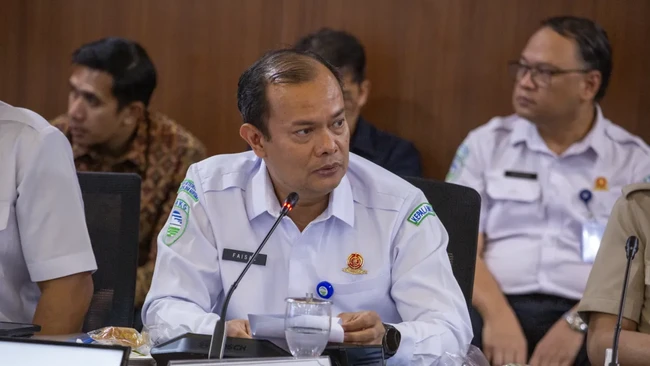
Jakarta, CNBC Indonesia – Meteorology, Climatology and Geophysics Agency (BMKG) chief Teuku Faisal Fathani has urged farmers to align planting calendars with conditions in each region and mitigate the risks posed by drought and heavy rainfall, which could disrupt agricultural production.
He made the remarks at a limited coordination meeting on food affairs at the Coordinating Ministry for Food in Jakarta on Monday (26 October 2026). Faisal said two climate conditions required joint attention: the continuing effects of El Niño and the gradual onset of the rainy season in various parts of Indonesia.
“Both conditions need to be taken into account when determining planting times, managing water availability and protecting food production. Climate information should provide the basis for decisions on planting times, water management and safeguarding production,” Faisal said, according to a BMKG statement on Wednesday (28 October 2026).
BMKG data show that the Nino 3.4 index reached +3.05°C over August–October 2026, indicating very strong El Niño conditions. Faisal added that this coincided with a positive Indian Ocean Dipole (IOD) reading of +0.63.
“This combination of climate conditions warrants caution because it could prolong the dry period and increase water shortages in some areas. BMKG predicts that El Niño will continue until early 2027,” he said.
Faisal also urged people to prepare for the effects of drought, particularly in areas experiencing prolonged periods without rain. BMKG recorded 1,707 locations with an exceptionally long number of consecutive days without rainfall. The situation highlights the importance of conserving water, especially in food-producing areas still affected by drought.
“At the same time, the arrival of the rainy season must be monitored because its onset and rainfall intensity vary from region to region. The timing of the rainy season therefore needs to be assessed by location, as a basis for adjusting agricultural activities,” he said.
When will Indonesia’s 2026/2027 rainy season begin?
Faisal said BMKG forecasts that most of Indonesia will enter the rainy season between November and December 2026.
According to BMKG’s updated 2026/2027 rainy-season forecast, released on 2 October 2026, most of the country is expected to enter the season in November 2026 (185 Rainfall Zones, or ZOM, covering 24.66% of Indonesia’s land area) and December 2026 (266 ZOM, covering 17.31%). The season is expected to begin in northern Sumatra before gradually reaching other parts of Indonesia.
“The rainy season is forecast to start later than usual across most of Indonesia (529 ZOM, covering 61.08% of the land area), while 26 ZOM (2.15%) are expected to begin at the usual time. Most of Indonesia (482 ZOM, covering 51.90% of the land area) is forecast to have a 2026/2027 rainy season shorter than normal,” BMKG said.
The following areas are forecast to enter the rainy season in November 2026:
Parts of Sumatra
Parts of Java
Parts of Kalimantan
Parts of Bali
Parts of West Nusa Tenggara
A small part of East Nusa Tenggara
Parts of Sulawesi
Parts of North Maluku
Parts of Maluku
Northern parts of West Papua
Parts of South Papua
The following areas are forecast to enter the rainy season in December 2026:
Parts of Lampung
Most of Java
Parts of South Kalimantan
Most of Bali
Most of West Nusa Tenggara
Most of East Nusa Tenggara
Most of Sulawesi
Parts of North Maluku
Parts of Maluku
Southern parts of South Papua
Short-term outlook
Faisal said rainfall from December 2026 to April 2027 is generally forecast to be moderate to very high, although conditions will vary between regions.
“This information can help local governments and agricultural businesses adjust planting calendars and prepare water-management infrastructure,” he said.
BMKG is also monitoring the short-term potential for rain-cloud development. From 25 October to 2 November 2026, significant cloud development is forecast across most of Sumatra, Java and Kalimantan, as well as North Maluku and parts of Sulawesi, Faisal said.
By contrast, Bali, West Nusa Tenggara and East Nusa Tenggara may remain relatively dry, he added.
Rainfall in areas where clouds are likely to develop could be used to replenish water reserves, including through weather modification operations if atmospheric conditions are suitable.
Faisal said such operations would be directed towards priority areas based on water needs and the likelihood of cloud development. They would also need to be adapted to atmospheric conditions to ensure support for water availability is appropriately targeted.
For 25–28 October 2026, BMKG also forecast moderate to heavy rain in parts of Riau, Jambi, South Sumatra, Banten, West Java and Central Java.
“Short-term forecasts should be used to manage planting, harvesting and water use in the field. Regions should continue to follow BMKG forecast updates and early warnings,” Faisal said.
In light of the climate conditions and weather forecasts, BMKG highlighted several measures to support national food security: adjusting planting calendars to regional seasonal forecasts; preparing irrigation networks and water reserves, particularly in areas still experiencing drought; and preparing for floods and inundation in food-producing areas at risk of heavy rainfall.
“BMKG’s updated weather and climate information should also be used continuously, alongside the optimisation of weather modification operations according to needs and atmospheric conditions,” he said.
“BMKG is ready to support the Coordinating Ministry for Food and other relevant ministries and agencies, so that climate information can inform operational decisions to protect food production,” Faisal said.
Source: jawawa.id (https://jawawa.id/newsitem/which-indonesian-regions-will-enter-the-rainy-season-in-november-has-el-nino-ended-1793184745)
Originally published by CNBC Indonesia (https://www.cnbcindonesia.com/news/20261028165142-4-780302/daftar-wilayah-ri-masuk-musim-hujan-bulan-november-el-nino-berakhir), translated from Indonesian