
Which Country Has the Most Starbucks Outlets in the World, and Where Does Indonesia Rank?
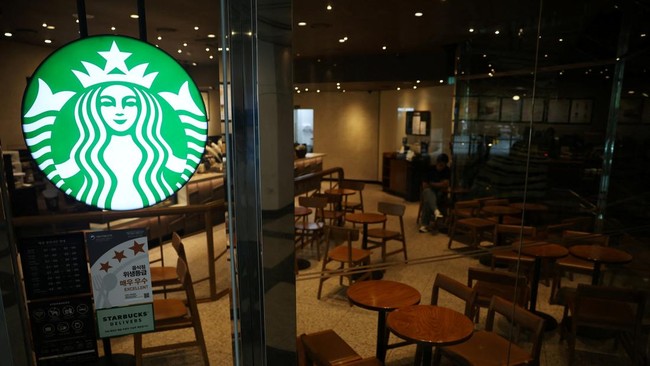
Starbucks’ logo is recognised around the world and its outlets are spread across nearly 90 countries, but its expansion has been uneven. While China has gained hundreds of new stores in two years, some markets—including Indonesia—have lost outlets.
As of the third quarter of fiscal 2026, Starbucks operated 41,304 stores worldwide.
The United States was its largest market, with 16,933 outlets, followed by China with 8,103. Together, the two countries account for around 61% of Starbucks’ global network.
Indonesia had 592 Starbucks outlets, down from 609 in the third quarter of fiscal 2024.
The figures show that, although Starbucks still has a large global network, its business is developing differently in each market.
The US and China dominate Starbucks’ network
The US ranked first, with 16,933 Starbucks outlets in the third quarter of fiscal 2026. China followed with 8,103, while South Korea and Japan had 2,174 and 2,138 outlets respectively. Canada completed the top five, with 1,438.
The size of the US and Chinese networks demonstrates Starbucks’ concentration in two major markets. Combined, they account for around 61% of all Starbucks outlets worldwide.
In Asia, South Korea and Japan also have much larger networks than many European markets individually.
Indonesia had 592 outlets, placing it behind Taiwan, with 614, but ahead of Thailand, with 574.
Are Starbucks outlets growing or shrinking?
Changes in outlet numbers over the past two years show contrasting expansion trends across countries.
China recorded the largest increase, adding 797 outlets, from 7,306 in the third quarter of fiscal 2024 to 8,103 in the same period of 2026.
That increase far outpaced the US, which added 203 outlets. South Korea and Japan also grew, by 237 and 190 outlets respectively.
Expansion has not taken place in every market, however. Malaysia saw the largest decline, losing 136 outlets, from 408 to 272. Saudi Arabia followed with a reduction of 59, while Canada’s total fell by 30.
In Indonesia, Starbucks’ outlet count declined by 17 over the same period, from 609 to 592.
These changes are occurring amid different pressures in each market. Starbucks has faced consumer boycotts linked to the Gaza conflict in Malaysia and several Middle Eastern markets, as well as competition from local coffee shops and lower-priced alternatives.
However, outlet closures cannot be attributed solely to boycotts, as decisions may also reflect corporate strategy and the performance of individual locations.
In North America, Starbucks also announced plans in September 2026 to close around 250 outlets considered underperforming.
Meanwhile, changes to store management are under way in Asia. At the end of September 2026, DFI Retail Group, a retailer operating several store chains in Asia, announced plans to acquire Maxim’s Caterers’ interest in the licensed Starbucks business across seven Asian markets. Maxim’s Caterers is a Hong Kong-based restaurant and catering company.
The markets are Thailand, Hong Kong, Singapore, Vietnam, Cambodia, Macau and Laos. The transaction is targeted for completion by the end of March 2027 and does not include Indonesia.
The company estimates that the Starbucks business will contribute US$600 million–US$650 million in revenue from April to December 2027. For 2028, its contribution is projected to reach about US$900 million, or Rp16.32 trillion (US$1 = Rp18,130), for the full year.
To support expansion, DFI is targeting compound annual revenue growth of 6%–7% from 2026 to 2029, while expanding its business network to at least 1,350 outlets.
The transition is not a global takeover of Starbucks, but a change in the management of licensed operations in specific markets.
Store numbers vary, but what about Starbucks’ profits?
Amid changes to its store network, Starbucks’ financial performance presents a more mixed picture.
In the third quarter of fiscal 2026, the company reported revenue of US$9.3 billion, down 1% from the same period a year earlier. However, global comparable-store sales grew by 7.9%, driven by increases in transactions and average spending.
A decline in revenue therefore does not necessarily mean that Starbucks is making a loss.
Changes to the operating model in China also affected reported revenue, as stores previously operated directly by the company were transferred to a licensed joint-venture model.
At the end of the quarter, 67% of Starbucks outlets were licensed, while the remaining 33% were operated directly by the company.
Under the licensed model, partners run outlets according to an agreement, while Starbucks receives revenue through a different mechanism from that used for directly operated stores.
Ultimately, expansion needs to be considered alongside sales growth, operating costs, local competition and network-management strategy. A higher outlet count does not necessarily guarantee greater profits, just as a decline in outlets does not always mean that a business is losing money.