
Which Chinese Car Brands Are Just Trading and Which Are Seriously Investing?
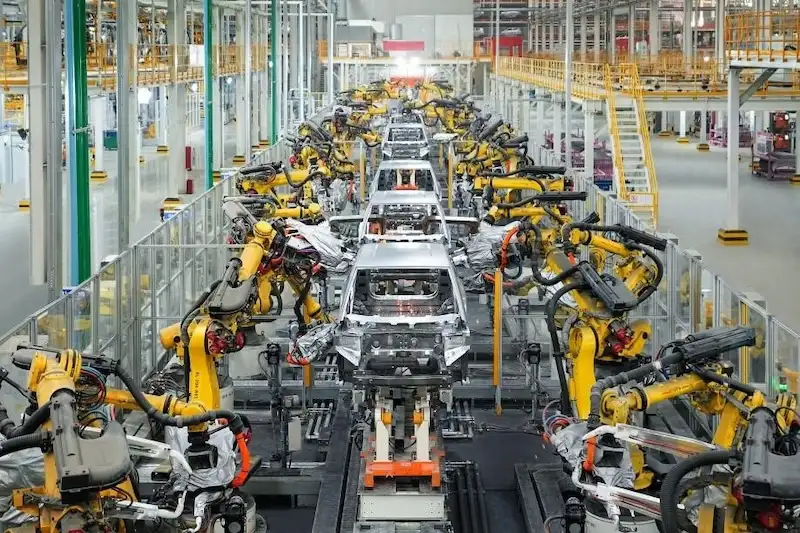
Competition among Chinese automotive brands in Indonesia is becoming increasingly dense. By the end of 2025, at least 16 Chinese brands were officially operating in the Indonesian market, ranging from BYD, Chery, and Wuling to relatively new entrants like Leapmotor. According to data from Gaikindo, these 16 brands consist of BYD, Chery, Wuling, Denza, AION, Geely, Jaecoo, GWM, FAW, DFSK, Jetour, BAIC, XPeng, Neta, Maxus, and Seres. This number is even higher than the 12 Japanese brands recorded.
However, the increase in the number of brands is not directly proportional to the amount of incoming investment. Some Chinese companies are building their own manufacturing facilities, while others choose to use production facilities owned by partners in Indonesia. This difference in approach is crucial because the presence of automotive brands is not solely about vehicle sales. Local production determines how much the domestic industry benefits from the investment, including employment, component suppliers, local content requirements (TKDN), and supply chain development opportunities.
Wuling and DFSK are among the earlier Chinese players to establish a manufacturing base in Indonesia. Wuling invested approximately USD 700 million to build a factory in Cikarang and began producing vehicles in 2017. Meanwhile, DFSK built a factory in Cikande, Serang, with an investment of around USD 150 million and a capacity of up to 50,000 units per year. Both companies took a different approach from merely testing the market through imported vehicle sales, positioning Indonesia as part of the company’s production base from the outset.
A similar pattern has since been followed by several other Chinese brands, albeit with different forms of investment. Chery, for example, has been carrying out local assembly through PT Handal Indonesia Motor since 2022. This production initially did not use Chery’s own independent factory. In January 2025, the government was still encouraging Chery to build its own manufacturing facilities to expand production capacity and export opportunities. A year later, Chery announced a cumulative investment commitment of more than IDR 5.2 trillion until 2030. The Ministry of Industry stated that this investment includes the development of production facilities through partnerships and the construction of independent factories. Minister of Industry Agus Gumiwang Kartasasmita assessed that this commitment demonstrates Chery’s seriousness in strengthening the national automotive industry.
Besides Chery, a number of Chinese brands have also chosen to start production through partner facilities. Geely began local production of the Geely EX5 in 2025 through cooperation with PT Handal Indonesia Motor. Neta previously targeted local assembly of the Neta V through Handal starting in the second quarter of 2024, while BAIC also launched its first locally assembled product in 2025 through the same facility. This local production has started to generate significant volumes; Jaecoo assembled more than 11,000 units locally up to April 2026, while Geely’s local production approached 5,000 units in the same period. Overall, local production of Chinese brands in January-April 2026 doubled compared to the same period the previous year.
Not all Chinese brands are building factories in Indonesia. The issue of Chinese brand investment cannot simply be divided between companies that own their own factories and those that only sell vehicles. There are companies that build their own manufacturing facilities, those that use partner company facilities, and those that develop production through facilities connected to local distributors. GWM, for instance, started local production of the Haval Jolion HEV in September 2024 through a KD facility in Wanaherang, and local production of the ORA 03 began in November 2025 with over 40 per cent TKDN. Maxus also stated that vehicles sold in Indonesia are assembled locally via CKD, while FAW Trucks saw the first unit from its KD plant in Indonesia roll off the production line in February 2026. Denza, a brand under BYD, has also targeted local production of the D9 in Indonesia once BYD’s Subang facility is operational. BYD itself is preparing a production facility with a capacity of up to 150,000 units per year, with an investment reportedly reaching IDR 11.2 trillion.
Amidst this competition, Leapmotor arrived with a relatively different approach. The Chinese electric vehicle brand only entered the Indonesian market in 2026, but from the very beginning, Leapmotor immediately started local assembly through PT National Assemblers in Purwakarta, West Java. This move was made simultaneously with Leapmotor’s debut at the Gaikindo Indonesia International Auto Show (GIIAS) 2026. Through a partnership with Stellantis and PT Indomobil National Distributor, Leapmotor vehicles marketed in Indonesia will be assembled locally at PT National Assemblers, a step Stellantis describes as part of its investment commitment.