
Where There Are Rice Fields, There Should Be Agricultural Extension Officers
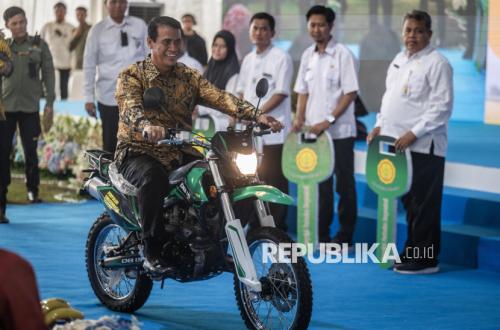
During a meeting with field agricultural extension officers (PPL), the Minister of Agriculture firmly stated that these officers are ‘food heroes’ and essential factors in achieving food self-sufficiency. Minister Amran noted that where there are rice fields, there must be agricultural extension officers, emphasising that the focus must now shift from achieving self-sufficiency to maintaining it and improving farmer welfare.
The statement ‘where there are rice fields, there are agricultural extension officers’ underscores their role as loyal partners working directly in the field. They serve as the government’s frontline in transferring technology, innovation, and modern agricultural practices to farmers. Their presence ensures that field issues, such as pest attacks or crop failures, are addressed immediately, acting as a shield for national food stability.
Beyond technical guidance, extension officers are tasked with transforming farmers from conventional labourers into independent, financially intelligent agribusiness actors. Their contribution to raising living standards focuses on several key areas:
First, technology transfer to improve production efficiency. By accelerating the adoption of superior seeds, balanced fertilisation, precision farming, and modern mechanisation, officers help farmers increase yields while reducing costs.
Second, education in financial literacy and agribusiness management. Officers are working to shift traditional mindsets, training farmers to accurately calculate capital versus profit, manage seasonal income, and utilise agricultural insurance to minimise risks.
Third, facilitating access to formal capital. To prevent smallholders from falling into debt traps with middlemen, extension officers act as facilitators connecting farmer groups with official financial institutions, such as state-owned banks, to access low-interest People’s Business Credit (KUR).
Fourth, the corporatisation of farmers and shortening market chains. By strengthening Farmer Group Unions (Gapoktan), officers encourage collective selling, which provides stronger bargaining power, cuts long supply chains, and connects harvests directly to industries or modern markets.
Fifth, digital transformation and information transparency. In the modern era, officers equip farmers with digital literacy through agricultural applications and social media, allowing them to monitor real-time market prices, consult on crop diseases instantly, and promote products online to wider regions.
This comprehensive role ensures that farmers do not merely work hard in the fields but also reap fair and sustainable economic rewards for their families. Consequently, agricultural extension officers are urged to remain active in the fields rather than merely working behind desks.