
Where is the Consolidation of State-Owned Logistics Enterprises Headed?
There are currently 1,077 companies in the SOE ecosystem. The consolidation targets merging them into just 200-300 companies by 2026.
SOE consolidation continues following the establishment of the Danantara Investment Management Agency. By the first half of 2026, the consolidation of SOEs in the logistics sector is targeted to be completed.
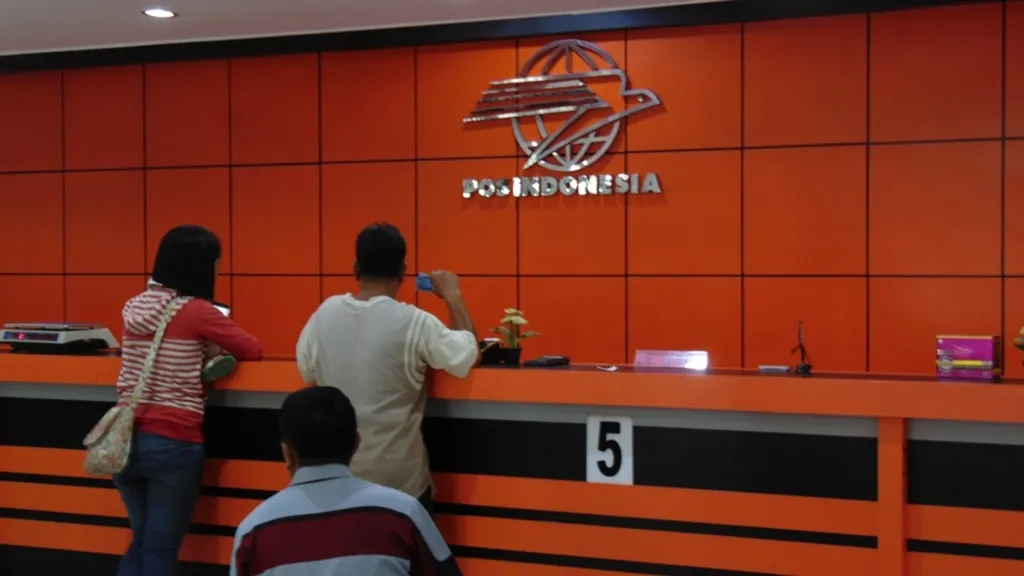
The consolidation process with the parent holding PT Pos Indonesia is still underway. Several state-owned enterprises (SOEs) operating in the logistics business are said to be included in the merger.
The SOEs in question include, for example, PT Multi Terminal Indonesia, PT Prima Indonesia Logistik, PT Sarana Bandar Logistik, PT KBN Prima Logistik, and PT Varia Usaha Dharma Segara.
There are also PT Krakatau Jasa Logistik, PT Berdikari Logistik Indonesia, PT Pupuk Indonesia Logistik, PT Semen Indonesia Logistik, PT Pelindo Terminal Petikemas, and PT KAI Logistik.
This consolidation is inseparable from the origins of the establishment of the Danantara Investment Management Agency, launched by President Prabowo Subianto on 24 February 2025. This institution, according to Deputy Chairman of the Danantara BPI Supervisory Board Muliaman D Hadad, consolidates all SOE assets to become a driver of economic growth.
To that end, BPI Danantara does not only carry out commercial investments. BPI Danantara also conducts strategic investments to encourage economic growth.
“The key is how effectively we consolidate SOEs and how productively we consolidate SOEs,” he said at a seminar titled “Prospects and Challenges of SOEs Amid the Global Geopolitical Crisis” organised by the Faculty of Economics and Business Management Institution of UI in Jakarta on Thursday (30/4/2026).
After gathering SOEs under BPI Danantara, President Prabowo requested that consolidation be carried out. The approximately 1,000 existing SOEs will be streamlined to around 300 SOEs only.
Logistics SOE consolidation becomes one of the streamlining clusters. PT Pos Indonesia has begun preparing itself by coordinating. PT Pos Indonesia Director Daud Joseph met with leaders of SOEs in the logistics sector in Bandung on 15 April 2026.
At that time, Daud stated that collaboration is key to creating efficient and competitive logistics. He also hopes that consolidation can encourage coordination among SOEs and their subsidiaries to become more solid, optimise each other’s capacities, improve distribution efficiency, and strengthen national logistics competitiveness.
What is concerning is that what is desired from the consolidation is not yet visible, seeming half-hearted.
Contacted separately, Director of Next Indonesia Center Herry Gunawan and Senior Advisor of the Faculty of Economics and Business Management Institution of UI Toto Pranoto both assessed that consolidation needs to be done for efficiency and more integrated and expansive SOE movements. “Consolidation is important and must be done for efficiency or secondly, done for expansion, increasing capacity,” said Herry on Wednesday (22/4/2026).
When similar state companies are separate and operate independently, he continued, performance becomes less optimal. Their operational areas, for example, are different and not interconnected. Some only “play” at the local, national, regional, and international levels. Consolidation will make capabilities and competitiveness stronger.
“What is concerning is that what is desired from the consolidation is not yet visible, seeming half-hearted. Is this consolidation due to political calculations or other considerations,” said Herry.
That question arises because the consolidation seems merely to combine all similar SOEs, both those with healthy finances and those that are not. As a result, healthy SOEs will be forced to “carry” unhealthy SOEs.
“If this happens, Danantara will nurture a virus and healthy SOEs could also become unhealthy,” said Herry.
Another indicator that raises the initial question is that not a single Pertamina subsidiary is being included in the merger. Yet, this oil and gas SOE has subsidiaries such as Pertamina International Shipping and Pertamina Patra Niaga.
Regarding this, Herry assessed that Danantara should review the fundamental objectives of this consolidation. Only then separate healthy and unhealthy companies while calculating their potential.
“From this identification, it can be determined what will be done—forming a national logistics system, sea logistics system, energy logistics system, food logistics system, or others. The parent holding should also be determined based on identifying the strongest and healthiest company,” he said.
Toto Pranoto, who is also a researcher at the SOE Research Group at LM FEB UI, assessed that consolidation is not a new idea, but the fundamental goal is important. “If checked, there is a desire to increase logistics competitiveness. Because, looking at the prices, logistics costs in Indonesia are relatively high, around 23% of GDP. Meanwhile, Malaysia and Singapore are around 13-15% only,” he said on Wednesday (22/4/2026).
This competitiveness improvement can be done by integrating all capital from upstream to downstream, starting from land, sea, air transportation services, warehousing, and delivery. Moreover, logistics SOEs each have their own potential. PT Pos has a network of post office branches throughout Indonesia, while other SOEs have delivery capacities with other modes.
PT Pos has a network of post office branches throughout Indonesia, while other SOEs have delivery capacities with other modes.
Toto predicts that consolidation could make logistics costs cheaper, easier, and more effective. What is concerning is that what is desired from the consolidation is not yet visible, seeming half-hearted.
“The latest financial reports show that Pos Indonesia alone has a declining trend. Pilog - Pupuk Indonesia Logistik and Semen Indonesia Logistik also have shrinking profit trends and some are starting to incur losses,” he said.
When unhealthy SOEs are merged, according to Toto, financially healthy SOEs could be dragged down. Therefore, in addition to financial due diligence, strengthening of the financial sector is also needed.