
Where is Iran's Leader Mojtaba Khamenei, and Why Has He Mysteriously Disappeared?
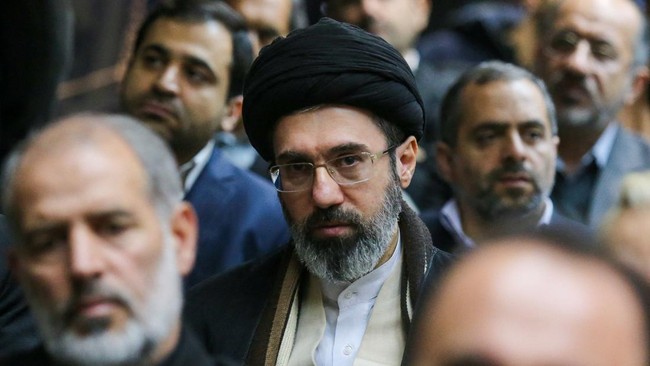
The Iranian public remains shrouded in uncertainty regarding the whereabouts of Supreme Leader Mojtaba Khamenei. Since his announcement as the successor to his father, Ayatollah Ali Khamenei, who was killed in a US and Israel attack in Tehran that ignited the Iran war, the 56-year-old figure has neither been seen nor heard directly by the Iranian people.
Citing a CNN International report on Wednesday (22/04/2026), Mojtaba’s absence has come under intense scrutiny amid a conflict threatening the regime’s very existence. Instead of physical appearances, statements attributed to the man are merely read out on television or utilise artificial intelligence-generated videos, fuelling speculation that he is incapacitated or abroad.
This situation starkly contrasts with his late father, Ayatollah Ali Khamenei, who for decades served as Iran’s vocal face. Observers assess that the current system is deliberately leveraging Mojtaba’s prominent name as a political shield to protect officials engaged in negotiations with the West.
Ali Vaez, Director of the Iran Project at the International Crisis Group, provided his analysis of the situation. According to Vaez, Mojtaba is likely not in a condition to make independent strategic decisions.
“It appears that Mojtaba is not in a state where he can truly make critical decisions or manage the minutiae of talks, but the system uses him to secure final approval for broad, high-level decisions rather than negotiation tactics,” said Vaez.
Vaez further added that the deliberate emphasis on Mojtaba’s involvement is a tactic to quell internal government criticism. By invoking the Supreme Leader’s name, negotiators feel more secure from political attacks.
“The system deliberately highlights Mojtaba’s involvement because it provides a protective shield against internal criticism, unlike his father who routinely appeared and commented on negotiation status. Mojtaba is currently absent from real actions, so linking views to him offers good protection for Iranian negotiators against criticism,” he continued.
The US Closely Monitors
On the other hand, these developments are being closely monitored by the United States. President Donald Trump claims that Iran has undergone a drastic regime change since Ali Khamenei’s death and is now dealing with a more cooperative delegation.
Trump expressed his views on the current Iranian negotiators in a statement last month. He feels optimistic about the shift in the character of those in power in Tehran.
“We are dealing with people different from anyone anyone else has ever dealt with before,” Trump stated.
However, uncertainty over who holds ultimate control continues to hinder negotiations. Danny Citrinowicz, an Iran expert at the Institute for National Security Studies in Israel, highlighted via a post on social media platform X that Iran’s political system has become far more complex and rigid.
“If negotiations were difficult before the conflict, they are now far more complex. Iran faces a more decentralised, hardline, and ideologically rigid system, one that interprets its resilience in the conflict as a form of divine victory,” Citrinowicz wrote.
The on-the-ground situation shows Iranian ministers caught between domestic pressures and the needs of foreign diplomacy. Hamidreza Azizi, a guest researcher at the German Institute for International and Security Affairs, assesses that Iranian officials are currently in a highly dilemmatic position to maintain stability.
“Managing this is very difficult; it is a real sign of dilemma. They need to walk a tightrope in balancing all those domestic and external pressures,” said Azizi.
Meanwhile, Ali Vaez reaffirmed that Mojtaba’s hidden position is highly useful for Iran’s veteran politicians to legitimise their actions. As long as he does not appear physically, officials are free to use his name for diplomatic purposes.
“Linking views to him even if he does not always agree provides good protection for Iranian negotiators against criticism. There is no rebuttal from a man absent from real actions,” Vaez concluded.