
Where Have the Guardians of Communication Gone?
Imagine a day when the global internet network suddenly collapses. Mobile towers fall, your phone screen goes dark, and undersea fibre optic cables are paralysed by a major disaster. Amid this terrifying isolation, our entire modern system is instantly thrown back into the Dark Ages. Yet, from behind the darkness, a silent miracle occurs.
Faintly, the tapping of Morse code and the hiss of human voices penetrate the storm, crossing oceans to coordinate life-saving rescues. They are not corporate employees or government soldiers, but a mysterious group of volunteers who have mastered atmospheric physics: Amateur Radio Operators.
However, a great puzzle is sweeping the world. A strange silence is creeping through the airwaves. Where have the hundreds of thousands of ‘guardians of the frequency’ gone?
A Historical Plot Twist and a Mirror in the Sky
In the early 20th century, following the sinking of the Titanic in 1912, the United States Congress issued strict regulations that banished radio hobbyists to frequencies above 1.5 MHz—the shortwave region—which was then dismissed as ‘useless junk’ by professional engineers. Yet, history recorded the greatest plot twist: these hobbyists proved the professors completely wrong!
They discovered that the Earth’s ionosphere, an electrically charged layer at an altitude of 60 kilometres, acts as a giant mirror. Shortwave radio signals could bounce across thousands of miles using only low transmission power. This community grew into a ‘keystone species’ in the global communication ecosystem. During its golden age in the early 2000s, the United States alone recorded more than 700,000 active licensed operators. These were people who memorised frequency charts like sports statistics and built their own radio equipment from scratch.
The Global Silent Crisis: The Ageing of the Frequency Guardians
Today, infographics show a worrying trend in the Western world and East Asia. The average age of global amateur radio operators has now reached 63 to 68 years. Less than 10 per cent of active operators are under the age of 40.
In Japan, known as a bastion of electronics craftsmanship and home to giant manufacturers like Yaesu, Icom, and Kenwood, the situation is even more severe. Japan has lost more than 600,000 licensed operators in just the last two decades. Substantial costs for HF equipment, complex examinations, a sometimes rigid seniority culture, and new bureaucratic fees imposed by regulatory bodies like the FCC’s $35 charge in 2022 have all contributed to slowing the influx of younger generations.
Even as digital technology attempts to inject new life through automatic protocols like FT8—created by Nobel laureate Joe Taylor, capable of extracting digital signals 20 dB below atmospheric noise—a cultural debate has emerged. For purists of conventional radio craftsmanship, computer-driven automatic communication feels ‘soulless’. There is something that computer algorithms cannot replace: human knowledge under pressure.
Indonesia: A Fortress of Defence on the Ring of Fire
However, the story takes a different turn when we look at our homeland. While the Western world and Japan grow quiet due to demographic ageing, Indonesia is showing remarkable resilience. Under the auspices of ORARI (Organisasi Amatir Radio Indonesia) and RAPI (Radio Antar Penduduk Indonesia), the nation maintains a solid line of approximately 110,000 to 130,000 active licensed frequency users.
Why is Indonesia different? The answer lies in our geography, perched atop the Pacific Ring of Fire. In Indonesia, amateur radio is not merely a technical hobby in a basement; it is a real lifeline for safety. Through units like ORARI’s CORE (Crisis Emergency Operation) and RAPI’s SATGAS, local operators are the frontline when earthquakes, tsunamis, or volcanic eruptions paralyse commercial mobile operators. When disaster strikes, they are the first to set up emergency stations powered by batteries or generators to connect evacuation communications.
Our bureaucracy has also transformed into a catalyst. Through the modern computer-based UNAR CAT (Ujian Negara Amatir Radio) system from the Directorate General of Resources and Equipment of Post and Information Technology (SDPPI) under the Ministry of Communication and Digital Affairs, access to an Amateur Radio Licence (IAR) has become highly transparent, fast, and affordable, with non-tax state revenue (PNBP) fees accessible to the general public. Indonesia has even reached for the skies with the independent equatorial satellite LAPAN-A2/ORARI (IO-86), which actively connects inter-island communications via amateur-built satellite technology.
The Inheritance Chain Nearly Broken
Although the number of operators in Indonesia is relatively stable thanks to easy exam access and the flood of cheap Handy Talkie (HT) devices in online marketplaces, we still face the same essential challenge: substantive regeneration.
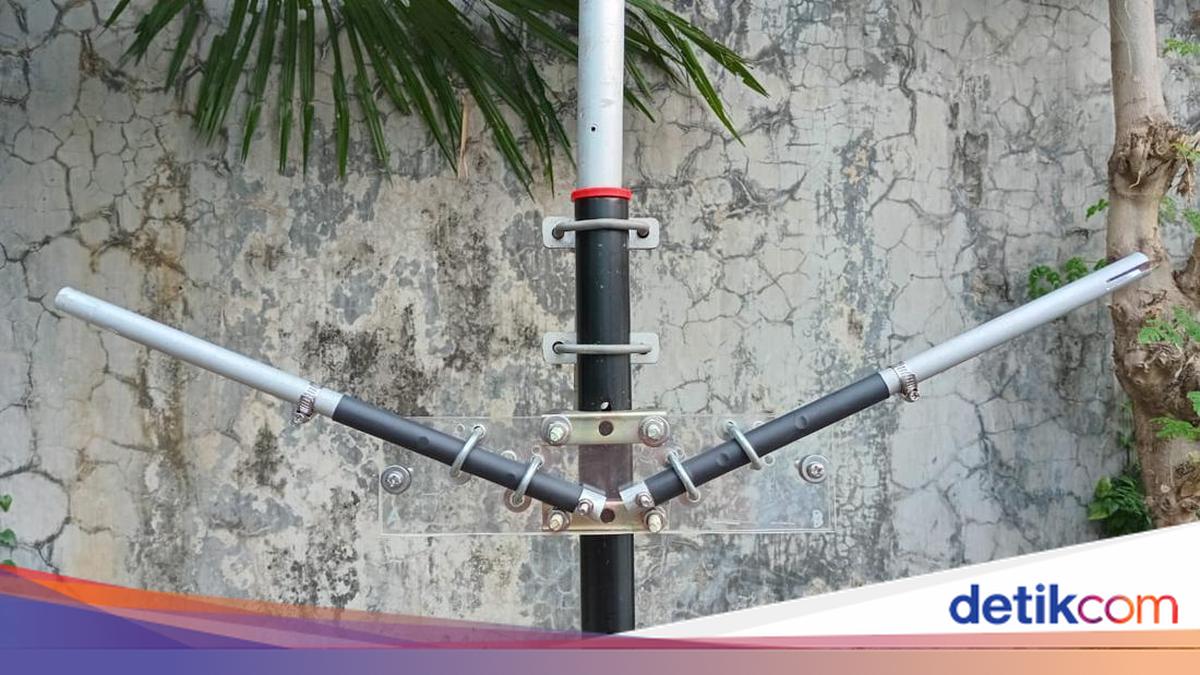
Many newcomers entering the hobby today tend to become instant, plug-and-play users. Meanwhile, the true expertise of homebrewing—the art of building your own antennas (such as a Delta Loop or Yagi), calculating loading coil windings, or assembling tuner components—remains in the hands of senior operators.
The greatest mystery behind the global decline of amateur radio is not the availability of equipment. Today, a $25 USB dongle and a laptop can turn your room into a sophisticated station capable of receiving weather satellite and maritime navigation signals.
The real problem lies in the transfer of human knowledge that is not written in any manual. It is the knowledge of how to remain calm when emergency traffic peaks, which frequencies to guard, and how to format life-saving messages when the entire world is plunged into darkness.
Out there, beyond the roar of the city and thousands of internet networks, there must be a 25-year-old who would be mesmerised if they knew they could touch the other side of the Earth.