
Where Does the Money for the Free Nutritious Meals Programme Circulate?
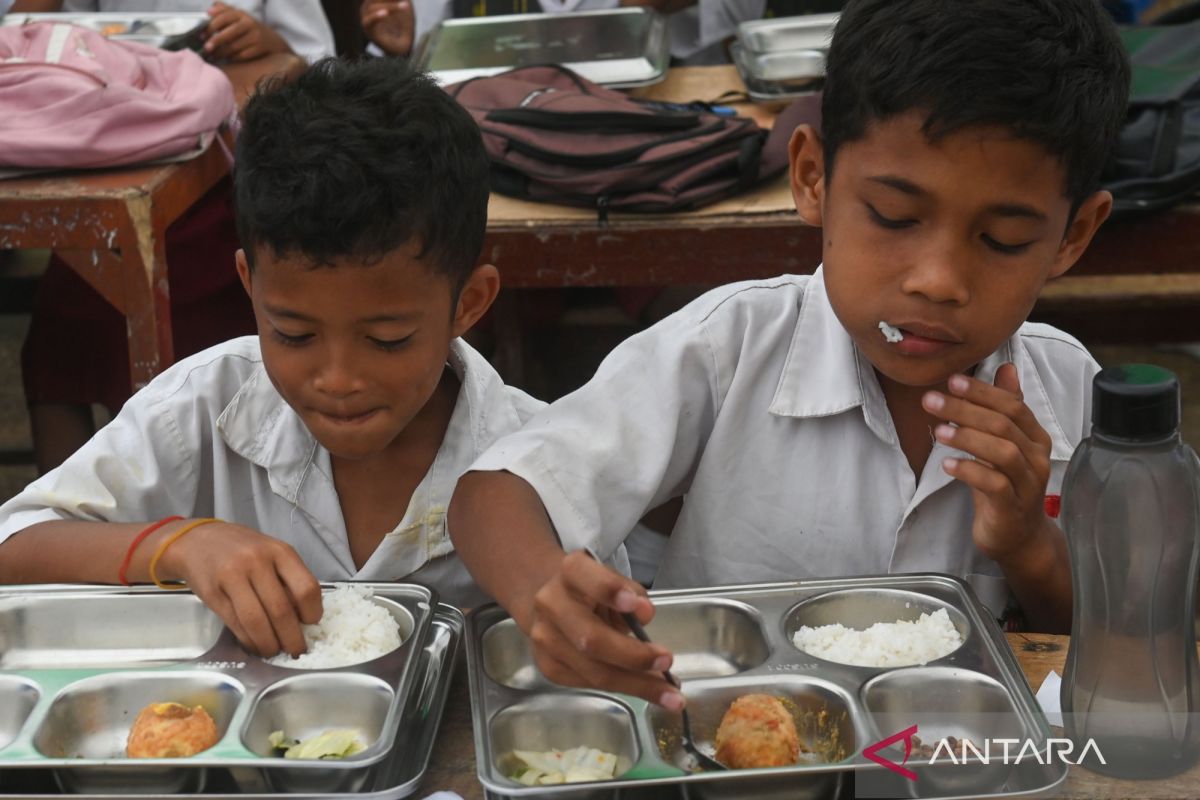
Jakarta (ANTARA) – In Blora, some of the catfish served in nutritious meals comes from biofloc ponds run by the Kamolan Merah Putih Village Cooperative. A pupil sees only the side dish. Behind it, however, is an unseen process: fingerlings are stocked in stages so the harvest coincides with the kitchen’s needs, then the fish are cleaned and sold for Rp25,000 per kilogram to four Nutrition Fulfilment Service Units (SPPGs). The transaction connects programme spending with production in the village.
A plate of lunch is the endpoint of a larger cycle. The question is how much of the money spent on that meal stays in the village before moving on.
In a report on two years of government on 20 October 2026, Cabinet Secretary Teddy Indra Wijaya said the Free Nutritious Meals (MBG) programme had reached 62 million beneficiaries and Free Health Checks (CKG) had provided 108 million services. The figures indicate the programmes’ reach. Behind them are flows of spending on food, distribution and services reaching communities across the country. Where that spending ends up determines what remains in each area.
The establishment of Merah Putih Village/Urban Ward Cooperatives (KDKMP) was accelerated through Presidential Instruction No. 9 of 2025. On 21 July 2025, President Prabowo Subianto launched the institutional framework for 80,081 cooperatives. KDKMPs are designed to serve as hubs where these flows meet.
National Nutrition Agency Regulation No. 10 of 2026 provides for cooperatives, Village-Owned Enterprises (BUMDes) and local businesses to be involved as suppliers to MBG kitchens. The opportunity depends on meeting requirements for quality and food safety, as well as on offering competitive prices and maintaining a reliable supply.
Other programmes converge at this hub. Roads and irrigation support production and deliveries. The government is discussing primary clinics and pharmacies as business units for KDKMPs. Clinics that meet the requirements to operate as first-level healthcare facilities can apply to work with BPJS Kesehatan, Indonesia’s national health insurance agency.
The need for these services is clear on the ground. On 10–11 August 2026, the writing team documented a telemedicine-assisted health screening trial through BUMDes Tatapakan in Indragiri Village, Rancabali District, Bandung Regency. An elderly resident described the cost of travelling each time they sought treatment – money that also leaves the village.