
Where Does the Free Meal Programme’s Governance Fall Short?
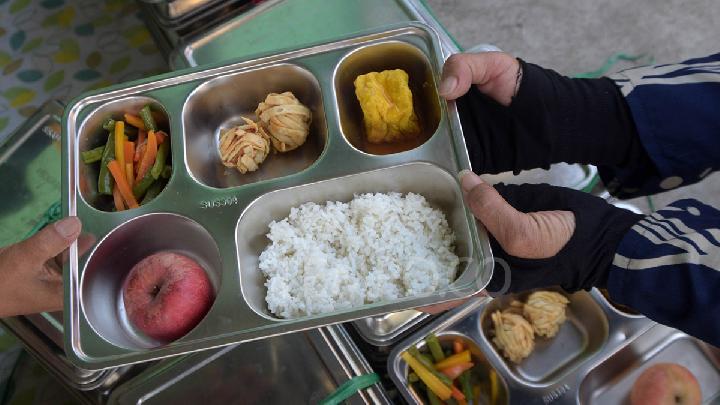
Where Does the Free Meal Program’s Governance Fall Short?
Reporter
October 8, 2026 | 05:41 pm
TEMPO.CO, Jakarta - Indonesia’s National Commission on Human Rights (Komnas HAM) has identified various gaps and weaknesses in the governance and implementation design of the Free Nutritious Meal Program (MBG). These findings were presented at a press conference on Thursday, October 8, 2026, at the Komnas HAM Office in Jakarta, covering the study and observations regarding the implementation of MBG.
Atnike Nova Sigiro, Coordinator of the Sub-commission for Human Rights Promotion at Komnas HAM, explained that the study was conducted to strengthen factual analysis of case studies and provide the government with recommendations for policy improvement.
“In its implementation, we found that various gaps still exist, both in governance and the design of the MBG,” Atnike said, as quoted by the Komnas HAM YouTube channel.
Atnike mentioned that these gaps risk shifting the program’s original objectives. MBG was initially designed to fulfill human rights, such as the right to food and children’s rights. However, it could raise issues related to the right to health.
“The study results indicate that the implementation of MBG still faces governance challenges, such as weak cross-sector coordination, inaccuracies in beneficiary data, food security and sanitation issues, and protection of workers’ rights,” she added.
Repeated Poisoning Cases and Sanitation Issues
The strategic program, with a budget allocation of Rp255.58 trillion from the 2026 state budget, targets developing 35,000 to 40,000 Nutritional Fulfillment Service Units (SPPG/MBG kitchens). However, underlying problems overshadow its implementation, including mass food poisoning, reallocating portions of the education budget, and determining kitchen locations that do not align with stunting levels.
Coordinator of the Sub-commission on Human Rights Enforcement at Komnas HAM, Pramono Ubaid Tanthowi, highlighted the increasing occurrences of food poisoning cases. According to data from the Ministry of Health dated May 12, 2026, 449 Extraordinary Events (KLB) of food poisoning affecting 38,000 people across 36 provinces and 221 districts/cities.
Pramono expressed disappointment that the government did not make optimal use of the program’s temporary halt during the school holiday in June and July.
“This shows that the break in providing MBG was not used to conduct systemic evaluation and improvement,” Pramono said.
In addition to poisoning cases, Komnas HAM noted that 43.12 percent of SPPGs had not obtained a Sanitary Hygiene Feasibility Certificate as of May 2026. Other issues include a lack of waste processing facilities and a slow emergency response mechanism.
Threat of Criminalization and Vulnerability of Kitchen Workers
Komnas HAM also emphasized the potential criminalization of public criticism. This is evidenced by police reports against parents who criticized food menus on social media, as well as digital attacks involving the dissemination of personal data (doxxing) against activists.
On the other hand, around 1.21 million kitchen workers are facing vulnerabilities. Most are volunteers who lack social security and job protection guarantees.
From a governance perspective, Commissioner for Research and Development at Komnas HAM, Uli Parulian Sihombing, assessed that the MBG implementation structure is highly centralized and barely involves local governments. According to him, the National Nutrition Agency (BGN) plays a dominant role in planning, implementation, and supervision.
“BGN dominates the planning, implementation, and site designation stages, making nutrition standard supervision less transparent and accountable,” said Uli.
Uli emphasized that BGN’s unilateral designation of SPPG kitchen locations ignores regional inequality data. Consequently, regions with a high prevalence of stunting, such as East Nusa Tenggara and the Papua Mountains, have a very small number of kitchens.
In light of these findings, Komnas HAM urges the government to conduct a comprehensive evaluation immediately so the MBG project can proceed transparently, accountably, and with a human rights perspective.
Read: Komnas HAM Shares Six Measures to Improve Free Meal Program
Click here to get the latest news updates from Tempo on Google News