
When Will Middlemen Love Farmers?
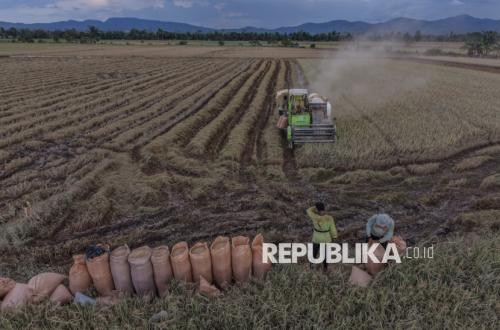
By definition, a middleman (tengkulak) is an intermediary trader who buys agricultural produce (such as rice, vegetables, or fruit) directly from the primary producer (farmer) for resale to end consumers, wholesalers, or factories. Their main roles and functions are, first, as collectors and distributors, facilitating the distribution of harvests from villages to cities. Second, as providers of capital, often lending money or production inputs at the start of the planting season. Third, as price setters, wielding the power to set purchase prices that are frequently lower than market prices, especially if farmers have limited market access or are in debt.
The impact on farmers’ lives can be seen from two sides. The positive side is that middlemen help farmers obtain cash quickly and bear logistical risks. The negative side is that they can trigger price monopolies and trap farmers in debt cycles, with harvest profits disproportionate to the capital outlay. Accordingly, middlemen are often defined as intermediary traders who buy agricultural produce from farmers or first owners, typically securing a purchase price lower than the market rate. Their presence is also intended as someone tasked with buying, distributing, and trading agricultural and other produce by travelling to regions to source and collect these goods.
It is also important to understand that the middleman’s involvement is not solely as a buyer; they also play a crucial role as a capital provider for farmers. In the eyes of farmers, the middleman is seen as a ‘saviour deity’ during times of hardship. Many farmers seek help from middlemen when a family member falls ill and requires immediate funds. This is why the middleman often becomes a ‘friend’ to the farmer. It would be a grave mistake to ‘antagonise’ the middleman.
Despite the various actions of middlemen who frequently ‘manipulate’ prices at the farm level, we understand that at certain times, the middleman’s presence is essential for farmers. A deep-seated understanding between farmers and middlemen has been built over a long time, creating a mutually reinforcing emotional relationship. For most rural communities, the middleman’s presence in farming life holds a quite strategic role, even if their behaviour is occasionally irritating. How could it not be? During the main harvest season, for instance, these middlemen are very keen on suppressing farmers’ selling prices, causing many farmers to suffer losses. Yet, we also cannot deny the middleman’s role in helping farmers when they suddenly need funds.
One reason farmers prefer dealing with middlemen over other parties like banks or cooperatives is the simple, fast, and straightforward procedure. The main rice harvest season has now ended. On average, rice farmers in our country sell their harvest during the main season in the form of harvested dry grain (GKP). They rarely process it first to sell as milled dry grain (GKG) or rice. Experience shows that during the harvest season, grain and rice prices tend to plummet. Farmers are sometimes disappointed with the government’s attitude. When prices fall and cannot cover the farmers’ production costs, the government is strangely almost never present amidst the farmers’ difficulties. The government appears powerless against market forces.
Recently, rice farmers in Tanah Merdeka completed their main harvest. Grain prices were truly profitable for farmers. With a Government Purchase Price (HPP) of Rp 6,500 per kg, it clearly provided a reasonable profit for farmers. The question is, during the main harvest, can the government guarantee that grain prices will not collapse, even though the HPP has been set? Or will the government once again be powerless against individuals who are keen on manipulating grain and rice prices during the main harvest? Where is the power and authority to defend and protect farmers?
The state or government should be present amidst issues concerning the fate and lives of farmers. The government also understands why farmers are happy when grain prices exceed Rp 7,000 per kg. Thus, how disappointed farmers would be if, during the main harvest, the government cannot maintain and uphold the grain prices that bring farmers joy. In other words, if the government wants to help and protect rice farmers so they can gradually escape poverty, then the government’s presence is most eagerly awaited during the main harvest. The issue is whether the government has the political will and action to implement this or not.
If the government lacks the ability to control grain and rice prices that clearly make farmers happy, then as the ‘ruler’, it should produce regulations that strengthen the friendship between farmers and middlemen. Create rules that foster an atmosphere where middlemen love farmers and farmers respect middlemen. The friendship between middlemen and farmers must be packaged properly and responsibly. The impression that middlemen merely reap profits should be shifted towards a language of togetherness. This means middlemen need to share profits with farmers. If the Japanese have ‘sogo shosha’, our nation should be able to implement the culture of ‘sisih asah, silih asih, silih asuh, and silih wawangi’. The emotional bond that has long existed between middlemen/collectors and farmers should not only be driven by social values but also developed into economic values. Middlemen need to teach farmers so they can become ‘farmer-entrepreneurs’.