
When Water Becomes Scarce, It Is Time to Learn to Save
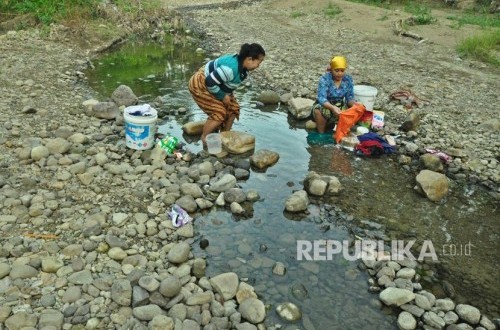
Indonesia is often called a water-rich country. This is because rain falls almost throughout the year, rivers flow, and most of Indonesia’s territory is surrounded by sea. However, that wealth does not automatically mean every community always has sufficient water. When the dry season arrives, water problems quickly turn into social problems. Wells dry up, river flows decline, rice fields lack water, household needs increase, and some communities even have to wait for clean water assistance.
The Meteorology, Climatology and Geophysics Agency (BMKG) predicts that most parts of Indonesia will experience a drier dry season than usual. The June 2026 update shows that 482 Seasonal Zones, or around 56.18 percent of Indonesia’s land area, are predicted to have below-normal rainfall. The peak of the dry season is expected to occur in August, while nearly half of the country is predicted to experience a longer dry season duration than normal. By the end of July 2026, BMKG even reported that 509 Seasonal Zones, or around 72.8 percent of Indonesia’s territory, had entered the dry season. In a number of locations, days without rain have reached more than 60 days.
The simple question is whether the public already knows what to do when water becomes limited. No less important, does the public know what should not be done?
Drought problems are often viewed solely as natural problems. When rain does not fall, people blame the season. When wells dry up, it is said that the dry season is indeed long. In fact, drought is a problem that is also related to how humans manage water resources. The Ministry of Public Works reminds that drought can be worsened by limited water sources, inefficient water use, and the reduction of forest areas and catchment areas. The public needs to conserve water, optimise water storage, maintain water resource networks, and protect water sources.
This is where the problem arises. Information about water has not always turned into practical knowledge, and knowledge has not always turned into behaviour. The public may know that water must be saved. But how should it be saved? How much water should be used for bathing? Should the tap be left running when brushing teeth? What about water used for washing vegetables? Can it be reused? What should be done with rainwater? How should water be used in schools, offices, mosques, markets and business premises?
These simple questions are important because behavioural change always begins with daily habits. The Minister of Public Works and Public Housing regulation on the use of water resources has even provided examples of public campaign materials: use water sufficiently, turn off taps immediately, reuse used water for certain needs, and collect rainwater. This means the problem is not solely a lack of knowledge. The problem is that the message has not been strong enough, consistent, simple and continuously present in people’s lives.
Source: jawawa.id (https://jawawa.id/newsitem/when-water-becomes-scarce-it-is-time-to-learn-to-save-1787817151)
Originally published by Republika (https://analisis.republika.co.id/berita/tkf2oi368/ketika-air-mulai-langka-saatnya-kita-belajar-hemat), translated from Indonesian