
When Waste is Transformed into a Substitute for LPG, Strong Enough to Cook Rendang for Hours
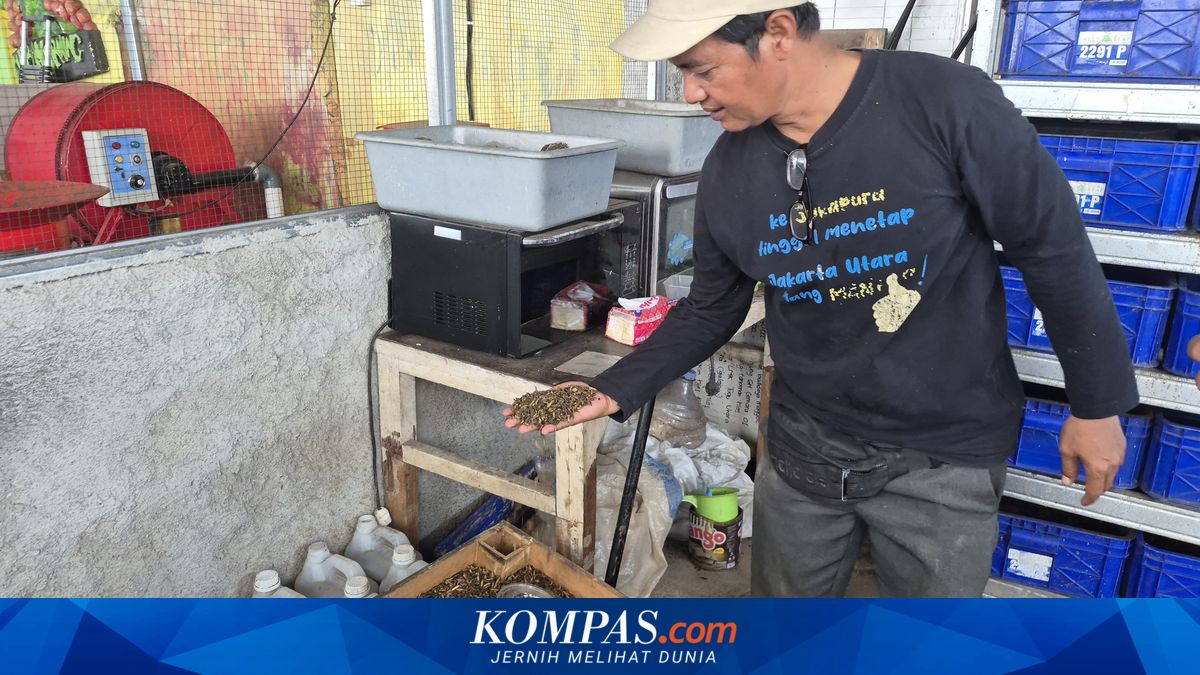
In a narrow alley just wide enough for two motorbikes in RW 01, Tugu Utara Ward, Koja Subdistrict, North Jakarta, the sound of a waste processing machine can be heard almost incessantly.
Since 2018, most residents in this area no longer view waste as something disgusting but as something that can be processed into something useful.
Waste from households is sorted by residents according to type. Plastic waste is collected, while organic waste is deposited at the Cemara Waste Bank in the area.
Every day, the Cemara Waste Bank can process around 200 to 500 kilograms (kg) of organic waste.
This waste comes from residents’ homes in the 10 RTs in RW 1, as well as from other sectors such as Koja Market, restaurants, and the Nutrition Fulfilment Service Unit (SPPG).
Waste processing at this location is done in two ways: using machines and maggot livestock.
Maggots are used to break down 80 kg to 100 kg of organic waste per day. Meanwhile, the machine’s capacity is around 500 kg to one tonne per day.
Starting from animal feed for ducks, chickens, goats, and fish. In addition, the Cemara Waste Bank also processes organic waste into fertiliser, eco-enzyme, and compost.
“We also make biomass pellets as a substitute for LPG gas,” said Dani when interviewed by Kompas.com at the location on Wednesday (13/5/2026).
The biomass pellets, which are an alternative material to replace LPG, are made from hard-textured organic waste, such as wood, plywood, branches, leaves, or waste that is difficult to decompose and often rejected by landfills.
The processing is also straightforward: wood and branch waste is first shredded with a machine.
After shredding, it goes through a drying process to reduce moisture content.
Once dry, the shredded waste is moulded into biomass pellets, then dried again before being marketed.
“The process takes about two to three days. Production capacity can reach 500 kg to 1.5 tonnes,” he added.
This is because the use of biomass pellets requires a special stove that uses a fire igniter, so it is only used by local residents for now.
The Cemara Waste Bank is developing a simpler stove for using biomass pellet fuel, so that it is easier for the public to use.
This alternative fuel is also frequently used by residents when cooking for large events in the RW neighbourhood.