
When War Subsides, Green Energy Consistency Must Be Safeguarded
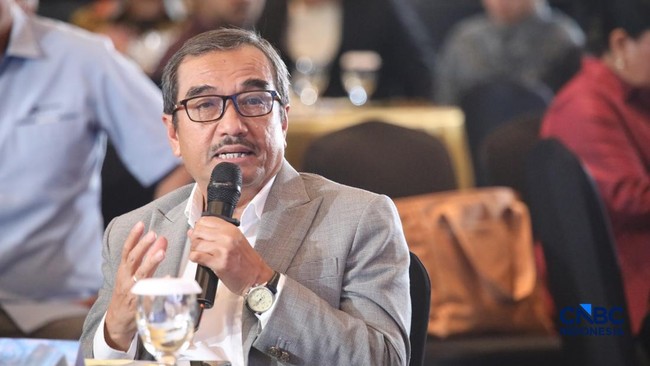
Mohamad Fadhil Hasan, a member of the National Energy Council (DEN) for the 2026-2030 period, has warned that consistency in implementing energy transition programmes remains a primary challenge, particularly as global geopolitical conflicts begin to subside.
He stated that the acceleration of new and renewable energy (EBT) development must not halt simply because the pressures resulting from war have decreased. “Therefore, we are encouraging all parties to remain consistent in executing this energy transition programme, even as conditions return to normal. I believe that even though things have normalised, uncertainty remains very high for the future,” he said during the CNBC Indonesia Energy Forum in Jakarta.
He cited the views of American geopolitical analyst Ian Bremmer, who suggested that the only positive impact of the war in the Middle East is the increased speed at which various countries are implementing their energy transition programmes. “According to Ian Bremmer, the only positive thing happening due to the war in the Middle East is that all countries are now accelerating their new and renewable energy programmes,” he noted.
According to Hasan, Indonesia must also utilise this momentum to accelerate the diversification of national energy sources to avoid over-reliance on a single type of energy. “This is the momentum to accelerate EBT. This is the momentum to accelerate the EBT programme,” he added.
Fadhil revealed that the government has prepared several strategic programmes to support the acceleration of the energy transition. These include the construction of solar power plants (PLTS) with a capacity of 100 gigawatts (GW), a programme to convert up to 120 million motorcycles into electric vehicles, and the implementation of mandatory B50 biodiesel.