
When Villages and Public Transport Become Indonesia's Economic Stronghold
Today the world is not in good shape. Geopolitical tensions in the Middle East and Eastern Europe continue to deepen. Global inflation still haunts many countries.
Energy and food prices rise and fall without certainty. On social media, various speculation about the rupiah’s weakness has rekindled old trauma of Indonesia’s Monetary Crisis of 1998.
For generations that lived through that period, the 1998 crisis is not merely a historical note. It was a time when the economy collapsed in a short period.
The rupiah exchange rate, which previously hovered around Rp 2,400 per US dollar, dropped to as low as Rp 17,000.
Large companies collapsed because they were burdened by dollar debts. Banks collapsed. Unemployment surged. Purchasing power plummeted.
Yet in the midst of that chaos, one important fact that is often forgotten: villages became the last bastion of the national economy.
When the financial sector in big cities faltered, the rural economy kept moving. Farmers continued to plant.
Fishermen continued to fish. Traditional markets stayed alive. Rural communities continued to transact in rupiah.
This fact remains relevant in the global situation in 2026.
The message is clear: Indonesia must not continue to rely on foreign powers to shape its destiny. The foundation of the national economy must be built on domestic strength.
The concept of berdikari (self-reliance) does not mean closing off from the outside world or being anti-foreign investment.
Berdikari means having economic resilience of its own so that when global storms come, Indonesia does not instantly collapse.
In today’s context, the path of berdikari is built through strengthening cooperatives and MSMEs, improving human resources, empowering villages, enforcing the law against economic mafias, and building public transport capable of linking the entire chain of the national economy.
Unfortunately, the last aspect is often neglected. Many speak about food security, cooperatives, and MSMEs, but forget that all of this can only work if the mobility of people and goods runs smoothly.
Villages may produce goods, but without good transport, production will not reach markets at low cost.
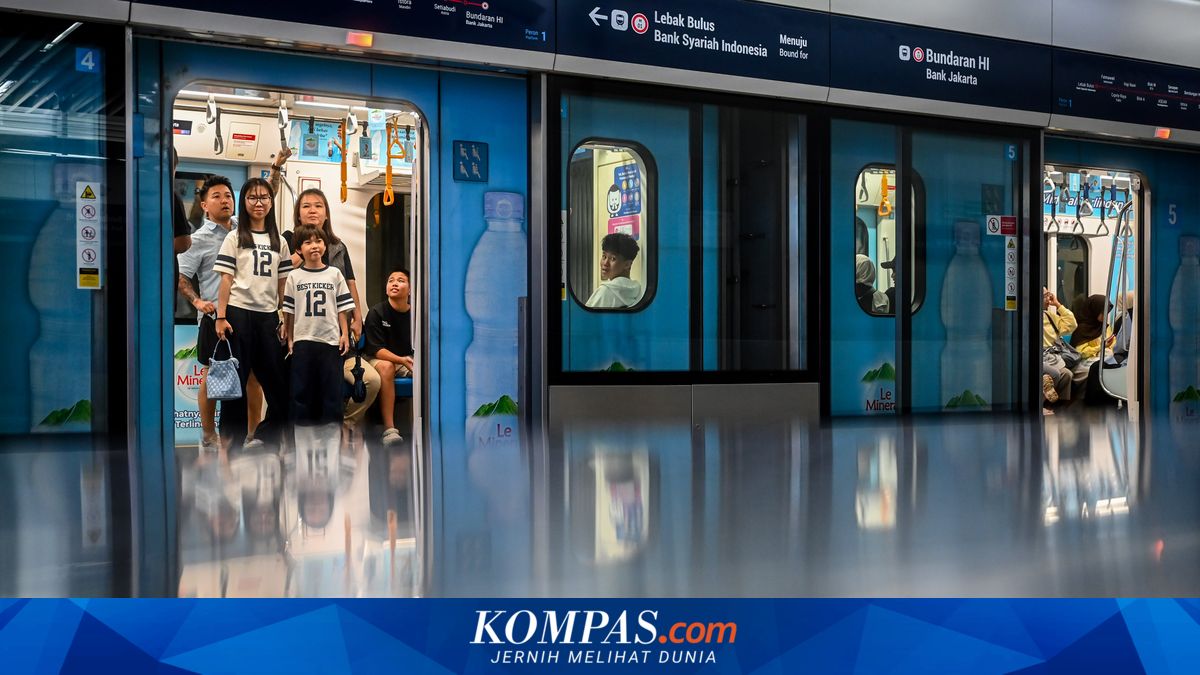
Therefore, if villages are Indonesia’s economic fortress, then public transport is its arteries.
The 1998 crisis taught hard lessons about the dangers of dependence on foreign capital and foreign currency debt.
Many large Indonesian companies at the time borrowed dollars because it was cheaper.
When the rupiah fell, their debt repayments surged many times over. The apparently strong companies eventually collapsed in a short space of time.
Farmers buy fertiliser, sell harvests, pay workers, and transact in traditional markets using domestic currency. They are not overly exposed to international financial market volatility.
Even some export-oriented villages producing commodities such as coffee, cacao, and shrimp gained significant benefits when the rupiah weakened because export prices rose.
Statistics Indonesia data shows that the Agriculture sector during the 1998 crisis was far more resilient than the manufacturing sector, which plummeted drastically.
That lesson remains relevant today. As the world faces global uncertainty, strengthening villages becomes an important strategy to build national economic immunity.
The Free Nutritious Meals Programme (MBG), revitalisation of cooperatives, downstreaming of local commodities, and strengthening MSMEs essentially aim to ensure that more of the state’s money circulates domestically.
If national budget (APBN) and regional budgets (APBD) spending are absorbed by local village products, then the people’s economy will be stronger.
Money does not only end up in big cities or large companies, but flows down to district and village levels. Yet villages cannot live in isolation.
Source: jawawa.id (https://jawawa.id/newsitem/when-villages-and-public-transport-become-indonesias-economic-stronghold-1779546218)
Originally published by Kompas (https://nasional.kompas.com/read/2026/05/19/14382531/saat-desa-dan-transportasi-umum-menjadi-benteng-ekonomi-indonesia?utm_source=ABC&utm_medium=rss), translated from Indonesian