
When Throwing Tomatoes Cultivates a Tradition in Lembang
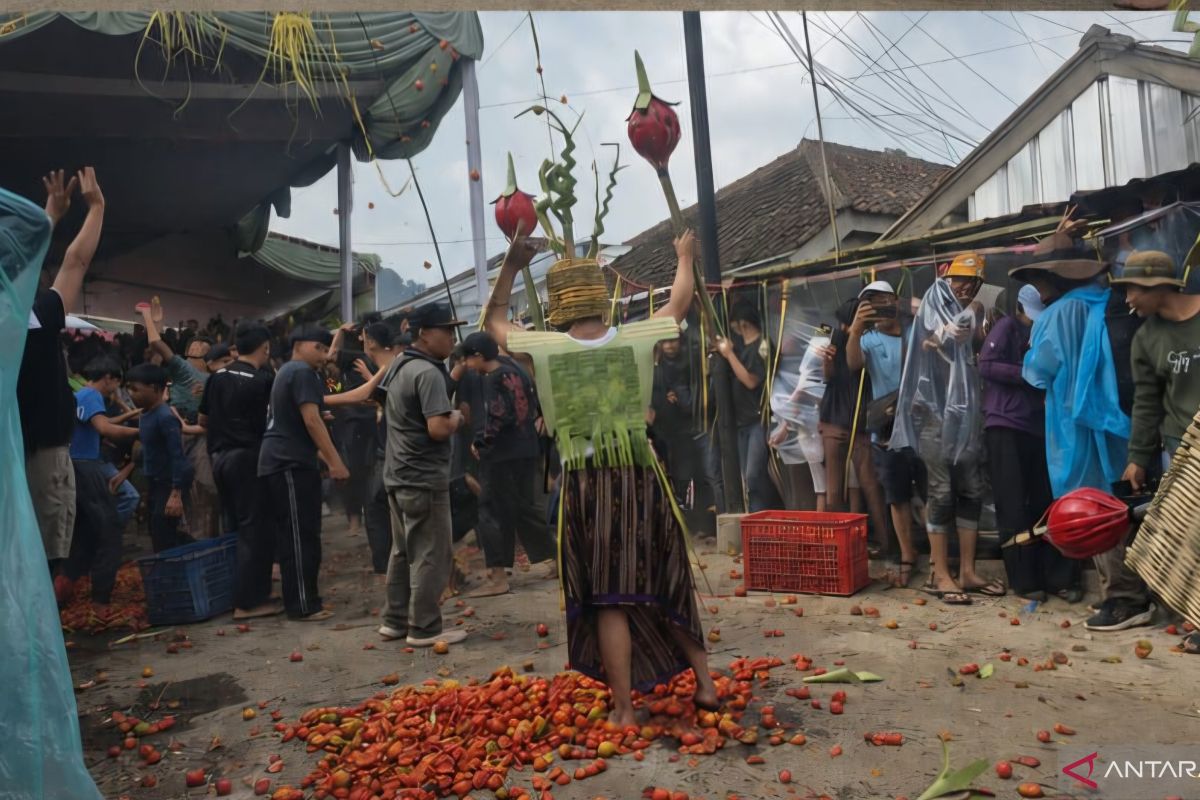
Cikareumbi Road in Cikidante Village, Lembang District, West Bandung Regency, is slowly transforming into a sea of red as baskets filled with rejected tomatoes are opened, while thousands of eyes await the start of the Rempug Tarung Adu Tomat.
The sound of drums and Sundanese music accompanies the steps of seven dancers carrying bamboo masks and shields, creating an atmosphere more akin to a cultural performance than a mere folk game.
One by one, masks and shields are handed to 14 men who then stand facing each other, wearing protective vests like soldiers preparing to enter a battlefield.
As soon as the signal is heard, tomatoes fly from both directions, smashing on the road and hitting shields, vests, and even the faces of participants, who respond with laughter and cheers of joy.
Amidst the red splashes of tomatoes filling the village road, tourists, local residents, photographers, and children merge into one, with no distinction between spectator and participant.
There is no anger in every throw, as the tomato war in Cikidang Village is not a battle to find a winner, but rather a celebration born from the long journey of Lembang’s farmers’ lives.
Farmer Anxiety
Behind the festivity of the festival lies a story of when tomato harvests once lost their value, leading farmers to choose to let the fruit rot in the fields.
This event occurred in 2011, when the price of tomatoes at the farmer level was only around Rp500 per kilogram, far below the production costs required for planting and harvesting.
The Chairman of the Rempug Tarung Adu Tomat Committee, Acep Unan, stated that this condition was the starting point for the birth of the tradition, which is now known as one of Lembang’s unique cultural attractions.
“This is actually a form of protest. Back then, the price of tomatoes was only Rp500 per kilogram. Meanwhile, the capital for just one tree was Rp5,000, which was our source of disappointment,” said Acep.
In the midst of that situation, West Bandung cultural figure Mas Nanu Muda, also known as Abah Nanu, invited farmers to transform their disappointment into a cultural performance that highlights the lives of the agrarian community.