
When the Yellow Books Are Read by Fingertips
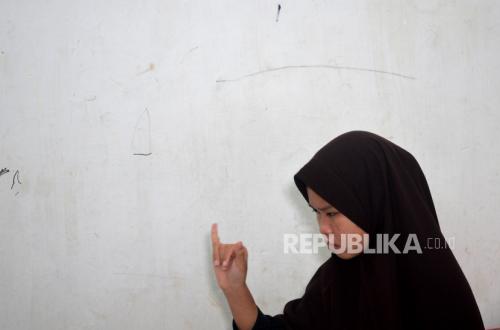
In pesantren, the yellow book is more than a book. It is a bridge between generations, a place where knowledge is passed down, chains of scholarship are connected, and civilisation is nurtured. Yet not all santri can cross that bridge on equal terms. Some blind students are eager to study, but their access to reading remains limited. The books are available, but the opportunity to read independently is not guaranteed.
Imagine a santri wanting to review a lesson after the dawn prayer, check the structure of a sentence, or study its meaning alone. Books line the shelves and lessons take place every day, but the words on the page are inaccessible to them. It is not a lack of motivation. What is missing is a means of reaching knowledge independently.
We often assume that education is fair once its doors are open to everyone. But an open door does not mean the way in is free of obstacles. Without accessible learning materials, assistive devices and adequate support, the promise of educational opportunity remains little more than fine words in a speech. Equality requires more than acceptance; it requires tangible change in the life of the pesantren.
The problem lies not in students’ visual impairments, but in the readiness of the learning environment. Pesantren have a long scholarly tradition, but that tradition must be able to respond to the needs of the times. If knowledge is passed down as a light, we must ensure that every santri can approach it by a route suited to their abilities.
In The End of Normal (University of Michigan Press, 2013), Lennard J Davis criticises the standards of normality that often treat difference as deviance. Pesantren should reflect on this idea. The ability to see is no measure of intelligence, perseverance or depth of knowledge. What needs to change is not the dignity of santri, but a learning system that has yet to accommodate everyone.
Opening the Book, Opening the Way
The Ministry of Religious Affairs’ initiative to promote the publication of Braille editions of the yellow books is an important step towards inclusive pesantren education. This is not simply a matter of replacing ink with raised dots; it means opening access to fiqh, theology, Quranic exegesis, hadith and Arabic grammar. Behind those dots lies students’ right to read independently.
This need is not hypothetical. Raudlatul Makfufin, a pesantren for blind students in South Tangerang, can serve as an important reference for studying religious education for blind people and the development of Braille literacy. The experience of institutions like this should be studied, not merely visited for ceremonial occasions. Good practice must be translated into knowledge and policy that can be replicated.
Darul Ashom, a pesantren for deaf students in Sleman, offers a different perspective. Its experience in educating deaf santri shows that access to learning cannot be provided through books alone. Communication methods, the use of sign language and teachers’ ability to deliver material also matter. Inclusion requires approaches suited to different needs, not a single formula for everyone.
Meanwhile, Sam’an Cinta Quran, a pesantren for blind girls specialising in Quran memorisation in West Bandung, demonstrates the importance of attention to religious education for women with disabilities. They are entitled to a safe, dignified learning environment suited to their needs. Inclusive pesantren should take account of differences in circumstances, age and gender, as well as the support each santri requires.
These three examples show that pesantren serving disabled students do not have a single model. Some institutions develop specialised services, while others seek to accommodate santri with a range of needs. The Ministry of Religious Affairs should map these models, identify gaps in facilities and develop support based on actual needs, rather than administrative uniformity alone.
Producing Braille editions of the books also requires precision. Arabic text, vowel marks, punctuation and sentence structure must be transcribed carefully so that meaning is not altered. Islamic scholars, Braille specialists, teachers, publishers and blind santri need to work together. Students are not merely recipients of the finished product; they are partners who best understand their everyday learning needs.
UNESCO’s A Guide for Ensuring Inclusion and Equity in Education (2017) emphasises the importance of identifying and addressing barriers to participation. This principle can be applied in pesantren through assessments of needs, accessible buildings, Braille equipment, audio materials, screen-reader technology and teacher training. Inclusive policy must be felt in the classroom.
From Publication to Change
An initial step could be to map pesantren and students’ needs, select priority books, test their readability with users, and then expand distribution gradually. The provision of books must be accompanied by assistive devices, teacher training and evaluation. Success should not be measured by the number of copies produced, but by whether santri use them to learn more independently and with dignity every day.
Inclusive pesantren do not always have to be separate institutions. Existing pesantren can improve their access and services, while specialist institutions develop support tailored to particular needs. The two can learn from one another. The aim is not to make everyone’s experience uniform, but to ensure every santri has room to grow, worship, learn and contribute to society.
Ultimately, Braille editions of the yellow books are an effort to honour both knowledge and humanity. The raised dots may be small, but they open a long road towards equality. Pesantren demonstrate their love of knowledge not only by keeping books on their shelves, but by ensuring every santri can reach them. The light of knowledge should not choose who is allowed to receive it.