
When the War Begins to Spiral Out of Control, the US is Forced to Choose a Dangerous Path
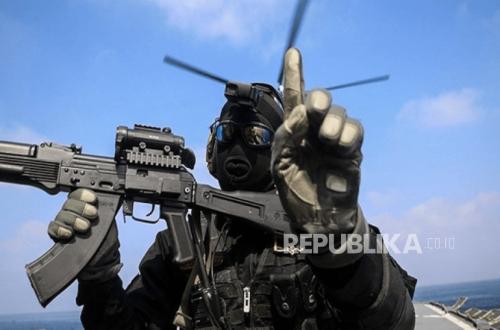
The war skies are never truly silent. Behind claims of swift victories and precision operations, the US-Iran conflict is instead moving towards a more dangerous direction, an escalation no longer easily controlled. Washington is beginning to consider something previously avoided: limited ground operations. This is not merely a tactical shift, but a signal that the war, originally designed to be short, is starting to lose control. It is at this point that the paradox emerges. President Donald Trump previously promised not to send troops, yet the reality on the ground is moving in the opposite direction. The deployment of thousands of soldiers from the 82nd Airborne Division and Marines shows that military calculations are now beginning to exceed political rhetoric. When promises clash with strategic needs, war often finds its own path. According to reports from French media such as Le Point, Washington is preparing between 7,000 and 10,000 initial troops, with potential escalation to 17,000 personnel. However, unlike the 2003 Iraq invasion, the scenario designed this time is limited in nature: precision strikes, special operations, and targeting strategic points within Iranian territory. Kharg Island, the heart of Iran’s oil exports, is one of the main targets, along with facilities related to the nuclear programme. This approach reflects a classic strategy: weakening the opponent without becoming mired in long-term occupation. Yet, this strategy also carries significant risks. Iran is not Iraq. It possesses tested asymmetric capabilities, from the use of drones and ballistic missiles to the ability to choke global energy routes through the Strait of Hormuz, as reported by Al Jazeera. The newspaper Le Figaro notes that the air strikes relied upon by Washington have not yet been able to cripple Iran’s capabilities. On the contrary, Tehran’s counterattacks demonstrate that this conflict is not one-sided. Gaps in the American defence system are starting to appear, while Iran continues to maintain its offensive capabilities. It is here that the war transforms from a military operation into a complex strategic game. The closure of the Strait of Hormuz, for instance, is not merely a military move, but global economic pressure. This route carries much of the world’s energy. When disrupted, the impact is felt not only in the Middle East, but also in global markets, from oil prices to the economic stability of developing countries. On the other hand, Washington’s ambiguity is increasingly evident. On one side, military threats continue to be issued. On the other, the door to diplomacy remains open. Foreign Minister Marco Rubio has emphasised that the war’s objectives can be achieved without ground operations. However, the troop deployments send a different message, as if the strategy has not yet been fully consolidated.