
When the Screen Becomes the Pulpit
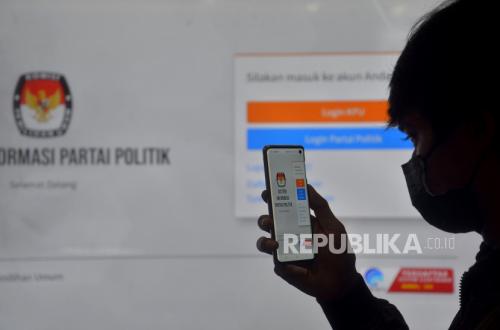
A student once asked in a lecture hall, ‘Who is my religious teacher today?’ The question seemed simple, but it touched the core of a major shift occurring within Muslim society. In the past, religious authority grew through study circles, Islamic boarding schools (pesantren), lecture halls, and long traditions of direct learning (talaqqi). Today, that authority emerges from mobile phone screens: one-minute videos, sermon clips, podcasts, anonymous social media posts that suddenly go viral. What has changed is not merely the medium of communication, but the social structure of knowledge itself. Digital media has become a space for the exchange of ideas, for learning, for preaching, for economic activity, and for shaping the public identity of Muslims. Religious discourse moves rapidly across various digital platforms, reaching millions of people in a very short time. The question of who is trusted becomes far more decisive than the question of who speaks most often. According to the Indonesian Internet Service Providers Association (APJII) 2025 Internet Profile Survey, internet penetration in Indonesia has reached 80.66 percent, or approximately 229.4 million people. At the same time, various digital literacy surveys indicate that the public’s ability to verify information still requires strengthening. This data highlights an important reality: access to information is increasing very rapidly, while the capacity to filter information is growing more slowly. It is within this space that scholarly authority faces a new test. In this context, authority means the ability of a person or institution to be trusted as a valid and responsible source of religious knowledge. Public trust was once built through a track record of scholarship, chains of knowledge transmission (sanad), academic works, and social service. In the digital age, trust is often shaped by visibility, frequency of appearance, content production skills, and the power of algorithms. Manuel Castells (1996) described contemporary society as a network society, where information moves through interconnected nodes. In such a structure, the centre of authority becomes more fluid. Anyone can speak to the public without going through formal institutions. This phenomenon opens up great opportunities for the democratisation of religious knowledge. Many people gain access to learning that was previously difficult to reach. Study sessions with scholars from various cities and countries can be followed from home. This expansion of access is a development to be welcomed. The main challenge lies in the mechanisms of verification and the formation of public trust. The digital space is filled with a dense flow of information. Fragments of Quranic verses circulate easily without context, hadiths spread without methodological explanation, and religious opinions are consumed like fast food entertainment. Platform algorithms work based on user attention. Content that arouses strong emotions often gains wider reach than calm, scholarly explanations. The attention economy reinforces this tendency. Content creators are incentivised by the number of viewers, interactions, and watch time. In this situation, boldness often proves more profitable than scholarly caution. The digital public sphere therefore requires more voices that bring calmness, knowledge, and ethical responsibility.