
When the Sanctity of Pancasila Whispers in Our Daily Patience
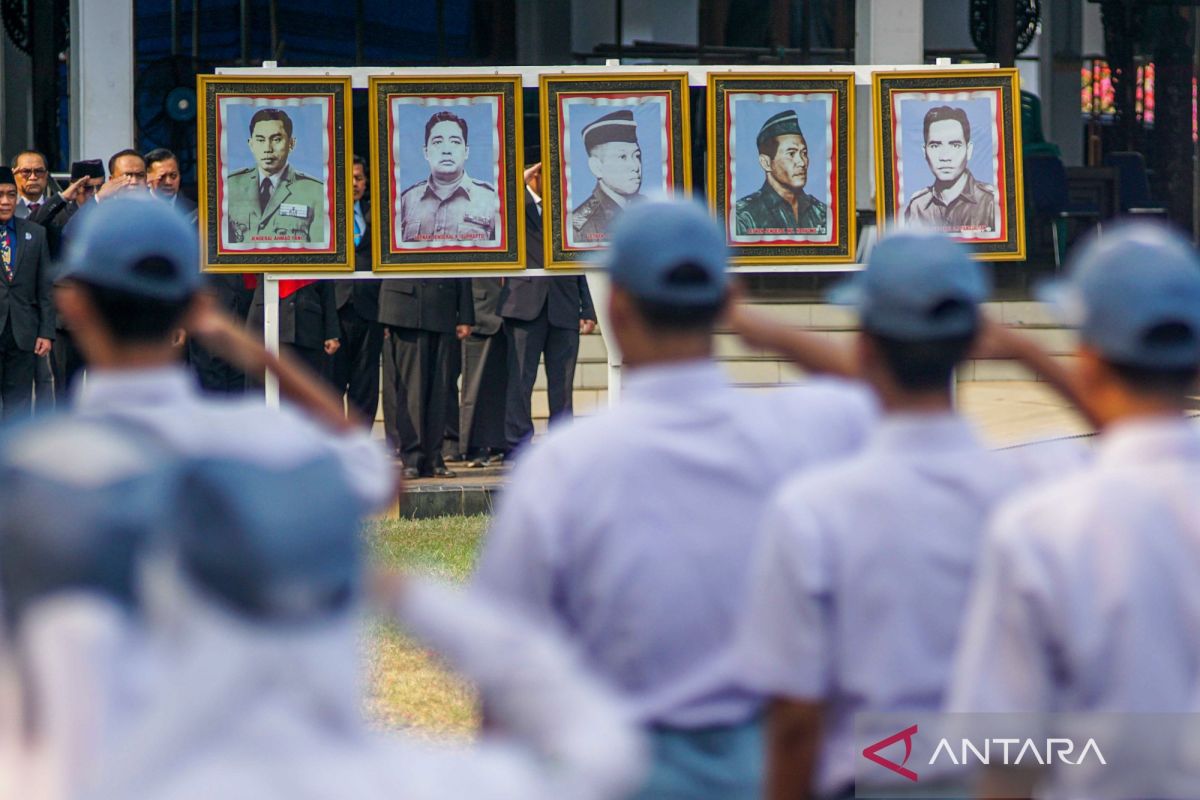
Sleman, DIY - There is something somewhat unsettling every time Pancasila Sanctity Day arrives, always celebrated with ceremonies complete with speeches filled with ‘grand’ words, such as ideology, unity, threats, integrity, and betrayal.
We indeed have a habit of treating things believed to be important ceremonially. Pancame Pancasila is no exception. It is as if Pancasila is a sacred heirloom that needs to be taken out of its chest every year, cleaned, and presented to the public: ‘Look, it is still powerful.’
Why must something described as ‘sacred’ appear so busy proving its own sanctity?
Does not sanctity, in a certain sense, work silently? Water, for instance, does not give a speech about its ability to sustain trees. It simply flows.
Perhaps it is the same with Pancasila. It perhaps does not require ceremonies as much as it requires habit.
This sounds naive. Indeed, too simple a metaphor for a state ideology. But human life is often determined by things that are even too trivial to be included in the themes of national speeches.
For example, a neighbour whose house wall is adjacent to ours is currently praying. Meanwhile, our television is on, displaying a funny programme that makes the children laugh.
Then we remember that someone next door is trying to be solemn. The television volume is lowered. That is all. No one records this as an act of tolerance. We ourselves might forget it five minutes later.
Tolerance is often like that; tolerance is not always beautiful statements about interfaith harmony. Sometimes it is merely a willingness to reduce one’s own noise. There is a simple awareness here, that the world does not consist solely of our own voices.
Perhaps the First Principle begins to be nurtured from that simple awareness: that our beliefs do not need to disturb the existence of the beliefs of others.
At another time, we open social media on our phones. On the screen, someone we do not know uploads something that provokes anger.
Our thumb moves. We type a line of harsh words. Upon re-reading, there is a sense of satisfaction; that person truly deserves it. However, in the next second, we delete that sentence.
What actually happens in that second? No one knows. No one records it as an achievement. One thing is certain: someone, somewhere, escaped an insult.
Human civilisation occasionally survives not because its people know what to say, but because some of them know what should not be said.
We often blame social media for the erosion of human decency. This is not entirely true. Social media merely reveals how fragile decency is when distance makes us forget that there is another human being behind the screen.
Therefore, the application of the principle of ‘Just and Civilised Humanity’ can find its simplest new essence in the single action of a thumb that decides not to press the send button.
‘Indonesian Unity’ also involves a matter of scale. We love to discuss unity on a large scale: nation, region, tribe, language, religion, and even the flag. All of that is correct. However, there is a unity that works on a much smaller scale.
A shop near our house, for example. We buy coffee there. The seller is a neighbour. Money changes hands. Part of it will later be used to buy rice, part to pay for electricity, part perhaps to buy milk for a child, and tomorrow morning, they can open their shop again.
No one considers a cup of coffee to be a national economic event. Indeed, it is not. However, a nation is not built solely by growth figures, skyscrapers, or giant corporations. A nation is also upheld by millions of small transactions that allow ordinary people to continue their lives.
Buying from a neighbour is not a revolution, and maintaining unity is not always revolutionary. The manifestation of ‘Unity’ sometimes occurs simply by ensuring the person next door does not feel left behind.
Then we enter the family WhatsApp Group. Perhaps there is no more exhausting democratic space than this.
In that space, everyone has a voice, from uncles and aunts to cousins and in-laws. There is no formal committee, but debates can unfold like a parliament. A political news item is sent, someone disputes it, another shares a link, and then a video appears, of unknown origin and creation.
Source: jawawa.id (https://jawawa.id/newsitem/when-the-sanctity-of-pancasila-whispers-in-our-daily-patience-1790831165)
Originally published by Antara (Indonesian) (https://www.antaranews.com/berita/5765997/ketika-kesaktian-pancasila-berbisik-dalam-kesabaran-kita-sehari-hari), translated from Indonesian