
When the River Teaches the Meaning of Independence
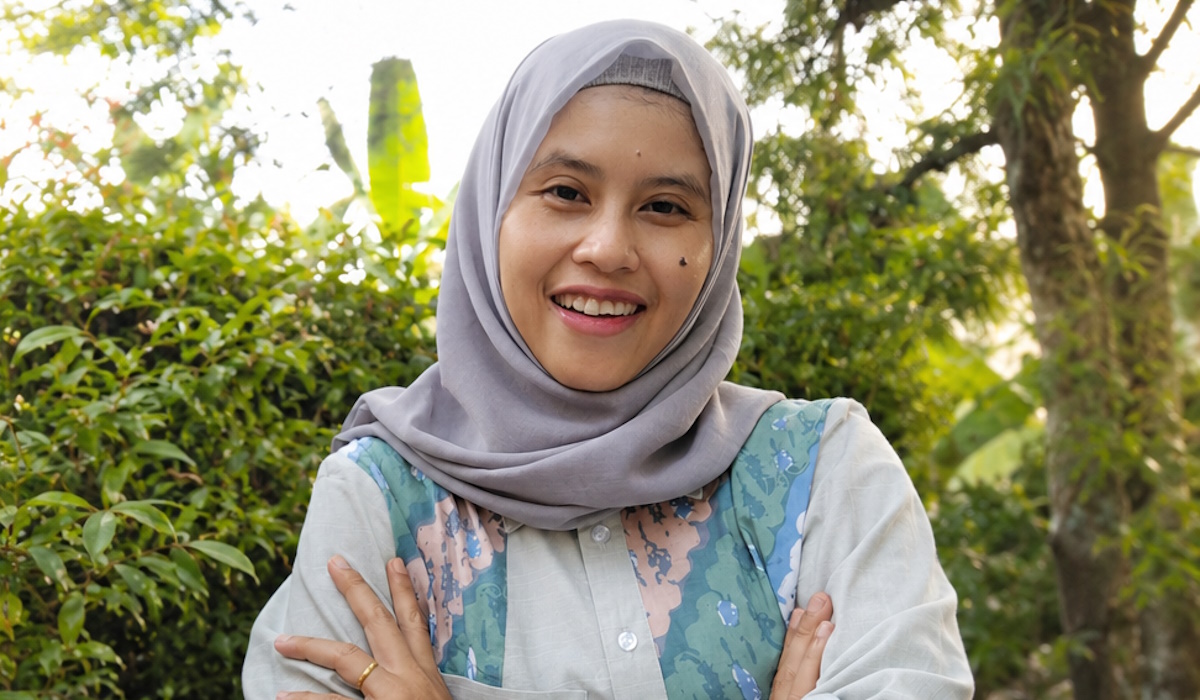
There is one childhood memory that remains firmly embedded in my mind to this day: the river. I grew up in a village in North Serang, Kampung Pulokencana, Pontang District, Serang Regency. When I was still in primary school, I was often invited by friends to bathe in the river. There was no coercion. Precisely because there was no coercion, the invitation felt far more attractive than my parents’ prohibition, which merely said, ‘Do not bathe in the river.’
Almost all the children did it. Bathing together, washing clothes together, washing rice, washing fish, even discarding things into the same flowing water. The river was part of daily life. It was not merely a flow of water, but a social space where the community met and carried out many activities.
My family was among those who did not use the river for bathing. We had a well at home. My grandfather was a religious figure, while my mother was a teacher. But the decision not to bathe in the river was not because we felt superior to the surrounding community. The reason was simple: cleanliness, propriety, and safety.
As a child, I saw all of this as something ordinary. I may have felt that something was odd, but I did not yet have the ability to call it an environmental problem. For me at that time, the river was the river. People bathed there because that was the life I saw every day. Perhaps that is where environmental problems often begin: with something too ordinary to be questioned.
When I was around five or six years old, my mother enrolled me in a school far from home, about 10 kilometres away and even in a different district. For the people around us, that decision felt unusual. Passengers on a public minibus once even remarked that my mother was too hard-hearted towards a small child. I myself was relaxed about it.
After graduating from primary school, I moved again to attend school in Cianjur, West Java. I then continued my education at several schools in Serang, studied at university in Jakarta, worked as a journalist for a teenage weekly, and eventually followed my husband to live in the Netherlands while he pursued his doctoral studies.
That journey turned out not only to move my body from one place to another. It also slowly changed the way I viewed the world.
One day, I sat on the bank of a river in Leiden. I was enjoying the atmosphere while tossing small stones into the water. To me, it was a simple act. It even felt like something insignificant. An elderly man and woman nearby then reprimanded me. The essence of their rebuke was simple: if you want to enjoy the river, enjoy its tranquillity. Do not disturb it. Inside that water there is other life that may be going on.
I was stunned. Not because I was committing a great crime. Nor because throwing stones into a river had suddenly become a criminal act. I was stunned because for the first time I saw a river not merely as something humans are allowed to use, but as a living space that also contains other beings.
On another occasion, while enjoying spring in a park in the Netherlands, I saw someone picking a flower. Again I heard a similar rebuke from elderly people around me. If you want to enjoy a flower, let it keep growing. Enjoy its colour, its shape, its fragrance. Do not take all of its beauty for yourself. For once it is picked, that beauty stops with the person who picked it.
Those simple sentences then lingered in my mind for a long time.
I began to ask: how many behaviours that we consider ordinary are actually born from the view that nature exists only to satisfy human needs?
That question became increasingly relevant when I looked again at environmental problems in Indonesia.
Government data shows that our waste problem is not a small one. In the national data used by the Ministry of Environment/Environmental Control Agency for National Waste Awareness Day 2025, Indonesia’s waste generation in 2023 was estimated to reach 56.63 million tonnes per year. Of that amount, only around 39.01 percent was recorded as managed, while 60.99 percent, or around 34.54 million tonnes, remained unmanaged. At the same time, 306 areas, or around 54.44 percent of final disposal sites, were still operated using an open dumping system.
Those figures indeed speak about the waste management system. But behind the numbers lies a far more fundamental problem: how humans view objects they no longer want. Waste does not suddenly appear at a disposal site. It begins with a person’s decision to buy, use, discard, and then hand over responsibility for that object to others or to the system.
Therefore, the waste problem cannot be adequately solved merely by building disposal sites, adding collection fleets, or enlarging the capacity of final processing facilities. We must also change our way of thinking: that something we have thrown away does not mean it has disappeared. It has merely moved elsewhere.
Plastic thrown into a ditch can move to a river. Waste that enters a river can move to the sea. Waste that is burned carelessly can move to become air pollution. Meanwhile, unmanaged organic waste can produce other problems in the environmental chain.
In other words, the act of discarding is an ecological act. It has consequences, even when those consequences are not immediately visible to our eyes.
At this point, religion should not stop at being a set of rules about the relationship between humans and God and between humans and one another. Religion also has great potential to shape the way humans treat nature.
The Qur’an, for example, reminds us that corruption on land and at sea occurs because of what human hands have wrought.