
When the Rails Mourn: The Argo Bromo Anggrek Tragedy and the Nation's Debt to Public Safety
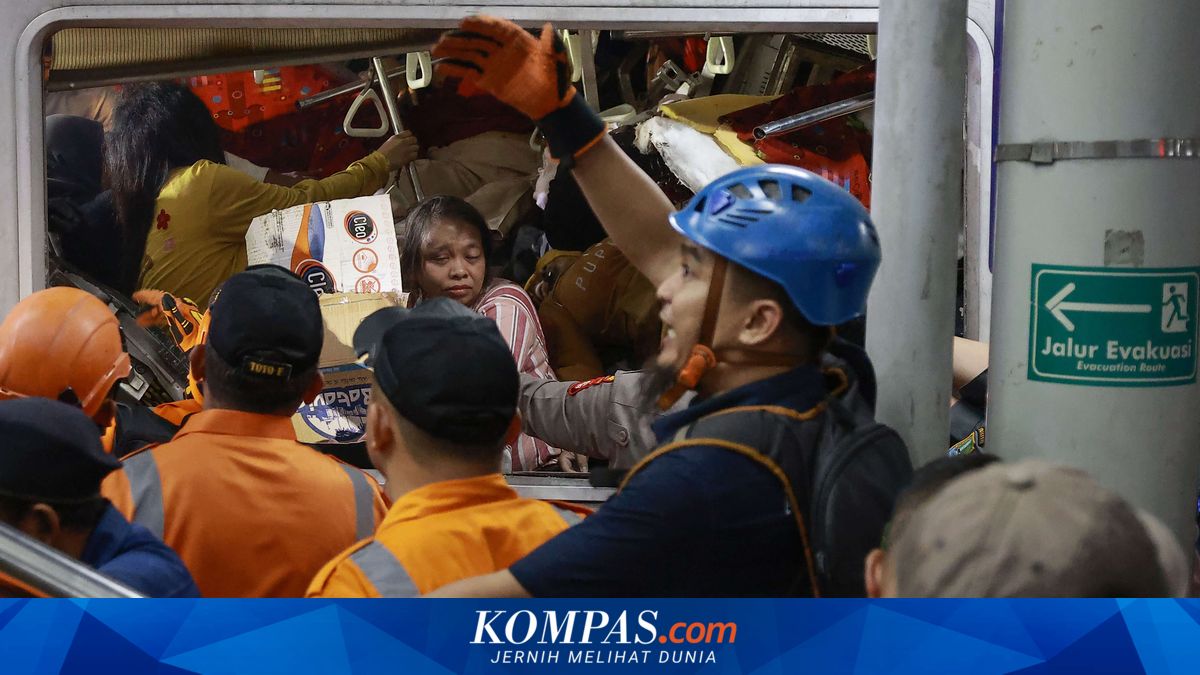
A taxi stalled on the tracks. A signal that failed to function. A train speeding without time to stop. And a nation once again harvesting sorrow from the long-sown seeds of negligence. On Monday night (27/4), Bekasi Timur Station was not merely a nighttime train stop; it became a silent witness to a tragedy that should never have occurred. At 20:52 WIB, the KA Argo Bromo Anggrek, the flagship long-distance train on the Gambir–Surabaya Pasar Turi route, slammed into the KRL Commuter Line train that was halted on the station platform. The impact was so severe that the locomotive carriage of the long-distance train penetrated the KRL carriage. The women’s-only carriage was destroyed. At least a dozen lives were lost. Dozens more were injured. This tragedy is not merely a tale of misfortune. It is a mirror of a fragile system where a single stalled vehicle can collapse the entire chain of national railway safety. To understand this tragedy honestly, we must dare to trace layer upon layer of interconnected failures. Not just scapegoating one party, but dissecting the system thoroughly. Level crossings—points where roads intersect directly with railway tracks—have long been known as the deadliest spots in Indonesia’s transportation system. JPL 85 near Bulak Kapal is one of thousands of such level crossings scattered across Java. There, motor vehicles and trains share space in a razor-thin window of seconds. When an electric taxi stalled on it with a wheel locking system that prevented manual pushing, disaster was merely a matter of time. The second layer is the failure of the signalling system. In the world of railways, signals are the universal language of safety. The most fundamental principle states that no two trains may occupy the same block section. When the KRL stopped due to the taxi incident, the signal should have immediately closed the line and warned trains behind it. Yet that night, the KA Argo Bromo Anggrek continued speeding until it crashed into the stationary KRL. Did the signal fail to operate? Was there a miscommunication in procedures? Or was there a red signal violation by the driver?