
When the President’s Daughter Urged Indonesians to Dump Dollars to Save the Rupiah
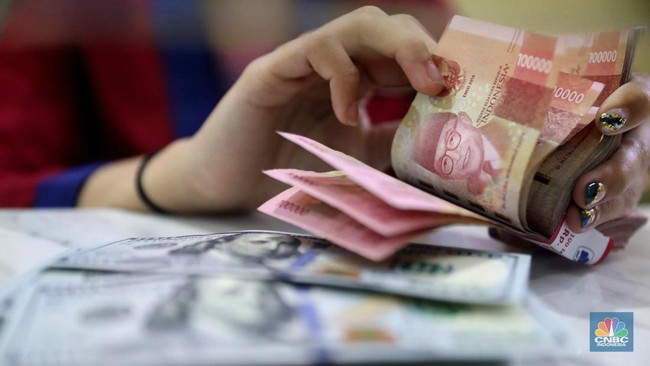
Jakarta, CNBC Indonesia – The 1997–1998 monetary crisis is remembered as one of the darkest chapters in Indonesia’s economic history. The financial storm sent the rupiah tumbling from a relatively stable level of around Rp2,000 to Rp10,000, before it briefly hit a record low of Rp16,000 against the US dollar.
Amid market panic and the threat of national bankruptcy, a moral campaign emerged among the elite and the wider public to encourage use of the rupiah and reduce dependence on the US dollar.
One of the most prominent initiatives was launched by President Soeharto’s eldest daughter, Siti Hardijanti Rukmana, widely known as Mbak Tutut.
According to historian Jan Luiten van Zanden in his book The Indonesian Economy 1800–2010 (2012), the rupiah’s collapse began with the domino effect of the Thai baht’s depreciation in mid-1997. The financial storm quickly spread, devastating currencies across Asia, including Indonesia’s.
In response to the escalating turmoil, Mbak Tutut launched the Gerakan Cinta Rupiah (Getar), or Love the Rupiah Movement, in January 1998. Its central appeal was straightforward: she urged people to sell their US dollar savings to help Bank Indonesia strengthen the rupiah and restore market confidence.
“The Gerakan Cinta Rupiah (Getar), pioneered by Mrs Siti Hardianti Rukamana, or Mbak Tutut, truly made an impact,” the Bali Post wrote on 16 January 1998.
To encourage participation, Mbak Tutut led by example, exchanging US$50,000 of her personal money for rupiah. She said the move was not merely a financial rescue effort, but also a symbol of patriotism during the crisis.
Officials and military representatives join the currency-buying drive
Mbak Tutut’s move quickly prompted senior officials and politicians to sell their foreign currency. According to the Bali Post archives (13 January 1998), a group of members of the People’s Consultative Assembly (MPR) went to Bank Indonesia to exchange their US dollars.
Among them was Susilo Bambang Yudhoyono (SBY), who would later become Indonesia’s sixth president. At the time, SBY was an MPR member representing the Armed Forces faction.
“Among the group were Ad Hoc Committee chairman Hartono and deputy chairman Susilo Bambang Yudhoyono … Susilo Bambang Yudhoyono exchanged US$1,300,” the Bali Post reported.
Technocrats and economic ministers also contributed dollars to Bank Indonesia. Finance Minister Mar’ie Muhammad and Bank Indonesia Governor Soedradjad Djiwandono were among those reported to have sold their dollar holdings. In total, the first wave of the campaign raised US$650,000 for the central bank.
The “Love the Rupiah” campaign also drew some of the country’s biggest business figures. The Berita Yudha newspaper reported on 13 January 1998 that prominent tycoons Aburizal Bakrie, The Ning King and Imam Taufik each exchanged US$100,000 for rupiah, making them the largest individual contributors at the time.
Veteran businessman Sukamdani Sahid Gitosardjono followed. “Second in the ranking was businessman Sukamdani Sahid Gitosardjono, who exchanged US$50,100 and handed over one kilogram of his gold to the government,” Berita Yudha wrote.
The campaign continued to gather momentum among the public. As an additional contribution, Mbak Tutut later handed over two kilograms of her personal gold to the state.
Economists raise criticism
Despite the publicity and acclaim in the media, the Cinta Rupiah campaign faced sharp criticism from economists and international observers. The moral appeal was seen as little more than a symbolic gesture, incapable of countering the fundamental forces driving global financial markets.
The foreign currency raised through Getar was estimated at only about US$5 million. That was a drop in the ocean compared with Indonesia’s foreign exchange needs and external debt, which had swollen to tens of billions of US dollars.
“This will not solve the problem,” businessman and politician Fahmi Idris was quoted as saying by the Bali Post on 1 February 1998.
The warning proved prescient. The US dollar remained dominant and the rupiah continued to plunge. The collapse of the national currency triggered widespread corporate bankruptcies, a surge in layoffs and soaring prices for basic goods.
The acute economic crisis then developed into a major social and political crisis. Mass student demonstrations and the May 1998 riots erupted in cities across the country. On 21 May 1998, President Soeharto formally announced his resignation, bringing to an end the 32-year rule of the New Order regime.
Source: jawawa.id (https://jawawa.id/newsitem/when-the-presidents-daughter-urged-indonesians-to-dump-dollars-to-save-the-rupiah-1793407818)
Originally published by CNBC Indonesia (https://www.cnbcindonesia.com/market/20261031003104-17-781105/saat-anak-presiden-ajak-warga-buang-dolar-demi-selamatkan-rupiah), translated from Indonesian