
When the President's Daughter Urged Citizens to Dump Dollars to Save the Rupiah
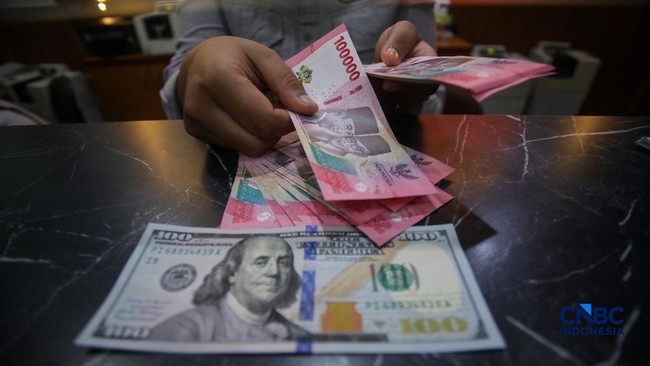
The 1997-1998 monetary crisis remains one of the darkest chapters in Indonesia’s economic history. The economic storm caused the Rupiah’s exchange rate against the US Dollar to plummet drastically, from a stable range of around Rp2,000 to levels of Rp10,000, even briefly touching Rp16,000 per US Dollar.
Amidst this market panic, a moral movement emerged from the elite to the wider public to encourage the use of the Rupiah and reduce US Dollar holdings. One of the most iconic initiatives was launched by President Soehlar’s eldest daughter, Siti Hardijanti Rukamana, popularly known as Mbak Tutut.
According to historian Jan Luiten van Zleden in the book ‘Indonesian Economy 1800-2010’ (2012), the rupiah’s collapse began with the volatility of the Thai Baht in mid-1997, which rapidly spread to various Asian nations, including Indonesia.
Responding to the escalating situation, Tutut Soeharto initiated the ‘Love Rupiah Movement’ (Getar) in January 1998. Its primary mission was simple: to invite the public to relinquish US Dollar savings to help authorities strengthen the rupiah’s exchange rate and restore public confidence in the national economy.
‘The Love Rupiah Movement (Getar) pioneered by Mrs. Siti Hardijanti Rukamana, or Mbak Tutut, is truly impactful,’ wrote the Bali Post on 16 January 1998.
As a demonstration of commitment, Tutut led by example by donating US$50,000 from her personal funds to be converted into rupiah. She viewed this step not merely as a fiscal rescue effort, but as a tangible way to revive nationalism in the midst of the crisis.
Mass Conversion of Rupiah by Officials and Conglomerates
This initiative was immediately followed by a series of high-ranking state officials. According to archives from the Bali Post (13 January 1998), several members of the MPR (People’s Consultative Assembly) visited Bank Indonesia to exchange their US Dollar savings for rupiah. Notably, one of the figures involved in the group was Susilo Bambang Yudhoyono (SBY)—who would later become Indonesia’s 6th President—who was then a member of the MPR from the ABRI Faction.
‘Among the group were the Chairman of the MPR Ad Hoc Committee, Hartono, and Vice Chairman Susilo Bambang Yudhoyono… Susilo Bambang Yudhoyono exchanged US$1,300,’ reported Bali Post.
Beyond the parliament, ministers and economic technocrats also participated actively. Finance Minister Mar’ie Muhammad and the Governor of Bank Indonesia, Soedradjad Djiwandono, were recorded releasing their dollar holdings. Cumulatively, the fresh funds gathered at the Bank Indonesia building from this initial action reached approximately US$650,000.
This wave of solidarity also reached major entrepreneurs. The Berita Yudha daily (13 January 1998) noted that tycoons such as Aburizal Bakrie, The Ning King, and Imam Taufik each contributed US$100,000 to be converted into rupiah, making them the largest individual contributors at the time.
Following them was senior businessman Sukamdani Sahid Gitosardjono. ‘Second place was held by businessman Sukamdani Sahid Gitosardjono, who released US$50,100 and donated 1 kg of his gold to the government,’ wrote Berita Yudha.
As time progressed, the movement grew more massive, involving various professions. Amidst this wave, Mbak Tutut increased her contribution by surrendering an additional 2 kilograms of her personal gold to the state.
Sharp Criticism and the Collapse of the New Order Regime
Despite receiving a warm reception in the public sphere, the Love Rupiah Movement began to face harsh criticism from economists and observers only a few weeks later. Several parties argued that the movement was nothing more than a symbolic gesture that was impotent in the face of global financial market shocks.
This was because the total funds collected from the movement were estimated to be no more than US$5 million—a figure far too small to plug Indonesia’s foreign exchange needs, which had reached billions of US dollars.
‘This will not solve the problem,’ criticised businessman Fahmi Idris, as quoted by Bali Post (1 February 1998).
This sharp criticism ultimately proved correct. The rupiah’s exchange rate continued its downward trend in the following months, triggering a surge in the prices of basic necessities that burdened the people.
The peak of this economic crisis transformed into an acute socio-political crisis, leading to waves of mass demonstrations and bloody riots across the country in May 1998. The curtain on President Soeharto’s power finally closed on 21 May 1998, ending the New Order regime that had ruled for over three decades.
Source: jawawa.id (https://jawawa.id/newsitem/when-the-presidents-daughter-urged-citizens-to-dump-dollars-to-save-the-rupiah-1789282387)
Originally published by CNBC Indonesia (https://www.cnbcindonesia.com/market/20260913095635-17-767481/ketika-anak-presiden-minta-warga-buang-dolar-buat-selamatkan-rupiah), translated from Indonesian