
When the President Pays Attention to the Capital Market
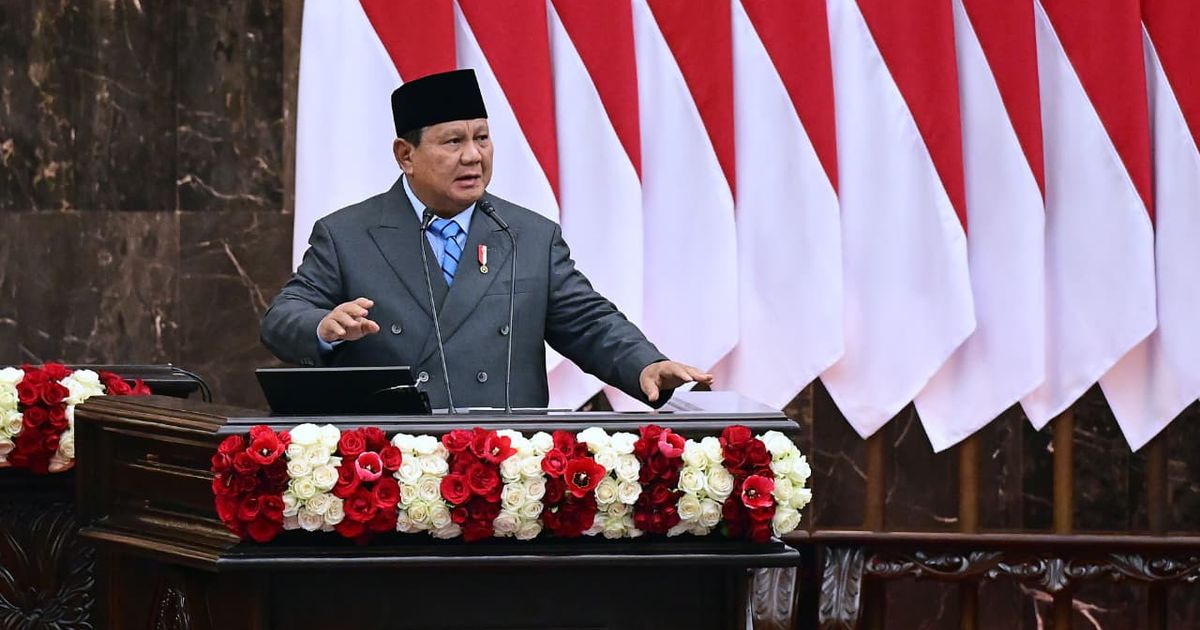
There was something different in President Prabowo Subianto’s two speeches at the Nusantara Building, Parliament Complex, Senayan, Jakarta, on Friday (14/8/2026). The capital market received far clearer attention from the President. Not only as an indicator of economic development, but also as part of the reform agenda, a source of corporate financing, an instrument of economic justice, and a foundation for making Indonesia one of the world’s important financial centres.
This attention is significant for capital market participants and investors. The market community has long awaited more explicit political support from the head of state for the development of the Indonesia Stock Exchange (BEI). They also hoped the President would one day visit the BEI directly, engage in dialogue with issuers, securities firms, investment managers and investors, while conveying the message that the capital market is an important part of national economic development.
Indeed, this was not the first time Prabowo mentioned the stock market in a speech on the state budget. In his introductory speech for the 2026 State Budget Draft and Financial Note on 15 August 2025, the President said optimism and investor confidence in Indonesia’s economic prospects were high and mentioned that “our stock market is also showing encouraging development” amid global uncertainty. However, it was only on 14 August 2026 that the President spoke more substantively about the direction of capital market reform, including demutualisation, exchange credibility, corporate access to equity, and the target of bringing Indonesia’s capital market towards world standards.
In the State Address at the Annual Session of the People’s Consultative Assembly and the Joint Session of the House of Representatives and the Regional Representatives Council on Friday morning, Prabowo had not yet specifically outlined stock market reform. However, the President had already placed market-based instruments in the green economy development agenda. He mentioned that the Carbon Unit Registry System had been implemented and the Carbon Exchange was operating by adopting world carbon standards.
A much firmer message emerged in the second speech on the same day, when the President delivered the Government’s Statement on the 2027 State Budget Bill and its Financial Note before the Plenary Session of the House of Representatives. It was here that Prabowo spoke openly about the stock exchange, capital market reform and demutualisation.
Prabowo appreciated the reforms carried out by the Financial Services Authority (OJK) to build a credible exchange. According to the President, violations of exchange rules must be sanctioned. He then conveyed the next direction: capital market reform would be continued through demutualisation. The target was ambitious, namely bringing Indonesia’s capital market to world standards and making it one of the largest capital markets in the world.
More importantly, Prabowo did not view the capital market merely as a place where people buy and sell shares and pursue profits. The President connected it to issues of justice and access to capital. A well-functioning capital market, according to Prabowo, must provide opportunities for Indonesian start-ups and entrepreneurs to move up a class by increasing equity and capital so that the scale and impact of their businesses grow.
This view is important. The main function of the capital market is not simply to produce daily fluctuations in the Jakarta Composite Index. The capital market is part of the economy’s financing system. Companies can raise long-term capital through the issuance of shares and other securities to strengthen their capital structure, build factories, develop technology, expand and create jobs. On the other hand, the public gains the opportunity to become owners of listed companies and enjoy investment returns in the form of dividends or increases in investment value.
The President even placed exchange reform within a larger design. The government plans to build the Indonesia International Financial Centre (PFII), initially in Jakarta and later in Bali. Activities designed to be included in the PFII include banking, insurance, capital markets, derivatives, carbon exchange, bullion, fintech, Islamic finance, family offices, treasury centres and investment management. The goal conveyed by the President is for global capital to gain certainty in Indonesia, for the best talent to work in Indonesia, and for transactions over Indonesia’s wealth to be settled in Indonesia.
Thus, the message of 14 August 2026 forms a fairly clear policy line: capital market reform, demutualisation of the BEI, improving credibility and market depth, and building an international financial centre.
The President’s attention to the capital market also carries particular significance when traced back to Prabowo’s statement on 4 December 2024. When opening the Tanwir Session and 112th Anniversary Reception of Muhammadiyah in Kupang, East Nusa Tenggara, Prabowo warned of the risks for ordinary people speculating in the stock market. The statement then spread very widely with the simplification that the President called “stocks are gambling”. In fact, the context and full sentence were more specific.
Prabowo said at the time that for “ordinary people”, dabbling in stocks without adequate capability could resemble gambling because they face large players with greater capital strength. He also reminded the public not to be easily tempted to pursue large profits in a short time.
The context of the remark was also important. Prabowo was recounting an experience when the Free Nutritious Meals programme was linked to a possible decline in the Jakarta Composite Index. In that context, he questioned why the interests of ordinary people should be defeated by concerns about stock movements. In other words, his criticism was primarily directed at speculation and inequality.
Source: jawawa.id (https://jawawa.id/newsitem/when-the-president-pays-attention-to-the-capital-market-1787136668)
Originally published by investortrust.id (https://investortrust.id/indepth/113444/ketika-presiden-memperhatikan-pasar-modal), translated from Indonesian