
When the People of Koto Laweh Fought Back in Padang Panjang
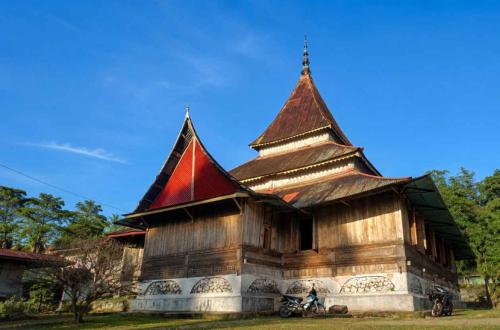
On the night of 21 December 1916, Padang Panjang was tense. Around 9 p.m., a demang approached colonial officials with news that an attack on the Dutch fort was imminent. The information reportedly came from a network of nagari heads and witnesses who claimed dozens of people were moving from the Pincuran VII area.
Though the report was unclear, the Dutch colonial government did not treat it as mere rumour. Civil and military officials consulted, while nagari heads were ordered back to their areas to check on the population. To avoid panic, the news was deliberately contained. However, as midnight approached, the situation changed rapidly.
A colonial official, accompanied by a major, an adjutant lieutenant, a demang, and a prosecutor, patrolled the city. They inspected a large surau near the old market and a mosque on the road to Lubuk Mata Kucing, but found nothing suspicious. Around midnight, the patrol returned. Shortly afterwards, the nagari head of Koto Laweh arrived in haste, reporting he had seen around ten people dressed in white at Lubuk Mata Kucing. Troops were immediately prepared and ammunition distributed. Soon, gunfire was heard near the old market and the residential area of Dutch officials.
In testimony later read during a Landraad trial, Assistant Resident J. Breukink described the group moving quickly and attempting to enter several parts of the city. Some members reportedly approached a colonial official’s residence and tried to open the bedroom door. This testimony suggests their target was not a random crowd, but the symbols of colonial power in Padang Panjang.
The firefight was brief but deadly. Colonial records state seven attackers were shot and killed on the road near the Padang Panjang tennis court. They were described as wearing all-white clothing. Another was found dead by a bamboo fence nearby. On the colonial side, one soldier was killed and another found wounded in a ditch.
One of the attackers, still showing signs of life, was reported to have repeatedly uttered the words “Pai ka Ulakan”, meaning “go to Ulakan”. Ulakan holds an important place in the history of the Syattariyah order in Minangkabau. However, a single utterance from a wounded man is insufficient to prove the entire movement was Syattariyah. It should be treated as a clue to be read alongside other sources.
The following day, the bodies were identified by the nagari head and buried. Arrests were carried out widely. Colonial records note at least 15 people were made defendants, while 16 others were placed under surveillance due to insufficient evidence for trial. Some defendants confessed to involvement, while others continued to deny it.
This incident did not occur in isolation. Eight years earlier, communities across Minangkabau had resisted colonial taxation, or belasting. The tax policy was seen as burdensome, particularly as it coincided with deeper Dutch interference in nagari governance. Officials acknowledged that changes to traditional leadership structures had caused dissatisfaction, as many respected leaders were sidelined after new rules were implemented. Taxes had also been raised since 1915. The colonial government attempted to balance this by reducing forced labour, but for the population, these changes still meant the colonial state was tightening its grip on daily life.
Because the archives were written from the perspective of the rulers, terms such as “gang”, “conspiracy”, or “natives” appear repeatedly. This language reveals how the colonial government viewed popular movements not as political protest, but as security disturbances to be suppressed.
A Memorie van Overgave by Whitlaw described the communities around Padang Panjang as deeply religious. Many surau existed, providing religious education to both children and adults. Dutch officials also admitted that supervision of religious activities was limited. At the time, surau were not merely places of worship. They served as spaces for learning, gathering, building teacher-student networks, and spreading news between nagari. In Minangkabau society, religious connections could move beyond colonial administrative boundaries. For this reason, the involvement of surau networks must be considered when interpreting the events of 21 December 1916.
Koto Laweh is a nagari in the Afdeling Tanah Datar that was persistently restless and resistant to Dutch colonial policy. This was not an isolated occurrence. During the Padri War, the nagari fought against Dutch soldiers under the command of Tuanku Pamansiangan.
Source: jawawa.id (https://jawawa.id/newsitem/when-the-people-of-koto-laweh-fought-back-in-padang-panjang-1785243264)
Originally published by Republika (https://news.republika.co.id/berita/tivsuj393/ketika-orang-koto-laweh-melawan-di-padang-panjang), translated from Indonesian