
When the Motorcycles Are Distributed to SPPG, Their Usefulness Will Become Apparent
The procurement of around 25,000 electric motorcycles for the Free Nutritious Meals (MBG) programme has drawn attention. The project absorbs a budget exceeding Rp 897 billion. At the same time, the public questions the choice of a motorcycle brand that is not widely known and lacks a dealer network or service centres. Several field findings raise further questions, from the company’s address under scrutiny to the poor track record of the firm selected as the winner of the electric motorcycle procurement tender.
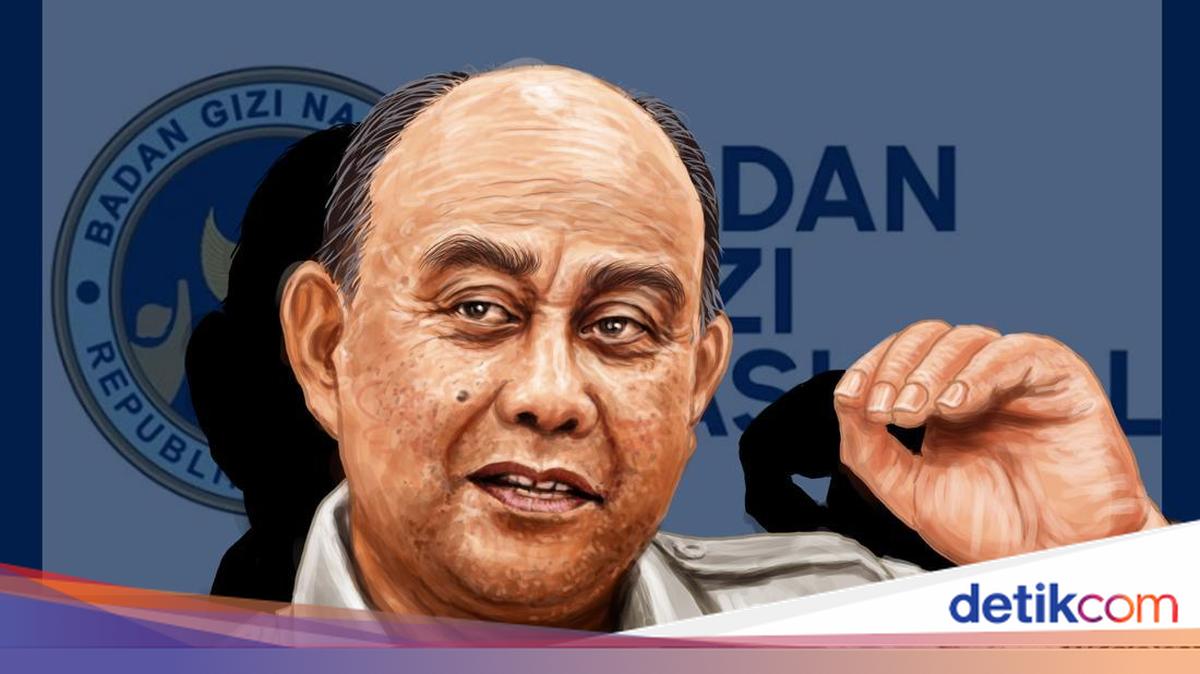
Amid the controversy, the Head of the National Nutrition Agency (BGN), Dadan Hindayana, continues to emphasise the urgency of procuring operational vehicles to support field work.
“Yes, I think that when these motorcycles are distributed to all our officers in the regions, their usefulness will become apparent,” he said when met by detikX at the Satuan Pelayanan Pemenuhan Gizi (SPPG) office in Citaringgul, Babakan Madang, Bogor Regency, on Friday, 17 April.
Nevertheless, he also admitted to having requested internal clarification regarding the various issues that have arisen.
“I have internally tasked the Inspectorate to handle it,” he stated.
So, how does BGN respond to the various issues surrounding the electric motorcycle procurement for the MBG programme? Read the full excerpt of the interview by detikX journalist Ani Mardatila with BGN Head Dadan Hindayana below:
Lately, the electric motorcycle procurement has been widely discussed. What is the origin of the plan for BGN to procure them, and from what need did it arise?
“Yes, it should be known that the Nutrition Agency is a new body. Then, it was asked to intervene in fulfilling nutrition for beneficiaries, including pregnant women, mothers, and toddlers as well as all schoolchildren, from early childhood education to high school students. And this is carried out throughout the remote areas of Indonesia.
“And there are many regions in Indonesia that will require mobilisation and vehicles, especially for the heads of nutrition fulfilment service units (SPPG) to carry out coordination, service delivery, and monitoring, and so on, particularly in hard-to-reach areas. Thus, the National Nutrition Agency strives to provide vehicles that can be used in those difficult areas, and we have realised this.”
How was the process until it was finally decided to procure a large number of electric motorcycles?
“Yes, because the design is that we have approximately 33,000 heads of nutrition processing service units who were previously trained as Indonesian driving scholars, and we plan that most of them will receive them, especially in difficult areas. Those in urban areas might not need them, but in difficult areas, we will provide those vehicles.”
Since when did the electric motorcycle procurement process begin, and what are the implementation stages?
“Yes, this is the 2025 budget. And we carry it out through the e-catalogue process. The budget unblocking for this was done in October, and then it was carried out. And the procurement requires additional time from 2025, so it can only be completed by the end of March 2026.
“So the process can be said from October to March, right, Sir?”
“Yes.”
Through what was the procurement process announcement made?
“Yes, it’s on Inaproc (Indonesia Procurement). So this is not a tender; the selection announcement is through the e-catalogue on Inaproc, and the selection is based on the potential possessed. The details might be explained by the commitment-making official.”
At the start of the procurement process, what was the planned number of needs?
“Yes, in our budget, it is actually allocated for approximately 25,000. But in realisation, with the available time, it can be realised for approximately 21,801 motorcycles. The PBN value is approximately Rp 1.2 trillion, but the realisation is approximately Rp 897 billion.”
Two types. One type is trail motorcycle, one is regular electric motorcycle. And they are two different motorcycles, but the majority of the trail ones are for men, and for women, regular electric motorcycles.
The motorcycles used are of the Emmo brand, types JVH Max and JVX GT, which have never been marketed or tested in Indonesia. The industrial design was also only recently submitted to the Directorate General of Intellectual Property (DJKI), and up to that point, it had no dealers or official service centres. Since when did you know these facts, Sir?
“Yes, this should be asked to the commitment-making official. In detail.”
From BGN’s side, what considerations led to the selection of this type and brand of motorcycle? What makes the vehicle deemed worthy of purchase?
“Yes, as the Head of the Nutrition Agency, I outline that for difficult areas, a trail with sufficient endurance and good battery is needed. And for women in easier areas, a regular motorcycle.”
Then, was there any party that convinced you in determining PT Yasa Artha Trimanunggal as the procurement winner? For example, from the commitment-making official or the procurement committee?
“This might be detailed by the commitment-making official.”
From our investigation, there are two warehouses owned by PT Adlas as a subsidiary of PT Yasa Artha Trimanunggal. One of them is claimed as a production site in Citeureup. However, when we checked on the ground, the warehouse has no office and its capacity is deemed inadequate, even for motorcycle storage. From these findings, is there any evaluation or indication of technical problems in this procurement process, Sir?
“Yes, I have internally tasked the Inspectorate to do it. But that’s an internal matter.”
So, when you tasked that, was there already an indication or suspicion of problems in the process, or how?
“Yes, I just asked for clarification.”
Has there been any report coming in regarding that, Sir?
“Up to now, I haven’t received a report. Later, if I get it, I will convey it.”
But when approximately was the inspection carried out, Sir?
“I already requested it from mid-January.”
Lately, news has also emerged in the…”