
When the High-Speed Train is Handed Over to the Ministry of Finance
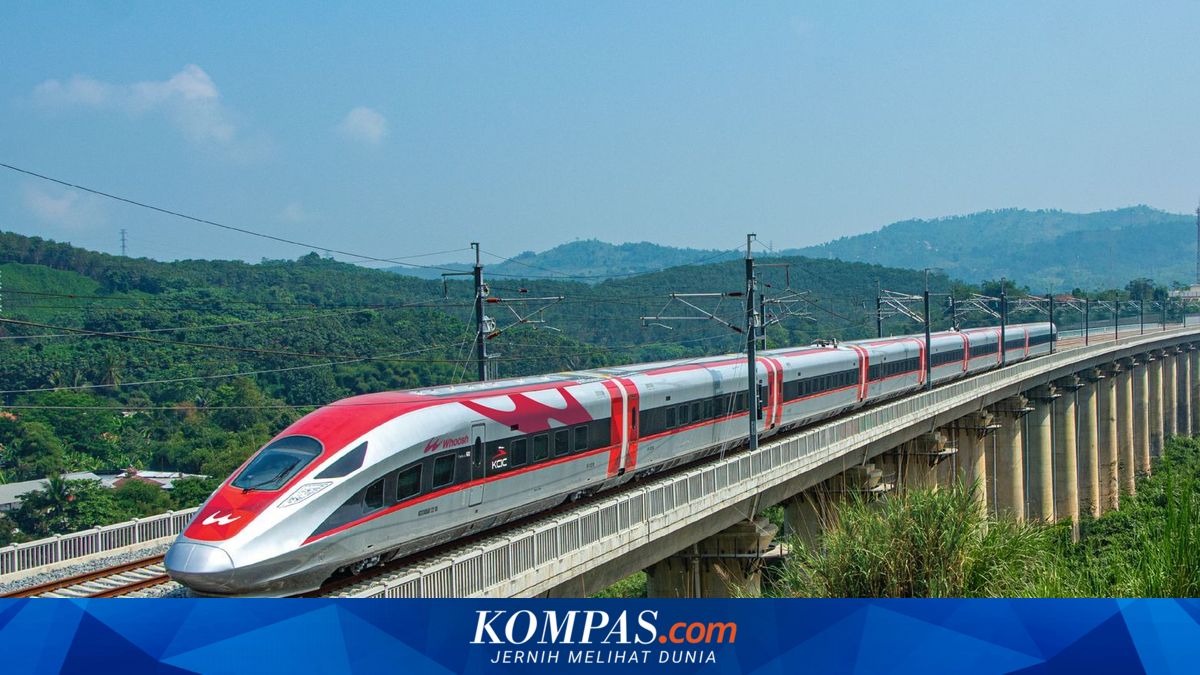
The roadmap for Indonesia’s mega-railway project reaches a crucial turning point in April 2026. The sweet promises of a pure Business-to-Business (B2B) scheme without state guarantees, which once formed the political foundation of the Jakarta-Bandung High-Speed Railway (KCJB), have finally collapsed entirely in the face of the bleeding financial balance sheets of the corporation. The plan to shift the management of PT Kereta Cepat Indonesia-China (KCIC) to direct control under the Ministry of Finance (Kemenkeu) is essentially an implicit admission of the structural failure of an infrastructure investment model in this country. This takeover plan becomes the largest “money laundering” operation in modern Indonesia’s fiscal history. From the outset, the Whoosh project has been overshadowed by political ambitions that exceed rational economic calculations. When project costs ballooned from the initial estimate of $6.07 billion to $7.26 billion, equivalent to Rp119.79 trillion, the financial burden began to strangle the consortium of state-owned enterprises (BUMNs) grouped under PT Pilar Sinergi BUMN Indonesia (PSBI). With a 60 per cent ownership stake, the Indonesian side bears far greater risks compared to its Chinese partners, especially when faced with interest on loans from the China Development Bank (CDB), which now poses a heavy burden on the horizon. The risk profiles of these red-plate construction companies have also fallen apart, while their business focus has been distorted by railway operations that are not their core competence. Similarly, PT KAI, as the lead consortium member, must shoulder the debt guarantee burden that threatens the stability of national public transportation services if not promptly rescued through central fiscal authority intervention. In terms of economic-political strategy, the transfer to the Ministry of Finance is a move to break the chain of corporate BUMN risk contamination. However, this asset transfer raises fundamental questions about the effectiveness of the institution that has only been in existence for a year, the Badan Pengelola Investasi Daya Anagata Nusantara (Danantara). As an institution touted to become a world-class Sovereign Wealth Fund, Danantara’s existence now appears shaky in facing financially “toxic” assets. The birth of Danantara initially promised a new era in which separated state wealth would be managed professionally to generate maximum returns. However, the plan to release KCIC to Kemenkeu creates a paradox that disturbs public reasoning.
Source: jawawa.id (https://jawawa.id/newsitem/when-the-high-speed-train-is-handed-over-to-the-ministry-of-finance-1776045121)
Originally published by Kompas (https://money.kompas.com/read/2026/04/13/074500726/ketika-kereta-cepat-diserahkan-ke-kemenkeu?utm_source=ABC&utm_medium=rss), translated from Indonesian