
When the Government Considered Turning Menteng into a Cemetery for Jakarta Residents
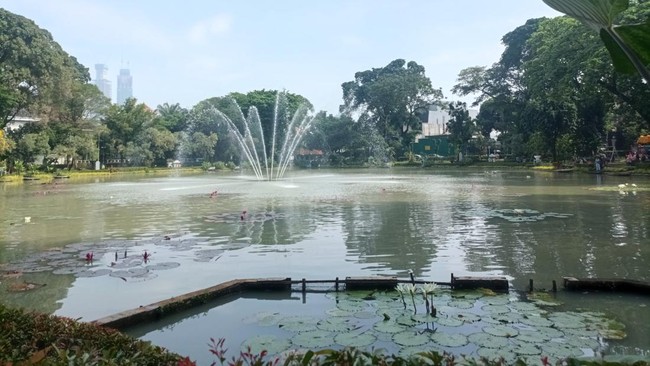
It is hard to imagine that the Menteng area, which currently serves as a symbol of luxury in Jakarta, was once nearly destined to become a cemetery for the residents of Jakarta (formerly Batavia). However, that plan never came to fruition. The colonial government chose instead to develop the area into an elite residential district that would eventually become one of the most prestigious neighbourhoods in Indonesia.
In 1908, the Batavia municipal government entered negotiations to purchase private land in Menteng owned by the Shahab family, of Arab descent. The purchase plan encompassed approximately 295 building blocks, with an agreed transaction value reaching 310,000 guilders. The acquisition was driven by the municipal government’s desire to secure public land amidst the many private plots scattered across Batavia. By controlling this land, the government could regulate the area’s development in accordance with public interests.
The Bataviaasch Nieuwsblad newspaper (20 July 1908) noted that the purpose of the purchase was to ensure the municipal government held a parcel of land amongst the various private holdings in Batavia. One of the considerations was to provide land should it be required for the construction of new cemeteries in the future. “The purpose of this purchase at a truly fair price is to ensure the municipal government possesses a piece of land amidst all the private lands in Batavia, where, if necessary, new cemeteries could be built,” wrote Bataviaasch Nieuwsblad.
Similar reports appeared in De Locomotief (20 July 1908). However, that newspaper mentioned that the municipal government did not yet have a definitive plan for all the land intended for purchase. In addition to the possibility of a cemetery, the land could also be used for developing model villages or new urban expansions.
The colonial government had further motivations behind the acquisition. They were concerned that if the Menteng land fell into private hands, development could proceed without government oversight. Consequently, there were fears that standards for roads, construction, and environmental cleanliness might not align with Batavia’s urban planning objectives.
Ultimately, the plan to use Menteng as a cemetery never materialised. The area instead underwent a massive transformation, evolving into one of the most modern housing projects of its era. In ‘Menteng: Indonesia’s First Garden City’ (2001), Adolf Heuken explains that this project was inseparable from the colonial government’s desire to build healthy residential areas around the capital of the Dutch East Indies. The land was eventually designated for high-class residential use.
“This newly established municipality intended for this newly acquired land to be used as a residential area for the upper class,” Heuken wrote.
The development of Menteng was subsequently carried out through modern means by the real estate company NV De Bouwploeg. Since 1908, the company began purchasing land in the area for approximately 238,870 guilders. From land once considered for burial needs, Menteng transformed into a modern garden district and a symbol of prestige. To this day, the area remains known as one of the most expensive and historic regions in Jakarta.