
When the EU’s Economic Interests Collide with Vietnam’s Human Rights Record
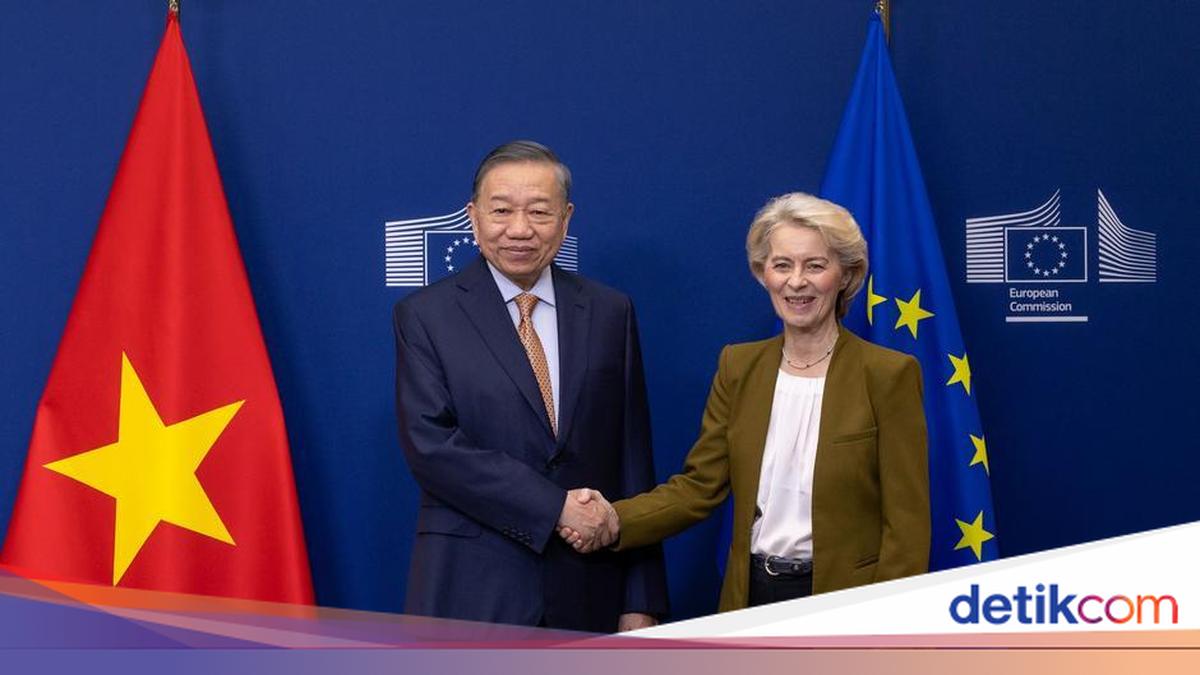
Vietnamese Communist Party General Secretary and President To Lam arrived in Brussels on Wednesday (21 October) for an official visit to the European Union and Belgium. The visit came days after Vietnam signed a free trade agreement with the European Free Trade Association (EFTA), whose members are Norway, Switzerland, Iceland and Liechtenstein.
Trade relations between Vietnam and the EU have grown closer since the EU–Vietnam Free Trade Agreement (EVFTA) came into force in August 2020.
Against the backdrop of a global tariff war, this cooperation highlights the importance of open markets, Khac Giang Nguyen, a visiting fellow at the ISEAS–Yusof Ishak Institute in Singapore, told DW.
Vietnam offers Europe a manufacturing base and access to Asian supply chains, he said. In return, Europe provides capital, technology and markets that help Vietnam reduce its reliance on US demand and Chinese industrial inputs.
Vietnam and the EU strengthen strategic ties
Vietnam is now the EU’s largest trading partner in Southeast Asia for goods and its 14th-largest globally. The EU, meanwhile, is Vietnam’s fourth-largest trading partner and one of its main sources of foreign investment.
In January, the two sides upgraded their relationship to a Comprehensive Strategic Partnership, the first such partnership between the EU and a Southeast Asian country.
Vietnam is also an important strategic partner for the EU in the Indo-Pacific, said Alfred Gerstl, an Indo-Pacific international relations expert at the University of Vienna.
The cooperation supports the EU’s efforts to strengthen economic security and reduce dependence on China, particularly by diversifying supply chains.
Several EU member states have signed defence agreements with Vietnam. On Wednesday (21 October), EU foreign policy chief Kaja Kallas met Vietnamese Foreign Minister Le Hoai Trung to discuss closer security cooperation, including in the South China Sea, where Vietnam and China have a territorial dispute.
Economic cooperation amid human rights concerns
Despite increasingly close ties, Vietnam’s human rights record remains a concern. Human rights groups say the government has become more repressive under To Lam, who previously headed the Ministry of Public Security.
Vietnam retains a one-party system and restricts political opposition, independent journalism and civil society activity.
In an open letter to European Commission President Ursula von der Leyen and European Council President Antonio Costa, 12 international human rights organisations expressed concern about the Vietnamese government’s escalating repression. They urged EU leaders to demand genuine reforms.
During negotiations on the EVFTA, Vietnam pledged to improve human rights protections, labour rights and environmental standards. Hanoi also promised to reform labour rules so workers could form independent organisations, and to bring national regulations into line with International Labour Organization (ILO) standards.
However, human rights groups say these commitments have not been met. Vietnam has yet to ratify the ILO convention on freedom of association, while independent trade unions remain banned.
“The European Union has taken no action over Vietnam’s repeated violations of its obligations and commitments under the EVFTA. Instead, in January, the EU upgraded the status of its bilateral relationship,” the letter said.
Trade benefits remain uneven
The benefits of the free trade agreement have also yet to be shared evenly in Vietnam.
Large manufacturing companies backed by foreign investors and established exporters are considered better placed to benefit from tariff reductions than small domestic businesses. Smaller firms often struggle to meet complex European import requirements.
Vietnamese exporters also face increasingly strict EU rules, including the Carbon Border Adjustment Mechanism (CBAM) and deforestation regulations. These policies require companies in affected sectors to provide more detailed information about production processes and supply chains.
“The benefits of the EVFTA have clearly not been felt evenly across sectors, companies and groups in society,” Hai Thiem Bui, a researcher at the Stockholm Center for Global Asia at Stockholm University, told DW.
He said the future of trade relations would depend on Vietnam’s ability to meet the EU’s increasingly stringent standards on workers’ rights, sustainability and regulatory governance.
Trade deficit poses a challenge for Europe
Another issue is the trade imbalance. Although the EVFTA has strengthened trade between the two sides, so far it has been more successful in boosting Vietnamese exports to Europe than EU exports to Vietnam.
In 2025, the EU’s goods trade deficit with Vietnam reached €51.7 billion (about Rp1,000 trillion), up from around €24 billion (Rp480 trillion) in 2019.
The imbalance is a concern as Brussels seeks to strengthen economic security and open up new export opportunities for European industry.
Investment protection also remains an obstacle. The EU–Vietnam Investment Protection Agreement, signed in 2019, has not yet entered into force because ratification is still pending in several member states.
Germany ratified it in February and Poland in April. France, the Netherlands and several other countries have yet to complete the process.
Chris Humphrey, executive director of the EU–ASEAN Business Council, said European companies’ investment in Vietnam continued to rise despite the investment protection agreement not yet being in force.
With Vietnam’s new government pursuing an ambitious legislative agenda and seeking to sustain economic growth, Humphrey expects trade between the two sides to continue expanding. However, European companies are still watching to see what reforms the government will implement.
For Brussels, the challenge is to ensure European companies also benefit from Vietnam’s economic growth without abandoning commitments to human rights and sustainable trade.
Source: jawawa.id (https://jawawa.id/newsitem/when-the-eus-economic-interests-collide-with-vietnams-human-rights-record-1792849878)
Originally published by detikcom (https://news.detik.com/dw/d-8722437/saat-kepentingan-ekonomi-uni-eropa-berhadapan-dengan-isu-ham-vietnam), translated from Indonesian