
When Soekarno-Hatta Fell Silent Due to Anak Krakatau Ash
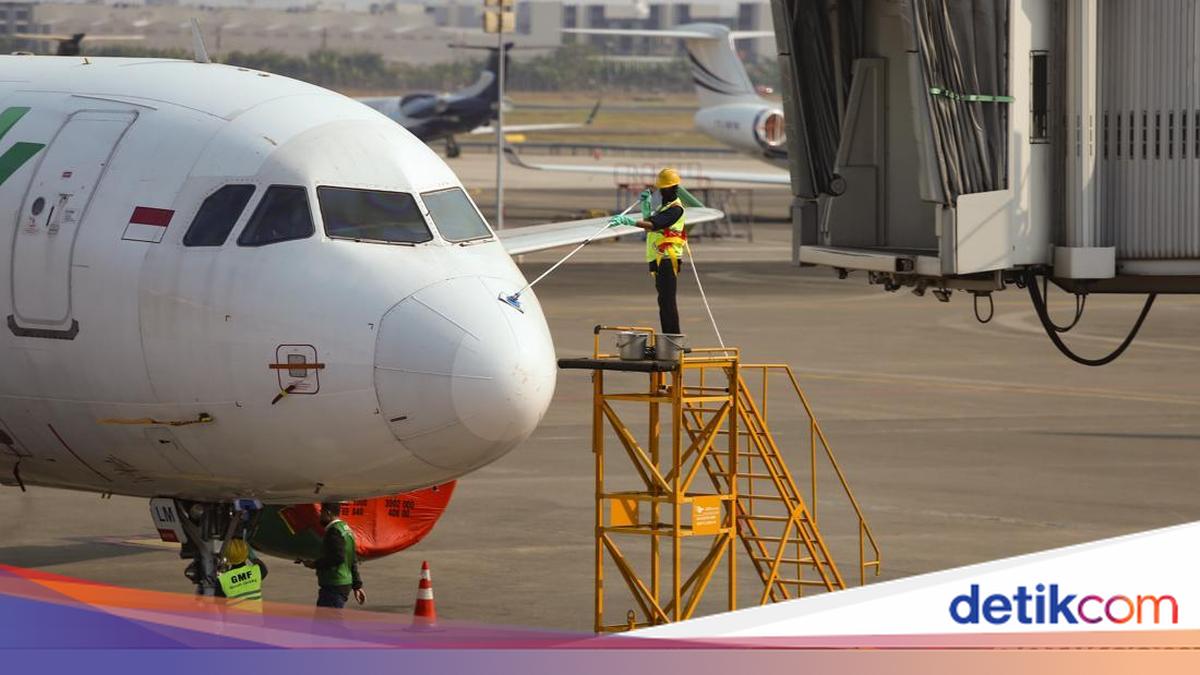
At 7:00 am, Soekarno-Hatta Airport was already crowded when Yudi Chandra arrived. He was originally scheduled to fly to Penang, Malaysia, for a medical check-up on 7 September. Although his 06:00 flight had been rescheduled to 09:00, he did not realise this change was more than a routine delay.
Amidst the terminal crowds, Yudi checked the flight schedule, only to find that all flights he viewed were cancelled. Passengers filled the airport as destinations on the departure screens appeared to halt simultaneously. Seeking clarification, Yudi approached customer service.
“Upon arriving at the airport, it was full of people. We checked the flight schedule, and it turned out all flights were cancelled,” Yud told detikX.
Customer service confirmed that all flights were cancelled due to airport policy following the dispersal of volcanic ash. There was no longer any reason to wait until 09:00; the plane intended to take him to Penang would not depart that morning.
Yudi’s immediate concern was not how to pass the time at the airport, but how to reorganise his entire itinerary. The trip was brief, with a tightly packed schedule involving rescheduled flights, pre-booked hotels, and fixed medical appointments that could not be easily moved without consequences.
Finding no alternative flights, Yudi’s only option was a refund. For him, this was the most sensible course of action, as no flights could be forced to depart while the airport was closed due to volcanic ash risks.
Financial loss was not his primary grievance. “The financial loss was not much, under Rp5 million. But the loss of time is significant, as I have to rearrange a very busy schedule,” he said. He noted that he understood the decision to halt operations, recognising the risks volcanic ash poses to aviation.
The disruption was not a standard flight disturbance. Between Friday and Saturday, 4–5 September 2026, eruption activity from Mount Anak Krakatau increased, spreading volcanic ash into the airspace of Banten and surrounding areas. Paper tests conducted in the airside area of Soekarno-Hatta International Airport confirmed the presence of volcanic ash.
At 01:30 WIB on Sunday, 6 September 2026, flight operations at Soekarno-Hatta were suspended. While initially expected to last only a few hours, the ash conditions and wind direction necessitated multiple extensions of the closure. Runways, taxiways, and aprons required cleaning from ash deposits, and safety protocols had to be re-verified before operations could resume.
This closure marks a significant event in the operational history of Soekarno-Hatta, as it is the first time the airport has faced a total operational halt due to volcanic ash dispersal like that seen in September 2026. From the suspension at 01:30 on Sunday until the gradual reopening towards Tuesday, 8 September, the airport experienced an operational paralysis of approximately 46 hours and 30 minutes.
A different story emerged from Hendrawan, who was preparing for an official duty trip to Bali regarding waste management. His flight from Bandung was originally scheduled for 08:00 but was delayed to 11:00.
Despite being warned by his child the previous night that Soekarno-Hatta was closing due to ash, Hendrawan arrived at Husein Sastranegara Airport in Bandung without certainty of a cancellation. He proceeded through the departure process and boarded the aircraft.
However, once seated in the cabin, an announcement was made. “Simultaneously, Ngurah Rai Airport in Bali was also closed. I had been sitting in the plane for perhaps 5 to 10 minutes when the announcement came through that the flight would be cancelled because the intensity of the volcanic ash had become massive,” he said.
Source: jawawa.id (https://jawawa.id/newsitem/when-soekarno-hatta-fell-silent-due-to-anak-krakatau-ash-1789053351)
Originally published by detikcom (https://news.detik.com/intermeso/d-8657640/ketika-soekarno-hatta-hening-karena-abu-anak-krakatau), translated from Indonesian