
When Small Shops and Gig Workers Lose Economic Sovereignty
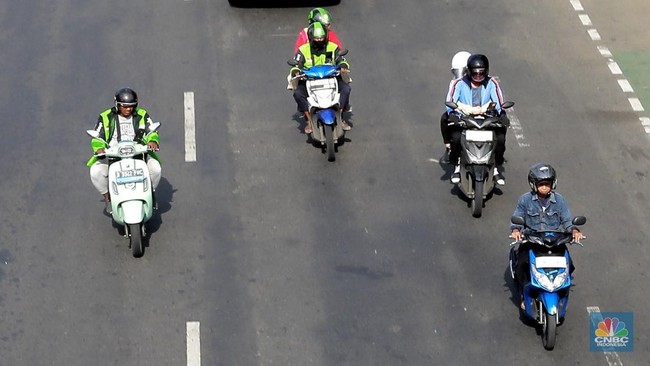
In every corner of Indonesia’s cities and villages, the narratives of ‘MSME upgrading’ and ‘digital transformation’ are echoed as the path towards a modern people’s economy. Data from the Ministry of Cooperatives and SMEs records that millions of micro-business actors have entered the digital ecosystem.
However, behind the seemingly optimistic macroeconomic figures lies a much more bitter microeconomic reality. The question is, is this what we call economic equality, or merely a shift in the form of exploitation from conventional market moneylenders to algorithmic moneylenders?
It must be realised that what is happening in Indonesia is not a local anomaly. It is a global symptom of a new phase of capitalism which economist Nick Srnicek calls ‘Platform Capitalism’—a system where value is no longer created through the production of real goods, but through the monopoly of digital infrastructure and the extraction of data and commissions from every transaction.
Recent research from the SMERU Research Institute (2lar24) shows that although participation in the gig economy is increasing, the level of income vulnerability is actually widening. Approximately 68% of gig workers report extreme income fluctuations, with average net incomes remaining stagnant or even decreasing after deducting operational costs and platform fees.
This phenomenon has given rise to what sociologist Guy Standing calls the ‘Precariat’: millions of workers trapped in structural uncertainty, without social security, minimum wage, or the right to unionise.
The failure of the ‘MSME Go Digital’ policy, which remains merely superficial, is clearly visible in two field phenomena. First, the case of the ‘agentisation’ of micro-shops. Many traditional shops in Java and Sumatra are being ‘pushed’ to become agents for e-commerce or fintech platforms.
Initially, this appeared to be modernisation. However, these shops are losing their pricing sovereignty. They are forced to follow prices dictated by central algorithms to win ‘discount wars’, while profit margins are eroded by rising logistics costs and platform fees.
Shops that were once independent business units are now being reduced to mere fulfilment centres that bear the risk of dead stock, while consumer data and the primary profits flow to the platform’s headquarters. Second, the trap of operational debt for gig workers. In the online transport sector, many partner drivers are trapped in a cycle of digital debt (online loans).
Because algorithmic incentives are becoming increasingly difficult to achieve and base tariffs no longer cover operational costs, they borrow money digitally just to cover daily expenses. This is a form of ‘financialisation of poverty’: their surplus labour is not used for capital accumulation, but is instead drained to pay compound interest.
The world, at the same time, is moving rapidly to respond to this same phenomenon—and Indonesia appears to be lagging behind. In 2024, the European Union passed the Platform Work Directive, which introduces a legal presumption of employment: if a platform meets at least two of five control criteria, the worker is automatically considered an employee rather than an independent partner.
Spain went even further with the Rider Law (2021), which mandates algorithmic transparency. The United Kingdom, through the Supreme Court ruling in Uber BV v. Aslam (2021), established that Uber drivers are entitled to the minimum wage and pension protections.
In developing nations, resistance is coming from below. India, with over 8 million gig workers, witnessed large waves of protests in 2024 that forced the government to implement the Code on Social Security—requiring platforms to allocate 1-2% of turnover to a social security fund for gig workers.
Brazil and Argentina followed with progressive regulations in 2023 and 2024, respectively. Equally important, platform cooperatives such as CoopCycle have grown in Europe—a network of courier cooperatives operating in over 30 cities, where the application is owned and managed democratically by the workers themselves.
Indonesia, with its strong cooperative tradition and the vision of Mohammad Hatta, should be an ideal place for this model to grow. Unfortunately, state support remains very minimal. The derivative regulations of the Job Creation Law have not explicitly recognised disguised employment within the platform ecosystem, and our regulations still struggle with the ambiguous status of ‘partners’.
In fact, this practice fundamentally contradicts the spirit of the Pancasila Economy. As the late Professor Mubyarto emphasised, our economic system must be based on the principle of kinship, which prevents the strong from preying on the weak.
Article 33 of the 1945 Constitution mandates state control for the greatest prosperity of the people. When the state facilitates power asymmetries that disadvantage the common people, we are betraying our own constitution.
Ending this exploitation does not mean rejecting technology, but rather demanding an institutional reconstruction that restores sovereignty to the people. There are three strategic steps that can be taken.
First, the strengthening of platform cooperatives. Encouraging digitally-native cooperative models, where applications or platforms are owned, managed, and regulated democratically by their members. Algorithms become transparent, platform fees are suppressed to a reasonable limit, and profit surpluses are redistributed as member dividends.
This is the modernisation of Hatta’s vision in the digital era, with a real precedent from CoopCycle in Europe. Second, regulation of algorithmic transparency and the presumption of employment. Adopting models like the EU’s Platform Work Directive and Spain’s Rider Law—establishing objective criteria for platform employment relationships and mandating openness regarding how algorithms function. The KPPU (Business Competition Supervisory Commission) needs to be given stronger authority to oversee these practices.