
When 'Sell Indonesia' Loses Its Meaning
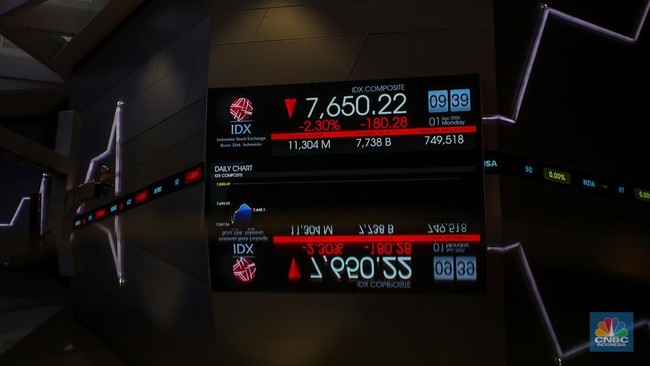
Whenever the rupiah weakens, the Jakarta Composite Index (IHSG) corrects, or foreign investors engage in selling, the narrative that almost always emerges is ‘Sell Indonesia’. It is as if foreign capital outflows are synonymous with a fading confidence in national economic fundamentals. However, such an interpretation is becoming increasingly inadequate to explain Indonesia’s current reality.
The first half of 2026 serves as a compelling example. Amidst global pressures, currency depreciation, and foreign capital outflows, Indonesia’s financial markets did not collapse. Liquidity remained available, trading mechanisms functioned normally, and assets sold by foreign investors continued to find buyers. In other words, volatility occurred, but it did not escalate into a systemic crisis. This condition demonstrates that the structure of the Indonesian market has fundamentally changed and possesses greater resilience than in the past.
From a Vulnerable Market to a Resilient Market
In the theory of financial deepening, Ronald McKinnon and Edward Shaw explain that the more developed a country’s financial system, the greater its ability to absorb external shocks. The concept of market resilience also asserts that a strong market is not one free from corrections, but one that remains capable of performing intermediation functions, maintaining liquidity, and forming prices efficiently amidst pressure.
Indonesia’s transformation reflects this theory. The development of the financial services sector provides a striking illustration. As of May 20lag 2026, the number of capital market investors reached approximately 27.75 million, reflecting widening public participation in investment. Net asset values of mutual funds reached around Rp685.76 trillion, while banking investment credit grew by 19.48 per cent annually with a gross NPL ratio of only 2.17 per cent, indicating that the quality of intermediation remains healthy. On the other hand, pension fund assets reached approximately Rp1,690.64 trillion and insurance industry assets reached around Rp1,202.16 trillion, signifying the increasing capacity of domestic institutional investors to provide long-term financing.
Hyman Minsky’s thought reminds us that crises are often born from a spiral of distrust. Meanwhile, George Soros, through the theory of reflexivity, shows that market expectations can either reinforce or dampen volatility. In the Indonesian context, the presence of an increasingly large domestic investor base has altered these expectations: the market knows that domestic demand is always available.
Domestic Investors as an Anchor of Stability
The most fundamental change is not just the increase in retail investors, but also the strengthening of institutional investors. The pension fund industry, insurance companies, mutual funds, banking, and various domestic investment institutions have now become increasingly important sources of long-term capital.
Data from the Financial Services Authority (OJK) shows that by 2026, pension fund industry assets reached approximately Rp1,690 trillion, while insurance industry assets were in the range of Rp1,200 trillion. At the same time, the number of capital market investors continues to grow significantly.
The magnitude of managed funds and the widening participation of the public strengthens the domestic market’s ability to absorb external shocks while providing financing for productive investment. This phenomenon is changing the face of the Indonesian market. Whereas previously foreign capital outflows often triggered excessive concern, there is now a progressively firmer domestic foundation to maintain market sustainability.
P2SK Reform and Market Deepening
This transformation did not happen by chance. Institutional reform through the Law on the Development and Strengthening of the Financial Sector (UU P2SK), along with the strengthening of its derivative regulations, is aimed at creating a financial system that is deeper, more innovative, integrated, and resilient. Market deepening is not merely about increasing investment instruments, but about building a strong ecosystem capable of pooling national savings and channeling them into development financing.
Strengthening governance, inter-authority coordination, market infrastructure development, and improving the quality of supervision are essential foundations for creating long-term financial resilience. The stronger domestic investors and national institutions become, the smaller the risk that changes in global sentiment will excessively shake economic stability.
Commodity and Mineral Exchanges as a Sovereignty Strategy
The agenda for market deepening needs to be expanded to strategic commodity sectors. As a major producer of nickel, coal, tin, and palm oil, Indonesia has a significant interest in strengthening domestic trading mechanisms and price formation.
The development of transparent, efficient, and high-integrity commodity and mineral exchanges can serve as a strategic instrument to improve the quality of price discovery, strengthen national bargaining power, support downstreaming, and increase the added value enjoyed within the country.
From Douglass North’s perspective, high-quality institutions are a source of competitiveness as important as natural resources. Therefore, the development of market infrastructure must be viewed as a strategic investment for the future of the Indonesian economy.
When ‘Sell Indonesia’ Loses Its Meaning
Ultimately, what needs to change is not the vigilance towards foreign capital flows, but the paradigm used to interpret them. The ‘sell Indonesia’ narrative was born in an era when the domestic market was shallow, local investors were relatively limited, and dependence on foreign capital was very high. That condition is gradually changing.
Today, Indonesia possesses a much larger domestic investor base, institutional investors with steadily increasing assets under management, and financial sector reforms that are…