
When Rp3,500 Is No Longer Enough to Move Around Jakarta
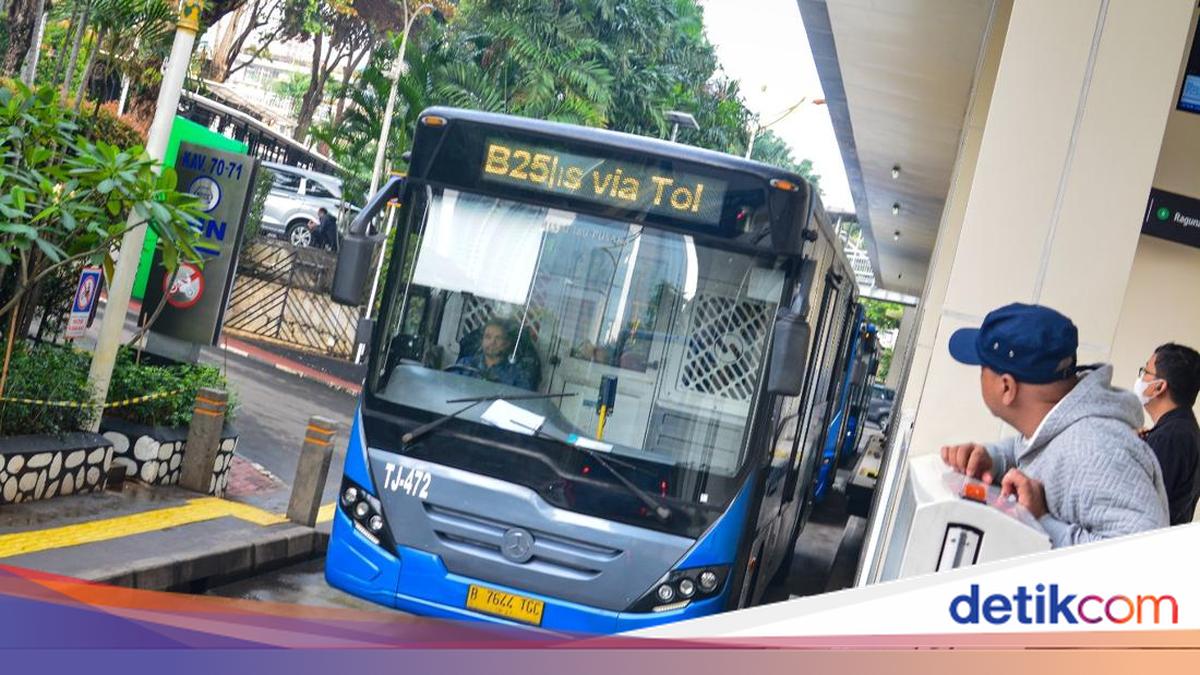
The queue at the Kalideres Transjakarta shelter began to snake. People stood as if they had memorised their respective positions. Some clutched electronic cards, others stared at phone screens without really reading. Raka Pratama stood in the middle row. His black backpack looked full, hanging from one shoulder. He was waiting for the 3F Kalideres–Senayan Bank DKI bus route, a route he knew by heart, including when it usually arrived and when he had to be ready if it was late. The 29-year-old works as an administrative staff member at a logistics company in the Sudirman area. He lives in a small rented house on the border of West Jakarta and Tangerang city with his wife. In a day, he can spend nearly three hours on the road, a journey that has inevitably become part of his life. He leaves before dawn, returns when the sky is already dark. Transjakarta, or more precisely the Transjabodetabek service, is not merely a transport choice for Raka. It is the only system that still fits into his life’s calculations. “What makes me hold on is not just the practicality, but… it’s cheap. Honestly, Rp3,500 really helps,” Raka told detikX. With a single fixed fare, he does not need to think about additional costs mid-journey. There are no connecting fees, no unexpected expenses when he has to change modes. Everything feels more certain, something important for Raka, who must adjust his spending to a salary that does not change much. In a month, he allocates around Rp300,000 to Rp400,000 for transport. He has calculated everything, from transport costs, lunch, to the remainder he can save at the end of the month. In that calculation, there is no room for sudden spikes. “If it goes up to Rp10,000 for example, it automatically triples,” he said. “Not to mention food prices, electricity, everything is rising. So it feels like… well, increasingly squeezed.” This anxiety is not without reason. The DKI Jakarta Provincial Government is indeed reviewing a fare adjustment for Transjakarta services, especially for routes connecting Jakarta with buffer areas such as Bogor, Depok, Tangerang, and Bekasi. This plan emerges as cross-city routes increase and the subsidy burden is deemed to be growing larger. Several regional officials have mentioned that the new fare figure is still in the calculation stage. However, in various discussions, the range surfacing is between Rp10,000 and Rp15,000 per trip. For some passengers, this discourse feels like a threat that directly hits their monthly calculations. But for others, the issue is not as simple as agreeing or disagreeing, but rather how large the impact will be on their daily work rhythm. Annisa Putri Maharani, 31, feels it in a different way. She stood while rechecking her meeting schedule for the day. As an account executive at a digital marketing agency, mobility is part of her job, moving from one client to another, from Sudirman to Kuningan, then to Kemang, sometimes even to Tangerang, in the same day. Annisa actually owns a motorcycle. But she chooses to leave it in the parking lot near her house in Ciputat, then continue her journey with Transjakarta. “The motorbike is only for getting to the starting point,” she said. “After that, I just continue with the busway. If I take the motorbike, it’s a headache thinking about parking everywhere, it’s expensive now. Not to mention petrol, and traffic jams,” she explained. In one day, Annisa can move between two to three different locations. This means that every fare increase will multiply according to the number of trips she must make. If the fare truly jumps to the range of Rp10,000 to Rp15,000, her transport costs could swell far above what she has been spending. “If it becomes Rp5,000, for example, I think that’s still okay,” she said. “As long as the service also improves. Buses are more punctual, more comfortable, that’s fair. But don’t just make it really high like that.” Annisa faces a dilemma; on one hand, she enjoys the convenience and time certainty of Transjakarta. On the other hand, a large fare increase could potentially push her back to the choice she has so far abandoned. “If the increase is that much, honestly, I’ll have to rethink,” she said. “Because if you multiply it by the new fare, the additional cost is quite significant,” Annisa stated. She admitted it is not that she does not want to keep using public transport. But if the cost difference becomes too large, rational decisions can change. “It’s possible that people will eventually go back to using private vehicles,” she said. The discourse on raising Transjakarta fares is not new. For more than two decades, the Rp3,500 figure has remained almost unchanged since the service first appeared in 2004. But now, the DKI Jakarta Provincial Government is reviewing fare adjustments, including for the Transjabodetabek service connecting Jakarta with buffer areas such as Bogor, Depok, Tangerang, and Bekasi. The figures circulating vary, starting from Rp5,000, Rp7,000, to a range of Rp10,000 to Rp15,000 for certain routes. One route under the spotlight is Blok M–Soekarno-Hatta Airport. “It is impossible for the Blok M-Soekarno-Hatta route fare to be Rp3,500. Taking Damri or other transport modes already averages above Rp100,000,” said DKI Jakarta Governor Pramono Anung. He stressed that the fare is no longer realistic when compared to the operational costs that must be borne. The long distance, numerous stops, and parking fees in the airport area are factors making the service cost much higher.