
When rights find their owners
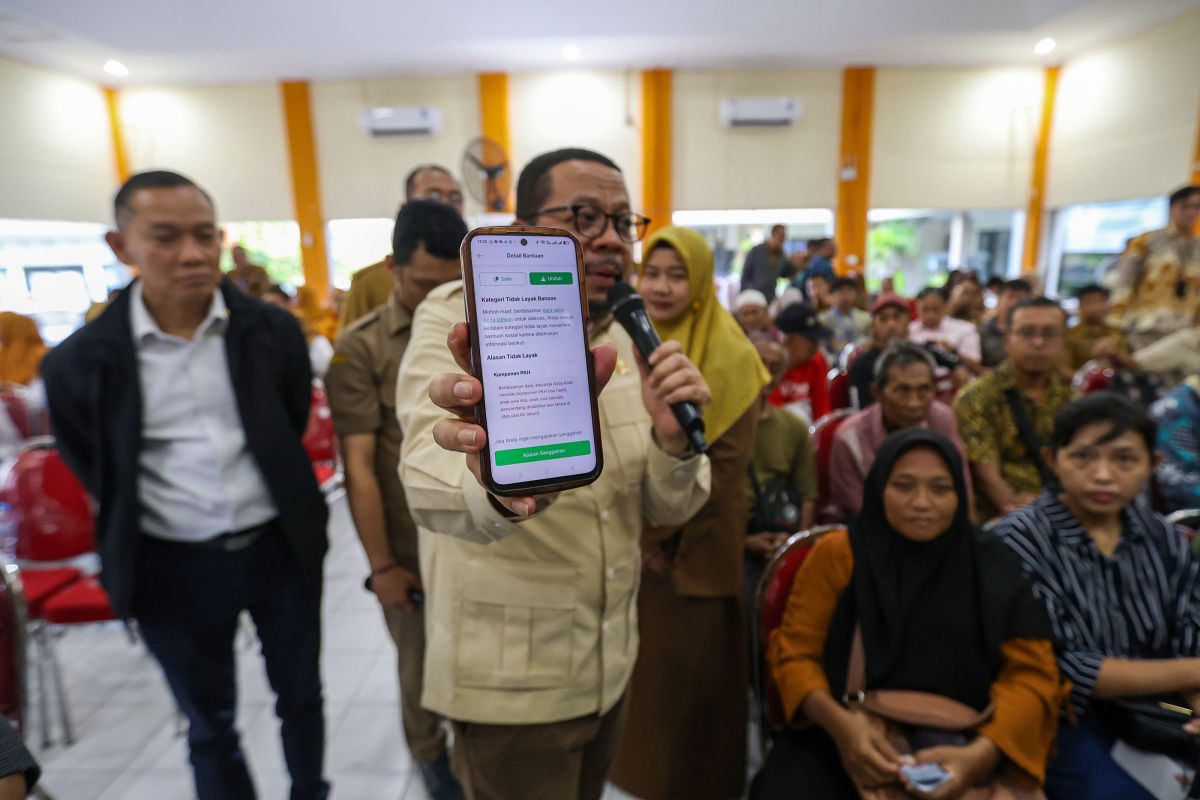
Behind the screen of a mobile phone, a citizen’s face is captured by a camera. Within seconds, the system recognises their identity, matches it with population data, traces information from various agencies, and determines whether they are entitled to social assistance.
A process that once took months can now be completed in minutes. Behind this change, something much larger than mere digitalisation is occurring: the state is transforming how it ensures social justice works.
The city of Surabaya, East Java, has become a key stage for this transformation. The city was selected as the national trial site for Digital Social Protection (Perlinsos Digital), a new system that integrates data across ministries and agencies to improve the governance of social assistance. This is not merely about replacing paper forms with applications, but about building a new mechanism to ensure aid truly reaches those in need.
This transformation deserves attention because the issue with social assistance for years has not been the smallness of the budget, but rather the accuracy of targeting. The government allocates a very large budget for social protection. However, no matter how large that budget is, it loses its meaning if poor families do not receive their rights, while those who are already well-off continue to enjoy the benefits. These are the two classic problems known as inclusion error and exclusion error.
Seeking justice: Data from the trial in Surabaya demonstrates why updating the system is vital. Out of more than one million recorded households, data collection has reached 99.74 per cent. This figure shows that almost all families were reached during the verification process.
Even more interesting are the evaluation results. From approximately 101,000 households receiving assistance based on old data, it was found that around 25,000 families were actually no longer eligible to receive aid. At the same time, the system successfully identified approximately 51,000 heads of households who were previously not included as recipients, despite meeting the requirements.
These figures illustrate that the primary issue is not simply the number of aid recipients, but the quality of the data that forms the basis for decision-making. For years, discrepancies in population data, unreported changes in domicile, and shifts in a family’s economic condition have caused databases to become obsolete very quickly.
This phenomenon is not unique to Surabaya. Almost all regions face similar dynamics because poverty is a highly fluid condition. Someone may lose their job today, while another may recover within a few months. When data is updated too slowly, assistance risks being misdirected.
Digital Social Protection attempts to address this issue through the integration of population data, asset ownership, vehicles, land, and even electricity usage data. Verification is performed automatically through cross-agency data exchange, so that decisions no longer rely entirely on manual assessment. The system also provides an appeal mechanism if a citizen’s real-world conditions differ from the data read by the system.
This approach is a significant step towards strengthening objectivity while maintaining a sense of fairness. As the basis for decision-making becomes more transparent, the space for subjectivity or suspicions of ‘favoured’ recipients can be narrowed. However, digital justice cannot be built through technological sophistication alone; it still requires high-quality data.