
When Revelation Invites Humanity to Read Rocks as Guardians of Life
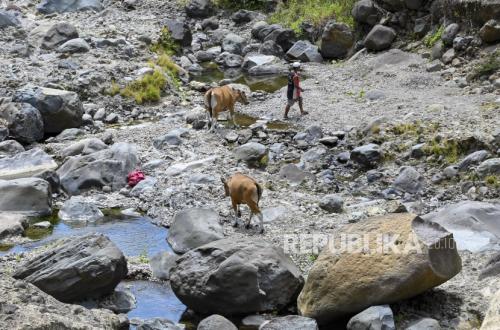
Water is the foundation of all life. No civilisation has ever arisen without water, and no ecosystem survives without a healthy hydrological cycle. Yet behind the water flowing in rivers or springing from the ground lies a component of nature that often escapes human attention: rock.
To the casual observer, rock is merely hard material that can be cut, broken, or mined. The Quran, however, presents a very different perspective. Rock is not simply an inanimate object, but part of the signs of Allah’s greatness, capable even of serving as the medium through which water and rivers emerge. This perspective appears clearly in QS Al-Baqarah verses 60 and 74.
This study does not intend to turn the Quran into a geology textbook, let alone force scientific discoveries into Quranic exegesis. Rather, it invites readers to see how modern hydrogeology can serve as a means of better understanding the kauniyah verses of Allah spread throughout the universe.
QS Al-Baqarah verse 60 recounts how the Prophet Musa AS prayed for water for his thirsty people. Allah then commanded him to strike a rock with his staff. By Allah’s will, twelve springs gushed forth, so that each tribe knew its own drinking place.
That miracle certainly lies outside the ordinary laws of nature. The water did not flow because Musa’s staff possessed some special power, but solely by the will of Allah SWT. Even so, it is striking that Allah chose rock as the medium through which water emerged. The verse then closes with a profoundly important command: “…Eat and drink from Allah’s provision, and do not commit corruption on the earth.”
This moral message shows that the gift of water is always accompanied by a duty to safeguard the earth. Even more compelling is QS Al-Baqarah verse 74. After describing the hardness of the hearts of some of the Children of Israel, Allah declares: “Indeed, among the rocks are some from which rivers gush forth; others split open, and water flows from them; and others collapse in fear of Allah.” This verse is not describing a miracle, but rather uses the phenomenon of rock as a moral lesson. At the same time, however, it invites humanity to observe the reality of nature: there are rocks connected to the emergence of water, and even rivers. From the perspective of modern hydrogeology, this phenomenon is deeply fascinating.
Hydrogeology is the branch of science that studies the relationship between rock, soil, and groundwater. One of its core concepts is the aquifer: a layer of rock capable of storing and transmitting groundwater. Aquifers may consist of sand, gravel, sandstone, fractured volcanic rock, or limestone that has undergone dissolution (Freeze & Cherry, Groundwater, 1979).
It is here that karst regions occupy a critically important position. The term “karst” derives from the Kras Plateau in Slovenia and Italy, which served as a natural laboratory for European geologists from the 19th century onwards. Slightly acidic rainwater dissolves limestone over thousands to millions of years, forming fissures, subterranean channels, caves, and underground rivers. The system works like a giant sponge: absorbing rainwater, storing it, and then releasing it slowly through springs (Ford & Williams, Karst Hydrogeology and Geomorphology, Wiley, 2007).
This phenomenon explains why many of the world’s great springs emerge from karst regions. One example is the Škocjan Caves in Slovenia. The Reka River disappears underground, flows through an extensive cave system, and then re-emerges as a spring at another location. The area is protected as a UNESCO World Heritage Site on account of its geological, hydrological, and ecological value.
Another example lies in the Swabian Alb region of Baden-Württemberg, Germany. The Blauptf spring in Blaubeuren and the Aachtopf spring in Aach result from the discharge of water from an extensive karst aquifer system. Hydrogeological research has demonstrated a connection between water lost from the River Danube and the Aachtopf spring via a network of fissures in the limestone (Geopark Swabian Alb; Ford & Williams, 2007).
Indonesia, too, possesses karst landscapes of no lesser importance, including Gunung Sewu, Maros-Pangkep, the Kendeng Mountains, and Citatah in West Java. These regions not only hold limestone reserves but also function as recharge areas and groundwater stores that sustain community life (Geological Agency, Ministry of Energy and Mineral Resources).
Hydrogeology, however, does not concern only limestone. The volcanic rocks abundant in Indonesia also perform remarkable hydrological functions. Fissures in andesite, basalt, and ancient lava can serve as pathways for rainwater infiltration and form highly productive aquifers. Many springs on the slopes of Java’s volcanoes emerge through volcanic rock systems that have undergone natural fracturing (Todd & Mays, Groundwater Hydrology, 3rd Edition, 2005).
This means rock is not merely geological material. It is part of the earth’s hydrological infrastructure.
In this context, QS Al-Baqarah verse 74 becomes all the more evocative. Allah does not merely mention rocks from which water issues, but rocks from which rivers gush forth. Modern hydrogeology shows that many rivers do indeed begin with the discharge of groundwater through large springs fed by karst aquifers or fractured rock systems. Science helps humanity understand part of the mechanism of Allah’s creation that is the object of contemplation.
This awareness should transform the way humans view rocky landscapes. To date, the value of a hill has too often been calculated by the volume of rock that can be mined. In fact, there is another, far greater value: hydrological ecosystem services. A karst hill can store millions of cubic metres of water, reduce flooding, maintain river flows during the dry season, and provide clean water for communities. This value frequently goes uncounted in conventional economic calculations (Millennium Ecosystem Assessment, Ecosystems and Human Well-being, 2005).
For this reason, a number of countries have begun to shift their paradigm for managing karst regions. In Slovenia, the Kras region and Škocjan Caves are maintained as areas for conservation, research, education, and ecotourism. Economic activity continues, but not at the expense of their hydrological function.
In Germany, many karst areas in Baden-Württemberg are designated as Wasserschutzgebiete, or drinking water protection zones. Activities that could pollute or damage aquifer systems are strictly restricted so that the water supply for the population remains secure.
In Indonesia, a similar approach is beginning to be applied to several strategic karst areas through the designation of Karst Landscape Areas (KBAK). Although implementation still faces various challenges, the direction of the policy reflects a growing awareness that rock is not merely a source of minerals, but also a storehouse of the water of life.
Reflection
QS Al-Baqarah verses 60 and 74 in fact teach something deeper than stories about rock and water. Both verses transform the way humans view nature.
Modern humanity often regards rock as a commodity. The Quran invites humanity to see rock as part of the signs of Allah’s greatness. Hydrogeology then reveals that, beneath its hardness, rock in fact harbours a tenderness in the form of the water that sustains all creation.
This may be the greatest irony of our age. We are so adept at calculating rock reserves, yet not yet wise enough to count the water reserves they hold. We can estimate the value of a mine in rupiah, yet often fail to calculate the worth of the springs that have sustained villages for hundreds of years.
Recommendations
First, every mining permit in rocky areas, particularly karst regions and water recharge zones, must be preceded by comprehensive hydrogeological mapping using methods such as Electrical Resistivity Tomography, tracer tests, and aquifer modelling.
Second, the government needs to make hydrological function one of the principal indicators in spatial planning and mining policy, so that water-storing areas receive adequate protection.
Third, universities should strengthen interdisciplinary research spanning Quranic exegesis, geology, hydrogeology, ecology, and environmental economics, so that a development paradigm emerges that pursues not only economic growth but also the preservation of the balance of Allah’s creation.
Fourth, society must build a new awareness that every rocky hill may be performing a function invisible to the eye: storing water for the future.
Ultimately, QS Al-Baqarah verses 60 and 74 teach us not only to marvel at Allah’s miracles. They also teach an ethic of reading nature. When hydrogeology explains how rock stores and releases water, humanity comes to understand ever more clearly that revelation and nature alike point to a single conclusion: life often springs from the places we least expect. Humanity’s task is to protect it, not destroy it.
Wallahu’alam.