
When Qurbani Teaches Economic Justice
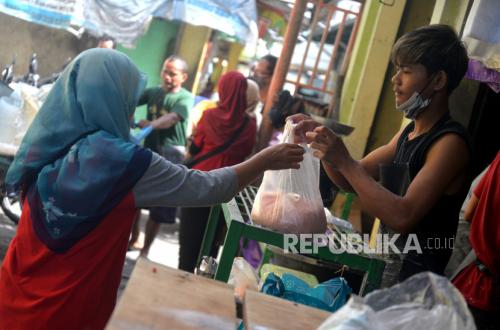
Eid al-Adha always brings a unique atmosphere. Takbir echoes as mosques and fields fill with worshippers, while sacrificial animals are prepared for slaughter. Yet behind this annual Islamic ritual lies profound economic and social messages. Qurbani is not merely an act of animal sacrifice but a lesson in how Islam builds economic justice through consumption, distribution, and social resilience.
Amid a world increasingly grappling with inequality, food inflation, and social solidarity crises, the Qurbani law feels more relevant than ever. As some communities live in abundance while others struggle to access nutritious food, Qurbani serves not just as a spiritual sacrifice symbol but as an instrument for wealth distribution.
Prophet Muhammad (PBUH) said: نَهَيتَ أن تُؤكَلَ لُحومُ الضَّحايا بَعدَ ثَلاثٍ، فقال: إنَّما نَهَيتُكُم مِن أجلِ الدَّافَّةِ التي دَفَّت؛ فكُلوا وادَّخِروا وتَصدَّقوا
“They asked, ‘Did you not forbid eating the sacrificial meat after three days?’ The Prophet (PBUH) replied, ‘I had forbidden you because of the influx of needy people. Now eat, store, and give in charity.’ (Sahih Muslim, narrated by Abdullah bin Waqid and Aisha RA)
This hadith is particularly significant as it outlines three foundational pillars of Islamic economics: consumption, logistical reserves, and social distribution. These concepts are now critical issues in modern economics.
Dignified Consumption
The Prophet’s first message is ‘eat’. Islam does not prohibit enjoying sustenance and prosperity. In fact, within Sharia economics, consumption is part of preserving life (hifz al-nafs) under the maqashid al-sharia framework. However, Islam sets moral boundaries to prevent consumption from turning into wastefulness and greed.
In the modern era, global economics is often driven by excessive consumerist culture. People buy not out of necessity but for status symbols and fleeting satisfaction, exacerbating social inequality and environmental degradation.
Qurbani teaches a different form of consumption: one rooted in gratitude and utility. Enjoying sacrificial meat is not merely about taste but an appreciation of Allah’s blessings and a means to improve community nutrition.
This lesson is highly relevant for Indonesia. Despite ongoing national economic growth, unequal access to nutritious food remains a serious challenge. The Central Statistics Agency (BPS) reported that Indonesia’s poor population in September 2025 stood at approximately 23.36 million. Simultaneously, stunting and limited access to animal protein persist across regions.
In this context, Qurbani serves as a crucial opportunity to redistribute nutritious food to communities rarely consuming animal protein daily.
Storage and Logistical Resilience
The Prophet’s second message is ‘store’. On the surface simple, but it embodies a modern economic philosophy: the importance of logistical reserves and food security.
The world is increasingly vulnerable to global crises. Geopolitical conflicts, climate change, supply chain disruptions, and food price volatility show that economic resilience cannot rely solely on production. Equally crucial is the ability to store, manage, and distribute food reserves effectively.
Islam has long taught this principle. Storing part of the sacrificial meat demonstrates the need for communities to prepare for tough times. From a modern economic perspective, this aligns with food security and social risk management concepts.
This lesson grows more critical as global food prices fluctuate and economic uncertainty rises. National resilience is not just about economic growth but also the community’s ability to maintain food stability and social solidarity.
Charity and Equitable Distribution
The Prophet’s third message is ‘give in charity’. This is the core of economic justice in Islam.
Islamic economics does not allow wealth to circulate solely within certain groups. Wealth must flow to create broader social benefits. Thus, Qurbani is not merely a personal act of worship but a tool for wealth distribution.
When sacrificial meat is distributed to the poor, it is not just temporary compassion but the building of social brotherhood.
Qurbani creates a collective experience where happiness should not be monopolised by the affluent.
Modern economic theory states that extreme inequality can trigger social instability and weaken community economic resilience. Hence, many nations develop tax systems, subsidies, and social aid to maintain balance.
Islam introduced social distribution concepts long ago through zakat, infak, sadaqah, waqf, and Qurbani. Unlike state-mandated systems, Islamic distribution is driven by spiritual and moral community incentives.
Qurbani also boosts the broader grassroots economy. Livestock farmers, animal traders, feed suppliers, transport services, and MSMEs benefit from increased Qurbani activities. The Ministry of Agriculture even estimates 2025’s national sacrificial animal supply will exceed 3.2 million, surpassing national demand estimates.
Thus, Qurbani is not just a ritual but a community-driven economic catalyst.
The Spirit of Economic Justice
Amid an increasingly individualistic world, Qurbani reminds us that economics is not just about growth figures, but also