
When Price Outweighs Value
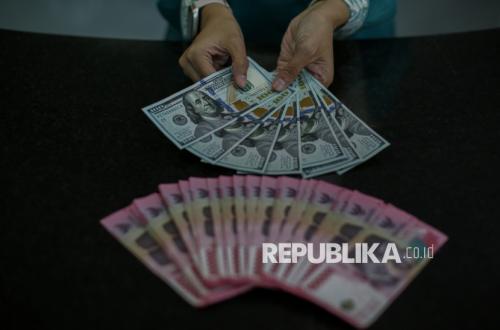
There is a simple question that is increasingly relevant in an age when almost everything can be given a price tag: What is the price of something—and what is its value?
We often assume the two are the same. If an object is worth Rp1 billion, it is considered more valuable than something that costs only Rp100,000. The market works this way. It needs figures to allocate resources, set prices, measure transactions, and calculate profit and loss. But human life is far more complicated than a spreadsheet.
A house has a price, but the sense of security it provides has no price tag. A city park may not generate direct profit, but it gives millions of people room to breathe. A tree can be sold as timber, but at the same time it stores water, prevents erosion, provides a habitat, absorbs carbon and helps regulate the local climate.
So the question becomes more serious: does something with a price automatically have greater value?
Michael J Sandel, a professor of political philosophy at Harvard, invites us to pause over this question in his book What Money Can’t Buy: The Moral Limits of Markets (Farrar, Straus and Giroux, 2012).
Sandel sees an important shift in modern society: we no longer merely live with a market economy; we are moving towards a market society—a society in which the logic of buying and selling, and economic incentives, are spreading into more and more areas of life. (What Money Can’t Buy: The Moral Limits of Markets, Michael J Sandel, 2012; Harvard Kennedy School/Weatherhead Center.)
For Sandel, the problem is not the existence of markets themselves. Markets play an important role. They help bring supply and demand together and encourage efficiency, innovation and exchange. The problem arises when we begin to assume that everything should be treated as a commodity.
There are two major concerns.
First, money creates unequal access. When something that was previously available to everyone begins to be sold, those with money gain greater access.
Second, and perhaps more profoundly, markets can change the meaning of an object or an action. When everything is given a price, we do not merely change how it is bought. We can change how we see it.
Imagine a child who learns out of curiosity, then enters an education system that pays them for every book they read. At first, the incentive may work. But over time, the child may come to see reading not as enjoyable or meaningful, but as work that earns money. Incentives change behaviour. But they can also change motivation. This is a dimension that economic calculations often overlook.
Interestingly, popular music has long captured this kind of unease.
In 1985, Dire Straits released Money for Nothing, written by Mark Knopfler and Sting and included on the album Brothers in Arms. The song adopts the perspective of a worker watching the lives of music stars on television. Behind its humour and irony is a portrait of a world in which success seems easy to measure: money, popularity, lifestyle and status. (Brothers in Arms, Dire Straits, 1985.)
What is visible is the outcome. What is not visible is the process. What is visible is luxury. What is not visible is years of practice. What is visible is popularity. What is not visible is creativity and risk. In other words, visible figures do not always reflect true value.
Several decades earlier, The Rolling Stones offered a gentler reflection in As Tears Go By. Written by Mick Jagger, Keith Richards and Andrew Loog Oldham, it was first recorded by Marianne Faithfull in 1964, before The Rolling Stones recorded their own version. The song contains a simple idea: wealth cannot buy everything. It sounds commonplace, but the more one reflects on it, the deeper it becomes.
Money can buy a house, but it cannot automatically buy a harmonious family.
Money can buy a bed, but it cannot automatically buy a good night’s sleep.
Money can buy medicine, but it cannot automatically buy health.
Money can buy an expensive school, but it cannot automatically buy wisdom.
Money can buy land, but it cannot automatically buy fertile soil.
Money can even buy the most advanced technology, but it cannot automatically buy the wisdom to use it.
This is where the difference between price and value becomes crucial. Price is the figure that appears in a transaction.
Value is what we consider important to life. Price can be calculated with a calculator. Value requires judgement. Price is quantitative. Value is often qualitative. Price can change with the market. Certain values, by contrast, must be protected from changing simply because the market does.
This issue becomes increasingly urgent when applied to nature. A forest can be priced according to its timber. But what is the price of the water that comes from it? What is the price of land that continues to absorb rain?
What is the price of clean air? Of biodiversity? Of an unpolluted river?
We can build economic models to calculate some of these things. Environmental economics has developed the concept of ecosystem services to help estimate the economic benefits of ecosystem functions. But an economic estimate is still not the whole reality. When a river is valued only for the water that can be sold, we may forget that it is also a life-support system.
When a forest is valued only for its timber, we may forget that it is ecological infrastructure. When people are valued only for their economic productivity, we risk forgetting that they are more than units of production.
This is where we need what might be called a balance sheet of values.
An economic balance sheet asks: What do we gain? An ecological balance sheet asks: What do we take? A social balance sheet asks: Who benefits, and who bears the costs?
An intergenerational balance sheet asks: What are we bequeathing to those not yet born? And a moral balance sheet asks: Is the gain we make really deserving of being called a gain?
That last question is crucial.
A company may record a large profit after clearing a forest. Financially, that is a gain. But if society bears the ecological costs through floods, landslides, droughts, the loss of springs and damage to health, that gain is incomplete. Some of the costs have merely been shifted: from the company to society, from the present generation to future generations, and from financial statements to the environment.
This is one of the major problems with modern economic thinking: what is not included in a price is often treated as if it does not need to be accounted for.
Yet something can be profoundly important even if it has no market price. A mother caring for a child. A teacher shaping pupils’ character. A farmer maintaining soil fertility. A volunteer working without pay.
A forest protecting water sources. A sea sustaining life. Not all of this is reflected in gross domestic product. Not all of it appears in profit-and-loss statements. But all of it contributes to quality of life.
Perhaps, then, it is time to broaden our definition of progress. Economic growth matters. But growth is not the only measure of success. Wealth matters, but wealth is not the whole of well-being. Efficiency matters, but efficiency without justice can produce inequality. Technology matters, but technology without wisdom can amplify humanity’s capacity for destruction.
And markets matter, but markets without moral limits can turn almost everything into a commodity.
Ultimately, Sandel’s question is not whether we should reject markets. It is far more fundamental: What kind of society do we want to build? If everything can be bought, what happens to solidarity?
If every service has a fee, what happens to generosity?
If every public space can be monetised, what happens to our shared sense of ownership? If nature is valued only according to the price of its commodities, what happens to our ecological responsibility?
And if human success is measured only by the amount of wealth accumulated, are we not creating a society that is materially rich but poor in meaning?
Perhaps this is where music, philosophy and lived experience meet.
Money for Nothing invites us to see the irony of a world that measures success through money and popularity. As Tears Go By reminds us that wealth has limits. Sandel gives us philosophical tools to question the dominance of markets. And everyday experience shows that life is never as simple as a number.
Perhaps, then, we need a simple principle:
PRICE ≠ VALUE.
Price is not value. Markets calculate prices. Human beings should be able to weigh value.
A mature society is not one that succeeds in putting a price on everything, but one wise enough to know what may be priced, what must be protected, and what is too valuable to be traded.
The greatest gain we pursue today may conceal a loss that will become visible only decades from now. A forest felled generates money today. But the loss of water may become a bill for our descendants. A polluted river may not appear as a figure in a company’s report, but society will pay for it. A society may appear increasingly prosperous in the statistics while the quality of its life slowly diminishes. This is the paradox of modernity: we are becoming better at counting, but not necessarily wiser about deciding what deserves to be counted.
Perhaps, in the end, the highest measure of a civilisation is not how much it can buy, but how many valuable things it can protect from becoming commodities. Price can show how much must be paid.
Value shows why something must be protected. And between the two lies a very important space: wisdom.
If everything is given a price, what remains of value? This is one of the strong conceptual foundations of EcoFitrah: nature is not merely an economic asset; it is a life-support system.
Source: jawawa.id (https://jawawa.id/newsitem/when-price-outweighs-value-1791532401)
Originally published by Republika (https://opini.republika.co.id/berita/tmmpx8393/ketika-harga-mengalahkan-nilai), translated from Indonesian