
When Pesantren Builds Water Sovereignty
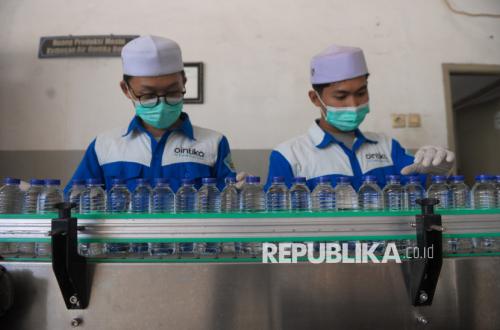
The clock had just passed 12.30 WIB. The scorching sun blanketed Pondok Pesantren Al-Ashriyyah Nurul Iman in Parung, Bogor Regency. From various corners of the pesantren complex, thousands of students wearing sarongs hurried towards the mosque to perform the midday prayer in congregation. Some others were still queuing at the ablution area.
Not long after the final greeting of the prayer resounded, the pesantren atmosphere came alive again. Students prepared for lunch and further study. Unlike the majority of students, five students instead walked towards a building not far from the mosque. At the entrance of the building, a sign read: ‘Welcome to the Nurul Iman bottled drinking water factory: Ointika (hexagonal reverse osmosis)’.
Inside the building, the pulse of one of the pesantren’s business units beats every day. On the wall of the building, a message from the pesantren’s founder is displayed: ‘Those who drink Ointika, women will become beautiful and men will become handsome’.
The five students wearing white caps appeared to be wearing masks and rubber gloves, then stood in a circle near the production machine. Before the machine button was pressed, a student led a prayer. Chants of shalawat filled the room, which appeared hygienic. ‘We are indeed taught by Abah to recite prayers and shalawat before producing. So that the water becomes more blessed,’ said Malik Albana (21), a student from Citayam, Bogor, to Republika on Tuesday (28/7/2026).
The prayer ended. The machine began to work. Empty bottles moved slowly into the production line. Water from reverse osmosis filtration flowed to fill each bottle, before being tightly sealed and labelled OINTIKA. It is in the hands of these students that thousands of bottles of water are produced every day. However, for Malik, the work is not merely about filling bottles. He is learning to become an entrepreneur.
Malik’s routine begins long before sunrise. At three in the morning, all students are required to wake up. They prepare for the dawn prayer, memorise the Quran, perform dhikr, and take part in various activities determined by the pesantren. ‘What is learned here is not only religious knowledge,’ he said.
Malik appeared enthusiastic when recounting how the late Habib Saggaf bin Mahdi bin Syekh Abu Bakar, the founder of the pesantren, educated the students. According to him, even the way one walks is part of the education. On one occasion, Habib Saggaf saw a student walking while dragging his sandals. The student was immediately reprimanded.
‘Abah said, if you walk like that, firstly it is not good for health because dust flies about and can be inhaled by others. Secondly, it is not good economically because the sandals wear out quickly,’ said Malik.
That simple lesson has left a lasting impression to this day. At Nurul Iman, he said, education does not stop at classical Islamic texts or the classroom. The way one opens a water tap, maintains cleanliness, and manages a business are all part of character building. ‘That is what I think distinguishes this pesantren from others,’ he said.