
When Knowledge Becomes an Indicator: Academics Caught Between Publication Costs and Ranking Ambitions
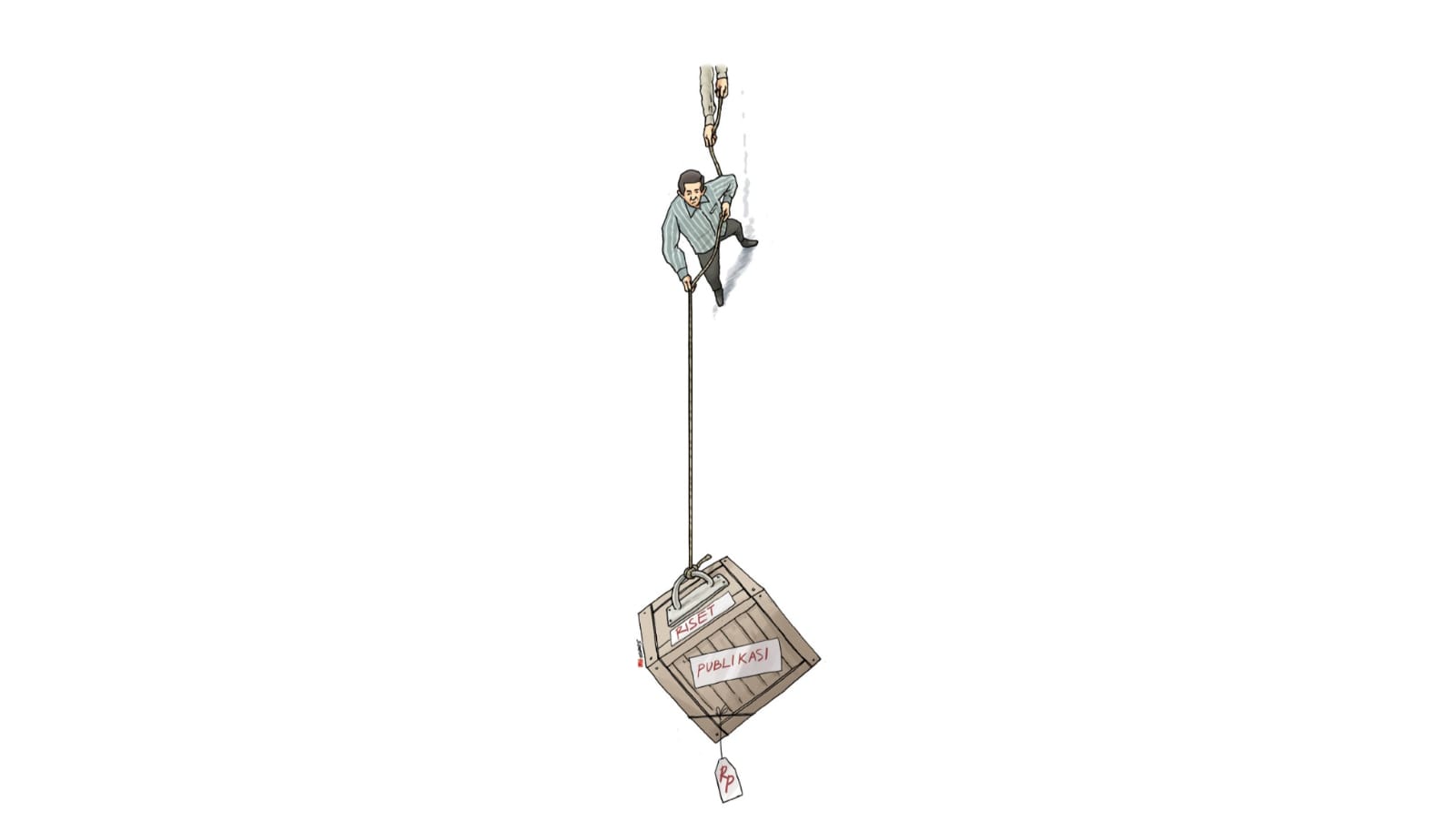
A paradox is increasingly felt in academic life today. Lecturers are asked to research, write, and publish scholarly works, simultaneously as a way of maintaining the reputation of higher education institutions. Yet, when the knowledge produced is to enter reputable publication spaces, lecturers often have to face significant costs. Knowledge born from long work, from research, from reading, from conversations with students and the community, ultimately must pass through an economic gate to be recognised. This paradox becomes more poignant when discussions about lecturer welfare resurface. Many lecturers, especially young lecturers, non-civil servant permanent lecturers, and lecturers at resource-limited universities, face the reality that material rewards for academic work are not always commensurate with the demands placed upon them. On one hand, lecturers are required to meet increasingly high academic standards. On the other, financial support to meet those standards is often inadequate.
In the functional position system, publication is a key requirement. To achieve the rank of associate professor, a lecturer is required to have publications in reputable national journals. In practice, some reputable national journals charge publication fees that can reach millions of rupiah. To advance to the functional position of full professor, the demands are even higher: reputable international publications, often in Q1 or Q2 indexed journals. At that point, publication costs are calculated in dollars. It is not an exaggeration for a lecturer to feel daunted and retreat when finding a Q1 journal with an article processing charge of US$4,000, which when converted to rupiah can reach tens of millions. This figure is not merely a number. It signals a structural problem in the knowledge economy. The state asks lecturers to enter the global academic reputation arena but does not always provide financing infrastructure equal to these demands. Consequently, lecturers are not only required to think, write, and research, but must also self-fund the path for their thoughts to gain recognition.
This problem does not stop at functional position policies. Higher education institutions themselves are increasingly driven by the logic of rankings. Campuses compete to improve accreditation, meet performance indicators, enhance national reputation, and improve their position in international rankings. All of this is certainly important. There is nothing wrong with a university’s desire to be of high quality, known, and recognised. However, problems arise when these ranking ambitions are translated into high research output targets, while the costs, time, effort, and publication support provided to lecturers are not always balanced. It is at this point that knowledge begins to change its face, no longer present solely as an endeavour to seek truth, answer societal problems, or broaden the horizons of knowledge. Knowledge transforms into an indicator. Scholarly articles become performance evidence. Reputable journals become ranking tools. Citations become reputation figures. Publication becomes a symbolic currency in the competition between study programmes, faculties, universities, and even nations. Lecturers stand right in the middle of this vortex, working not only for knowledge but also for institutional reputation. Lecturers write not only so their ideas are tested and read, but also so the campus has outputs, the study programme has performance evidence, the faculty has performance index achievements, and the university has material for rankings. In such a situation, academic work, which should grow in a healthy atmosphere of thought, can turn into pressured administrative work.
Lecturers are not rejecting publication. Scholarly publication remains important. Without publication, knowledge is difficult to test, share, and develop. Lecturers are also not entirely rejecting rankings. Rankings can be an evaluation tool, a competitiveness map, and an impetus to improve institutional quality. However, rankings become problematic when they prioritise numbers over the ecosystem, chase outputs over process, and demand productivity over caring for lecturers’ working conditions. What makes many lecturers feel exhausted is not merely the demand to write or publish scholarly works. The wound comes when all these demands arrive together with significant costs, inadequate welfare, and ever-increasing institutional pressure. Lecturers are asked to maintain the quality of higher education, but often must do so with nearly depleted energy, limited funds, and anxieties that are not always visible.
The problem is not the quality standards, but the justice behind the standards. If universities ask lecturers to produce reputable national or international publications, the support provided must also be commensurate. Research requires funding. Publication requires fees. Writing articles requires time. Revisions require mentoring. The process towards reputable journals requires networks, academic literacy, and mental resilience. All of this cannot be solely burdened onto individual lecturers. More ironically, many research outputs are forced through unrealistic financing schemes. Research funds are often insufficient to cover the entire research process, let alone publication. Yet, at the end of the programme, outputs must still meet targets: reputable national journals, international journals, indexed proceedings, or other calculable forms of output.