
When Kindness Becomes Infrastructure: The Flores Earthquake and the Social Capital That Sustains Us
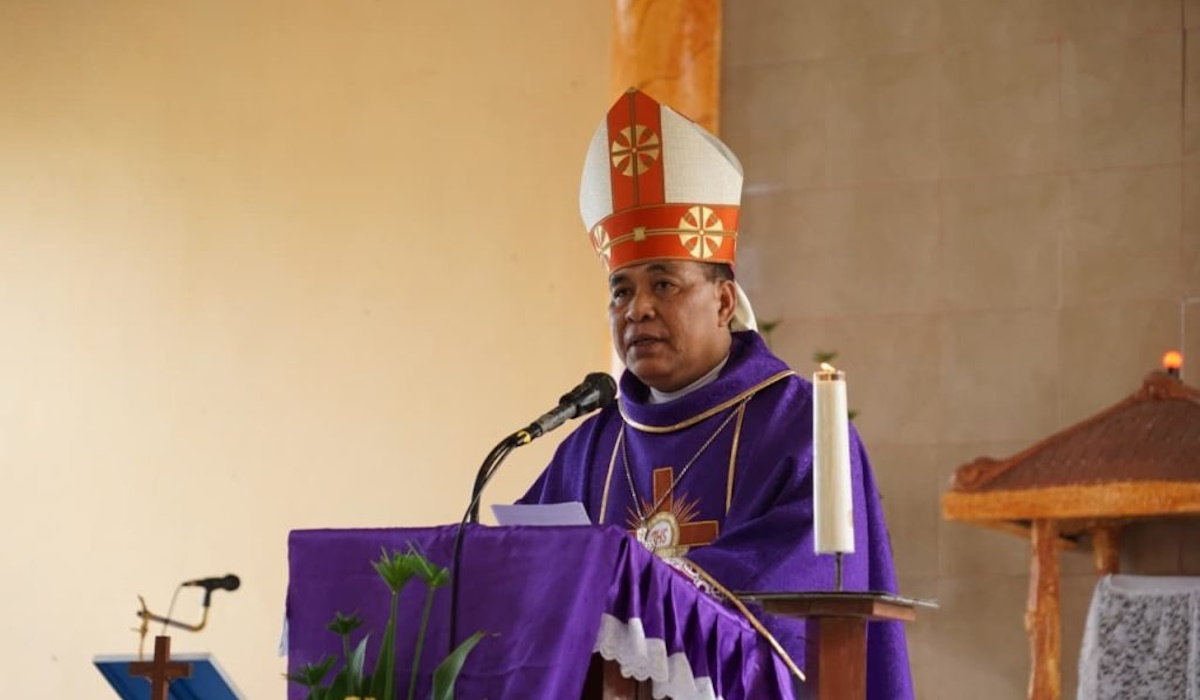
An earthquake destroys many things within seconds. Homes, places of worship, schools, and even a sense of safety suddenly become fragile. Yet amid the devastation caused by the 7.7 magnitude earthquake that shook Flores on 15 August, I witnessed something that grew quickly: people began to seek one another out.
Telephones that initially carried bad news changed function. Some sent food, distributed medicine, or became volunteers. The government, health workers, humanitarian agencies, the Church, and residents moved from their respective nodes. Amid damaged physical infrastructure, another kind of infrastructure was at work: networks of kindness.
I was not in Ruteng when the earthquake struck. The first report concerned my own room: ceiling panels had fallen and a large frame had toppled towards the bed. Had I been there that morning, I do not know what would have happened.
Yet the disaster truly acquired its face when the next reports arrived: people injured, families displaced, fatalities found. My thoughts turned to those who that night had no room to enter.
We usually imagine resilience through earthquake-resistant buildings, roads, electricity, and hospitals. But communities also possess infrastructure not built from concrete: trust, habits of mutual assistance, and the ability to connect needs with resources.
The social sciences call part of this strength social capital. Its face is simple: a neighbour ensures another neighbour has eaten, vehicles are lent, and volunteers reach difficult places. Disaster research reinforces this impression. In the 1995 Kobe earthquake, official studies recorded that around 80 per cent of people pulled from the rubble were rescued by civilians, not professional rescue teams. Daniel P. Aldrich, in Building Resilience (2012), found that the speed of recovery between regions was determined not by the scale of damage or the size of aid, but by the density of social networks before disaster struck. True resilience is saved long before the ground shakes.
I even heard of people who were themselves victims still struggling to carry their neighbours to safety. There I learned that love is not a beautiful noun. In a disaster, it always seeks to become a verb: to lift, to escort, to treat, to listen, to connect, or to accompany.
But good intentions alone are certainly not enough. Kindness requires organisation. Aid must know its address, needs must be mapped, and resources must be matched with those most in need.
That experience corrected how I understand leadership. A leader must decide and connect needs with resources. He is not a solitary hero, but a connector of nodes.
Yet there is something that cannot be entirely delegated: presence. After initial coordination was underway, I went to meet the victims. There are moments when presence cannot be replaced by telephone; there are moments when suffering people need not speeches, but a leader’s willingness to be there.
After several visits, I received a message from residents thanking us for coming. I read it with emotion and embarrassment. I did nothing special. I merely came.
We live in an age when presence is easily replaced by messages of sympathy. All of that is useful. But human grief cannot be fully reached through a device screen. Presence is not primarily about being seen by victims, but about the willingness to see victims. From there a leader brings home what is not always in the tables: exhaustion, anxiety, overlooked needs, and the human endurance behind the numbers.
My thoughts returned several times to my own room. I do not dare say that God saved me while others were not saved. The mystery of suffering is too great to be simplified. I have no answer as to why one person survives while another never emerges from the rubble.
What I do have is responsibility for the fact that I am still alive. The question changes: no longer, ‘Why did I survive?’, but, ‘For what purpose is this life still given to me?’
For me, survival is not a privilege. It becomes a responsibility. And that question applies to anyone: everyone has something—skills, time, authority, or two hands that can work—and all of it acquires social meaning when it becomes a path for the lives of others.
The Church’s social teaching has long refused to read solidarity as mere sentiment. In Sollicitudo Rei Socialis, John Paul II called it not a vague compassion, but a firm and persevering determination to work for the common good—because we are all responsible for all.
When ordained as bishop, I chose the motto Omnia in Caritate: to do all things in love. I found it far beyond the boundaries of the Church: in volunteers, health workers, the government, the military and police, and neighbours. Disaster does not ask a person’s religion when he needs water. Kindness likewise ought not ask about identity before extending a hand.
The recovery period is longer than the period when a disaster is headline news. Homes are rebuilt, trauma is accompanied, livelihoods are revived, and distance from the city centre must not determine the order of who is helped first.
Here social capital faces its next test. Networks of kindness are not enough if spontaneous; they must be nurtured and connected with good governance. Community solidarity does not replace state responsibility; the two must reinforce each other.
The Flores earthquake taught that resilience is visible not only in buildings that can withstand, but also in how quickly hands reach out when the ground shakes.
Source: jawawa.id (https://jawawa.id/newsitem/when-kindness-becomes-infrastructure-the-flores-earthquake-and-the-social-capital-that-sustains-us-1787453432)
Originally published by Media Indonesia (https://mediaindonesia.com/opini/924925/ketika-kebaikan-menjadi-infrastruktur-gempa-flores-dan-modal-sosial-yang-menopang-kita), translated from Indonesian