
When Journalism Is Hit by AI OTT
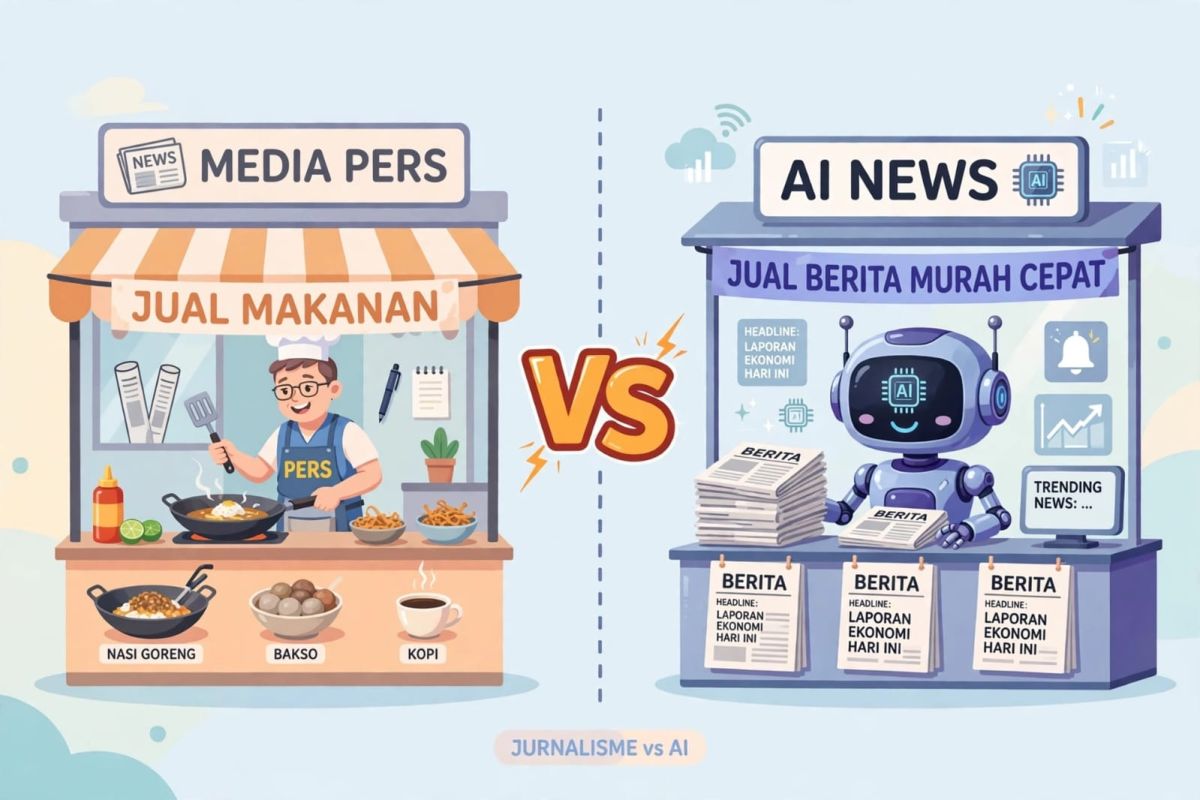
Jakarta (ANTARA) - The media industry is undergoing major change as artificial intelligence (AI) advances. People can now obtain news summaries, explanations and answers to a wide range of questions through AI services without visiting the websites of the media outlets that produced the information.
The change recalls the telecommunications industry’s experience as over-the-top (OTT) services expanded. Operators built networks and bore substantial investment costs, but applications such as WhatsApp and Skype subsequently took over part of the relationship with users and some of the economic value of communications services.
Journalism is now facing a similar situation. Media companies continue to bear the costs of gathering information, sending reporters, verifying facts and producing news. Yet more and more people are accessing journalistic work through AI services that draw on various sources to provide direct answers.
The difference is that AI is not merely a distribution channel. It can read, combine, summarise and re-present information. As a result, media outlets risk losing their direct relationship with readers as well as some of the economic value generated by their content.
The phenomenon can be explained through the concept of platformisation developed by David B Nieborg and Thomas Poell (2018). They describe how digital platforms influence the production, distribution and circulation of content by controlling infrastructure and algorithms.
The media have felt this influence since the era of search engines and social media. AI now has the potential to take that dependence to the next stage. Whereas search engines previously directed users to news websites, AI can provide answers directly, meaning users do not always need to visit the original source.
A July 2025 Pew Research Center study of 900 adults in the United States found that users who saw AI summaries on Google clicked on conventional search results in only eight per cent of visits. The figure was 15 per cent on pages without AI summaries. Links to sources within AI summaries were clicked in just one per cent of visits.
Pressure on media traffic is also evident in the Reuters Institute’s 2026 report. Based on Chartbeat data from more than 2,500 news websites, referral traffic from Google Search fell by 33 per cent globally between November 2024 and November 2025.
The data point to changing patterns of information consumption. Although the decline in traffic is also influenced by algorithm changes and user behaviour, the media industry needs to prepare for AI’s growing role in news distribution.
Source: jawawa.id (https://jawawa.id/newsitem/when-journalism-is-hit-by-ai-ott-1793868771)
Originally published by Antara (Indonesian) (https://www.antaranews.com/berita/5833831/ketika-jurnalisme-kena-ott-ai), translated from Indonesian