
When Green Gold and Technology Unite in East Kalimantan
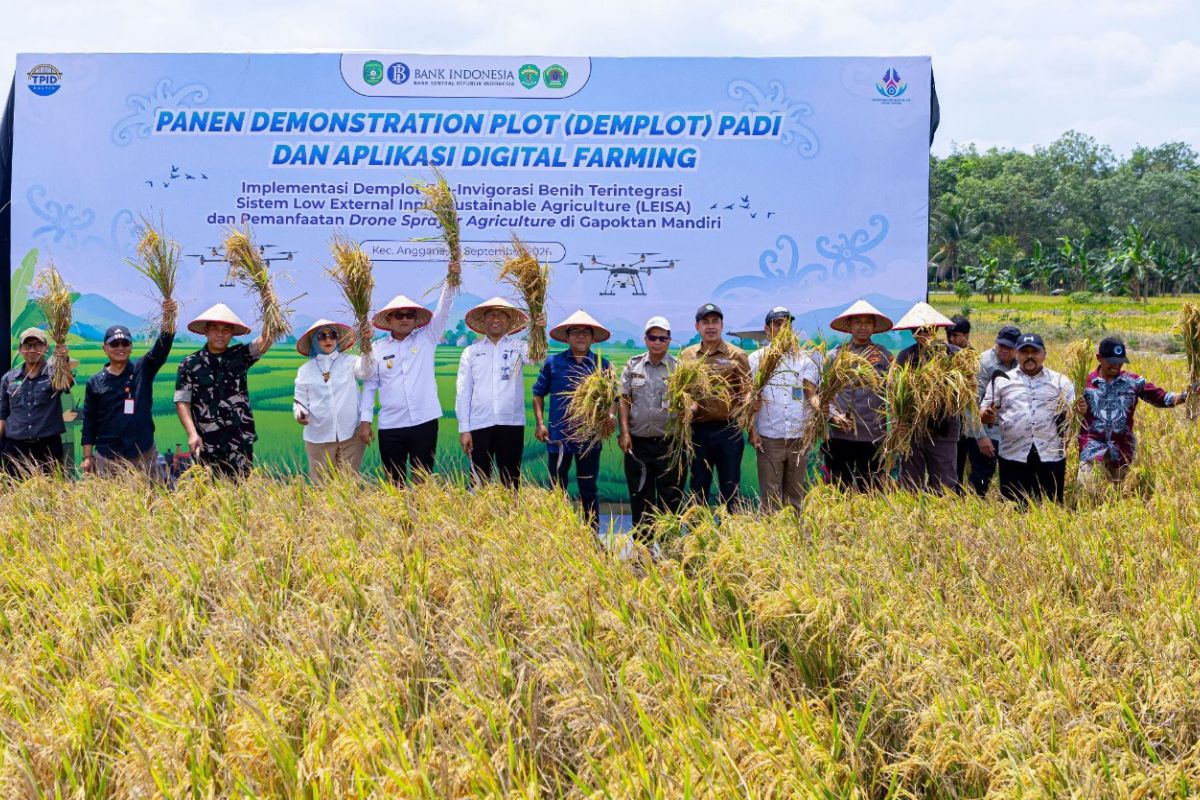
The government designs the path, research institutions contribute knowledge, financial institutions provide support, and farmers act as the primary agents turning aspirations into reality.
Samarinda (ANTARA) - Vast expanses of paddy fields stretch across the Anggana District, Kutai Kartanegara Regency, in the eastern region of Kalimantan. The wind carries a soft rustle from the rice stalks that are beginning to turn golden.
In this land touched by the Mahakam Delta, the agricultural world is treading a new path—one that blends natural wisdom with scientific knowledge, and the patience of farmers with the precision of technology.
The inaugural harvest of the demonstration plot for rice based on the Low External Input Sustainable Agriculture (LEISA) method and digital farming at the Mandiri Farmer Group Association (Gapoktan) is more than just a celebration of the earth’s bounty. This moment represents a collective promise that food security is not merely a dream, but a reality flourishing from the unification of many hands.
Under the bright skies of Sidomulyo Village, rows of golden rice stand tall. It is here that seeds of hope are planted with the conviction that true agriculture is about harmony with nature, rather than its conquest.
The LEISA method serves as an answer to long-standing concerns: how to harvest abundantly without harming the earth, and how to grow plentiful yields without exhausting existing resources.
Alongside researchers from the Samarinda State Agricultural Polytechnic, the Bank Indonesia East Kalimantan Representative (BI Kaltim) has integrated bio-invigoration-based seeding technology with LEISA principles.
Through this method, seeds are empowered by nature itself. Soil fertility is maintained through efficient yet meaningful inputs, while water and space are managed so that every inch of land can breathe freely.
Amidst the challenges of unpredictable weather, even during droughts caused by El Niño, these rice crops continued to grow upright and fertile.
When harvest time arrived, the figures provided tangible proof. Productivity reached 6.95 tonnes per hectare, a surge of 44.8 per cent compared to the period before the implementation of LEISA. This leap was born not from coercion, but from a deep understanding that when humans care for nature, nature cares for humans.
The Head of the Bank Indonesia East Kalimantan Representative, Jajang Hermawan, stated that food security is not built overnight. Food abundance is born from sincerity, consistency, and the desire to continuously learn and innovate.