
When Government Communication Crisis Erodes Market Confidence
Not all crises originate from erroneous policies. In many instances, a crisis can worsen due to a failure in communication to provide clarity. When the government is late in explaining a situation, delivers inconsistent messages, or allows the public sphere to be filled with various speculations, trust erodes faster than any policy-driven improvements can repair.
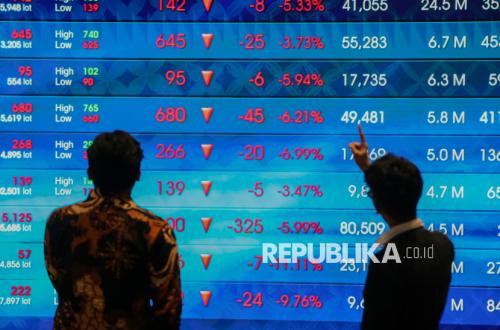
This phenomenon was evident during the weakening of the Rupiah and the Jakarta Composite Index (IHSG) in June 2026. Amidst economic pressures, what emerged was not merely concern regarding market conditions, but also questions regarding the government’s ability to manage public communication in the midst of a crisis.
In such situations, the public and market participants do not only require certainty regarding policy direction, but also explanations capable of alleviating uncertainty. However, government communication has not yet fully met this need.
While the government has repeatedly asserted that Indonesia’s economic fundamentals remain strong, explanations regarding the causes of the Rupiah’s depreciation, the fiscal condition, and the concrete steps being taken have not been fully conveyed from the outset. Simultaneously, statements from various officials have highlighted different aspects, failing to form a single, consistent narrative. Consequently, the information space was first filled with various analyses and speculations that influenced the perceptions of both the public and market players.
In financial markets, perception often moves faster than data. Investors do not only observe economic indicators; they also read the signals transmitted by the government.
When communication is reactive and unable to provide certainty, that very uncertainty can become a factor that amplifies market volatility. In other words, the issue is not solely the economic condition, but the government’s ability to build confidence that the situation remains under control.
Interestingly, this issue has been acknowledged from within the government itself. During the APBN KiTa press conference on Monday (8/6/2026), Finance Minister Purbaya Yudhi Sadewa admitted that one of the government’s weaknesses lies in public communication, which has not been able to fully explain the fiscal condition. This statement is significant as it shows that the government’s challenge is not only to maintain economic stability through policy, but also through the delivery of information capable of building trust.
This phenomenon aligns with the Situational Crisis Communication Theory (SCCT) developed by W. Timothy Coombs. This theory explains that success in facing a crisis is determined not only by the quality of the actions taken, but also by the quality of the accompanying communication.
In situations of high uncertainty, organisations need to convey information quickly, consistently, transparently, and credibly so that stakeholders gain certainty regarding what is happening and how the crisis is being handled. Conversely, delayed, incomplete, or conflicting communication will increase uncertainty, thereby opening the door for speculation that ultimately evolves into a crisis of confidence.