
When Gen Z in North Jakarta Retire from Street Brawls to Become Urban Farmers
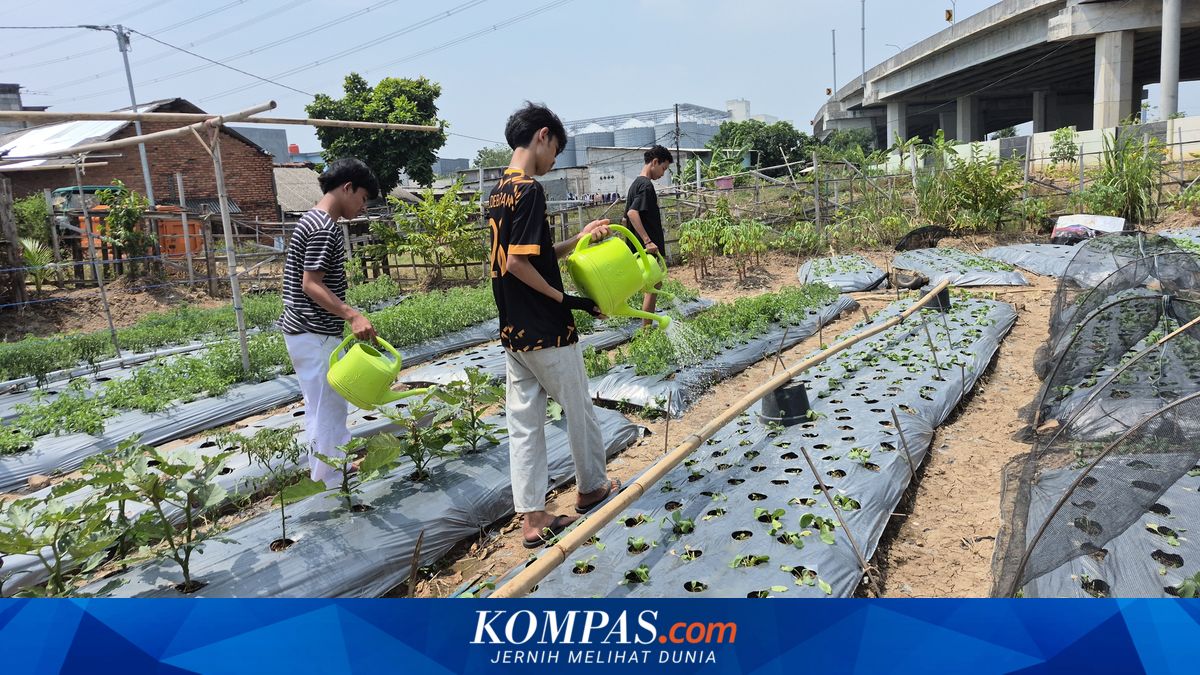
In the midst of the scorching sun, every afternoon after school, Gen Z in RT 06, RW 10, Rawa Malang, Semper Timur, North Jakarta, no longer gather at street corners for brawls as they once did. Instead, they hurry to a small garden nestled between residential areas next to the Cibitung-Cilincing toll road underpass. Still wearing their white school trousers, three Gen Z individuals can be seen entering the 1.5-hectare urban farming land named Bangun Karya Mandiri. They sit casually chatting with one another while exchanging ideas with Dwi Angga Mukti (26), the Chairman of the Bangun Karya Mandiri Farming Group. After a brief rest to shake off the fatigue from school, these Gen Z youths immediately fetch water from a man-made pond using a green watering can. The intense sun beating down on their skin does not dampen their enthusiasm for watering the growing green plants such as kangkung, basil, mustard greens, chillies, and others. Previously, Fajar was quite active in brawling. Almost every week, he would clash with rival groups. “I used to like brawling, but not anymore,” said Fajar when interviewed by Kompas.com at the site on Tuesday (27/4/2026). However, he retired from such activities after being invited to farm on the urban land a few years ago. Now, every afternoon after school, Fajar prefers to spend time in the garden with his friends. This is different from the past when he would loiter and end up in brawls after school. According to him, managing a garden in the middle of the city is indeed not easy and tiring. Yet, it has become addictive. “Because it’s fun, we can do it together with friends, watering like that,” said Fajar when interviewed by Kompas.com at the site on Tuesday (27/4/2026). Not only watering, Fajar and his friends also help with planting, fertilising, and cleaning the garden every day. On the other hand, the presence of urban farming has made Fajar and his friends rarely hang out outside and instead focus on positive activities through gardening. However, at least the income from it can be used to buy ice and snacks to eat together with friends at the garden. Although the additional pocket money is not much, Fajar admits he is happy because there are many lessons to be learned while helping manage the urban farming.