
When Forests and the Stock Market Are on Fire: Where Can the Public Put Down Roots?
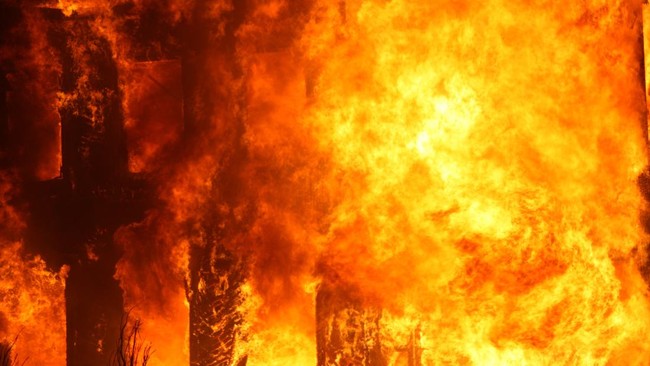
For years, economic growth and environmental sustainability have often been placed on opposing sides. When investment requires land, forests are expected to give way. Conversely, when environmental protections are tightened, concerns about slower investment and lost jobs quickly emerge.
But when forests are burning and the stock market is also “on fire” at the same time, a bigger question arises: if the two are seen as incompatible, why are both now vulnerable?
Forest fires and turmoil in the capital market are, of course, not directly linked by cause and effect. They have different causes and dynamics. However, the emergence of both problems at the same time reminds us that development cannot continue to be understood as a simple choice between protecting nature and pursuing growth.
The issue is not simply choosing which matters more, but ensuring that development decisions do not weaken the foundations that support both.
A dichotomy worth questioning
The relationship between the economy and the environment is far more complex than a simple exchange of gains and losses. Nature does not exist outside the economic system. The availability of water, soil fertility, climate stability and the continued supply of natural resources are prerequisites for a range of productive activities.
The World Bank’s 2021 report, The Economic Case for Nature, estimates that the loss of environmental functions could leave global GDP up to US$2.7 trillion lower by 2030 than it would be without such degradation.
Indonesia is projected to see an 11 per cent decline in GDP under the same scenario. This figure is a reminder that environmental degradation is not only a conservation issue, but also a real threat to the foundations of economic growth.
In Indonesia, research involving academics from Sultan Ageng Tirtayasa University and researchers from the Ministry of Finance (2025) examined the relationship between forest areas, regional fiscal policy and economic growth, and environmental quality across 33 provinces from 2017 to 2022.
The study found that economic growth in the primary, secondary and tertiary sectors was negatively associated with environmental quality. By contrast, natural resource revenue-sharing funds were positively associated with it, while environmental protection spending had no statistically significant effect.
These findings are a reminder that neither economic growth nor the size of environmental budgets automatically ensures ecological improvement. The issue is not simply how much the economy grows or how much money is allocated, but how policies are designed so that growth does not continue to come at the expense of environmental quality.
The choice between economic growth and environmental protection does not always have to be absolute. A 2022 study, Balancing National Economic Policy Outcomes for Sustainable Development, using Egypt as a case study, showed through simulations that certain policy combinations could sustain economic growth while reducing emissions and inequality.
However, the study also cautioned that the costs and benefits of policies are not always distributed evenly. The challenge of development, then, is not only to find the right policies, but also to ensure their consequences are managed fairly.
This is where the challenges of development become more tangible. A policy that delivers aggregate benefits may not benefit every group equally. Some communities may gain new economic opportunities, while others bear the costs of adjustment or lose their livelihoods.
Bringing the economy and the environment together does not mean eliminating every trade-off. Rather, those consequences must be acknowledged, assessed and discussed openly.
When trust becomes a challenge
The issue becomes more complicated when different groups in society no longer share a common basis of trust. The 2026 Edelman Trust Barometer found that 70 per cent of global respondents were unwilling or hesitant to trust people with different values, sources of information, approaches to social issues or backgrounds. In Indonesia, the proportion was 66 per cent.
The phenomenon, described as “insularity”, reflects a tendency for trust to become increasingly confined to circles and groups seen as sharing one’s views. The findings offer a way to understand why debates about development may become increasingly difficult to reconcile.
For businesses, regulatory certainty and investment viability are reasonable considerations. For communities dependent on natural resources, the health of ecosystems is a matter of livelihood and safety. Meanwhile, the government must pursue growth while also fulfilling its duty to protect the public interest.
These three interests are not necessarily in conflict. But amid a tendency to place greater trust in groups with similar views—as the phenomenon of insularity suggests—differences in interest risk being seen as irreconcilable. This can lead to the assumption that achieving one objective requires sacrificing someone else’s interests.
In such circumstances, the challenge of development is no longer merely to identify the most promising policy on technical grounds. It is also to build trust in the decision-making process and in those responsible for carrying it out.
Bridging interests, not concealing disagreements
The 2026 Edelman Trust Barometer highlights the importance of “trust brokering”: efforts to bridge groups with differing views by listening without judgement and helping them understand one another’s perspectives.
In the context of development, this approach requires a change in how the government and businesses communicate. Successful communication should not be measured only by how widely a development message is accepted, but also by the extent to which different groups feel their interests and concerns have been understood.
Public communication should therefore not be treated as an effort to obscure the consequences of policies to make them easier to accept. Credible communication must instead explain why a particular choice was made, what alternatives were considered, who stands to benefit and who may bear the costs.
Research from Baise University in China (2026) emphasises that reconciling economic growth with environmental sustainability requires more than technical policies; it also calls for transparent governance, public participation and a fair distribution of benefits.
Meanwhile, a study involving academics from the University of Oxford (2026) introduces the concept of a “nature-positive economy”: an economy that not only reduces its harmful effects on nature, but also helps restore it. Yet this idea requires more than commitment. Without measurable targets, monitoring and accountability, the sustainability agenda risks becoming a promise the public finds difficult to trust.
Building trust, then, cannot stop at campaigns about environmental commitments. Trust must be grounded in action, verifiable results and mechanisms that allow the public to demand accountability.
At least three areas deserve collective attention. First, the government should explain policy trade-offs openly, including why one approach was chosen over the alternatives.
Second, stakeholders should be involved before decisions become difficult to reverse, rather than merely being consulted to publicise decisions that have already been made. Third, the government and businesses should ensure that economic and environmental performance is reported using clear, assessable indicators.
These measures will not guarantee that every conflict of interest is resolved. But an open process gives all parties the opportunity to understand decisions, question assumptions and propose improvements on the basis of the same information.
Ultimately, when forests and the stock market are both on fire, the public needs more than promises of growth or commitments to conservation. It needs credible reasons to believe that development genuinely takes both into account.
Trust does not take root simply because the government and businesses say that the economy and the environment can go hand in hand. It takes root when people can see how decisions are made, who is heard, and whether benefits and risks are shared responsibly.
Forests and the stock market may be driven by different dynamics. Yet both remind us of the same need: development that does not merely pursue results, but also safeguards the ecological, economic and public-trust foundations on which its continuity depends.
Source: jawawa.id (https://jawawa.id/newsitem/when-forests-and-the-stock-market-are-on-fire-where-can-the-public-put-down-roots-1792475451)
Originally published by CNBC Indonesia (https://www.cnbcindonesia.com/opini/20261020114407-14-777786/ketika-hutan-dan-bursa-terbakar-ke-mana-publik-mengakar), translated from Indonesian