
When Financial Markets Determine Investment Performance of the Life Insurance Industry
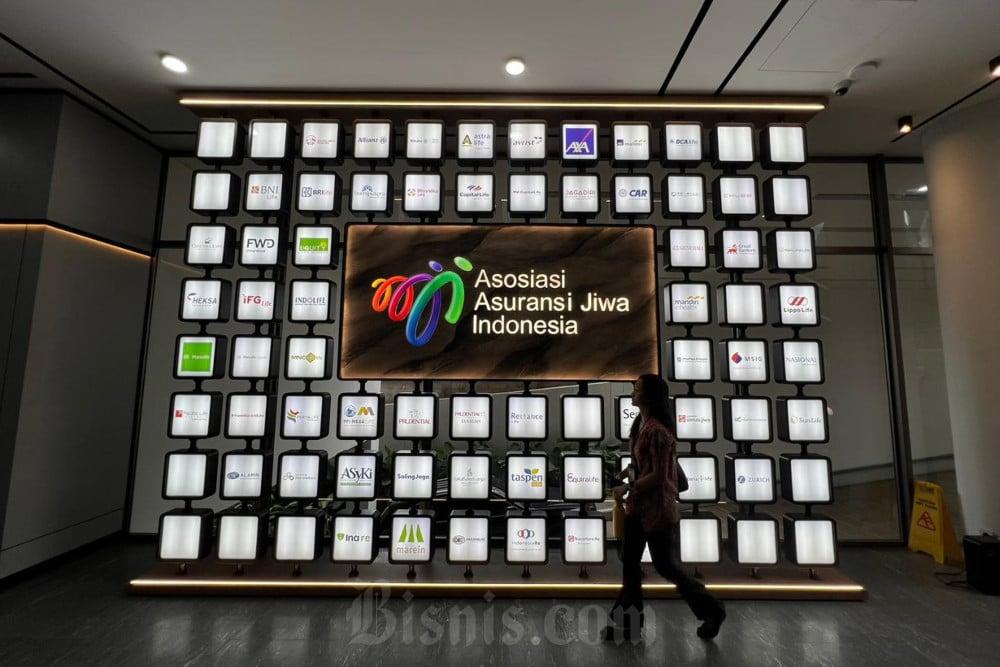
The investment results of the life insurance industry faced significant pressure in the first quarter of 2026. The Indonesian Life Insurance Association (AAJI) attributed this decline to fluctuations in the financial markets.
AAJI recorded that as of March 2026, the life insurance industry’s investment returns were negative by Rp1.60 trillion. This stands in stark contrast to the first quarter of 2025, which remained positive at Rp790 billion.
Handojo G. Kusuma, AAJI’s Head of Inter-Institutional, Regulator, and Domestic & International Stakeholder Cooperation, stated that the condition was heavily influenced by financial market volatility. “Both the stock market and other investment instruments are sensitive to both global and domestic economic dynamics,” he said during a press conference regarding the industry’s performance for January-March 2026 in Jakarta.
Handojo continued that for the life insurance industry, investment management is a vital component in maintaining business sustainability. However, he added that the industry’s approach is always long-term oriented, prioritising the principle of prudence.
“Therefore, we view this condition as part of a market cycle that must be managed prudently,” he asserted.
Explaining the investment portfolio, Handojo noted that growth in Government Securities (SBN) was able to strengthen the industry’s investment portfolio. In the first quarter of 2026, fund placement in SBN rose by 15.8% year-on-year to Rp248.03 trillion.
He noted that this reflects the industry’s commitment to maintaining a balance between optimising investment returns and healthy risk management, demonstrating consistency in placing policyholders’ funds in prudent and relatively safe investment portfolios.
On the other hand, he emphasised that the industry continues to maintain portfolio diversification through instruments such as stocks, deposits, mutual funds, corporate sukuk, land and buildings, and direct participation. He believes diversification is essential amidst dynamic market conditions, though he acknowledges that short-term market fluctuations are natural in the investment ecosystem.
“However, because the life insurance industry is long-term oriented, the investment strategies applied are also oriented towards long-term sustainability, rather than being a momentary response to the market fluctuations we are currently seeing,” he explained.
Furthermore, he mentioned that SBN instruments still dominate the total investment of the life insurance industry in the first quarter of 2026, accounting for 43.4%. This is an increase from 39.6% during the same period the previous year. Meanwhile, stocks remain the second-largest instrument with a 19.7% share, followed by mutual funds at 12.7%. Handojo stated that this composition shows the industry continues to implement a diversified investment strategy, maintaining a strong portion in relatively stable fixed-income instruments.
In detail, the life insurance industry’s instruments as of March 2026 included deposits at Rp33.32 trillion, stocks at Rp112.64 trillion, corporate sukuk at Rp53.43 trillion, mutual funds at Rp72.45 trillion, buildings and land at Rp16.21 trillion, direct participation at Rp30.31 trillion, and others at Rp5.32 trillion.
Regarding strategies to improve investment performance, PT Asuransi Ciputra Indonesia (Ciputra Life) stated that its primary focus this year is to maintain portfolio quality, optimise investment income, and ensure liquidity remains at a healthy level. The company will continue to monitor market developments and selectively adjust strategies to capture emerging investment opportunities.
“With this approach, we are optimistic that we can maintain solid, sustainable investment performance in line with the company’s commitment to creating long-term value for all stakeholders,” said the President Director of Ciputra Life, Hengky Djojosantoso.
Currently, Ciputra Life’s portfolio is dominated by fixed-income instruments, primarily government bonds, followed by corporate bonds with good credit ratings. According to its financial reports, the company’s investment returns in March 2026 rose by 66.8% year-on-year to Rp16.60 billion.
Hengky stated that Ciputra Life projects fixed-income instruments will remain the main contributor to the company’s investment performance throughout 2026. While rising interest rates may cause price corrections, they also offer the potential for higher yields.
Meanwhile, insurance observer Wahju Rohmanti projected that by the end of 2026, the life insurance industry’s investment returns would be positive, albeit with slim growth. This is conditional on insurance companies being able to capitalise on rising interest rate opportunities, successfully performing reallocations (switching), and the government successfully preventing an economic recession.
“However, my pessimistic projection is that the investment returns of life insurance companies will be negative, looking at the data up to the first quarter of 2026, the ongoing weakness in the capital market, and worsening economic indicators,” he explained.
Source: jawawa.id (https://jawawa.id/newsitem/when-financial-markets-determine-investment-performance-of-the-life-insurance-industry-1781041835)
Originally published by finansial.bisnis.com (https://finansial.bisnis.com/read/20260610/215/1979276/kala-pasar-keuangan-tentukan-kinerja-investasi-industri-asuransi-jiwa), translated from Indonesian